
The Legal Status of the Right to Vote in India: Constitutional or Statutory?


From Current Affairs Notes for UPSC » Editorials & In-depths » This topic
The democratic fabric of India is intrinsically linked to the power of its citizens to elect their representatives. However, the precise legal standing of this power, the right to vote, is a subject of continuous debate and judicial interpretation. Recent events, such as the Supreme Court’s hearing of cases against the Special Intensive Revision (SIR) of electoral rolls in Bihar, have brought this issue to the forefront. This has reignited discussions on whether the right to vote is a fundamental, constitutional, or statutory right. The debate is further enriched by differing judicial opinions, such as Justice Ajay Rastogi’s partial dissent in the Anoop Baranwal case, and the foundational role of laws like the Representation of the People Act, 1951, particularly its Section 62, in defining who can and cannot vote. Understanding this complex legal landscape is crucial for appreciating the nuances of India’s electoral democracy.
What is the Nature of the Right to Vote in India?
The right to vote, also known as suffrage, is the right of a citizen to cast a vote in an election to choose their representatives. In the Indian context, its legal status is not straightforward and has been clarified through various court judgments.
- Not a Fundamental Right:
- The right to vote is not explicitly included in Part III of the Constitution, which lists the Fundamental Rights.
- The Constituent Assembly debated including it as a fundamental right, but the idea was ultimately rejected by the Advisory Committee.
- A Contested Constitutional Right:
- Some argue it is a constitutional right because Article 326 of the Constitution provides for elections to the House of the People and Legislative Assemblies of States to be on the basis of Universal Adult Franchise.
- This article states that every citizen aged 18 and above is entitled to be registered as a voter, provided they are not disqualified.
- However, the Supreme Court has generally not upheld this view in its majority judgments.
- Primarily a Statutory Right:
- The prevailing legal position, established by a Constitution Bench of the Supreme Court in the Kuldip Nayar v. Union of India (2006) case, is that the right to vote is a statutory right.
- This means the right flows from a law made by the Parliament, not directly from the Constitution itself.
- The specific law governing this right is the Representation of the People Act, 1951 (RPA, 1951). This stance was reaffirmed in the Anoop Baranwal v. Union of India (2023) case.
Why is This Right Considered Statutory and Not Constitutional?
The classification of the right to vote as a statutory right stems from specific legal interpretations by the judiciary, which emphasize the role of parliamentary legislation in giving effect to this right.
- Dependence on Legislation:
- While Article 326 lays down the principle of universal adult franchise, it also mentions that this right is subject to disqualifications made by an appropriate legislature.
- This implies that the Constitution itself does not grant an absolute right to vote but allows Parliament to regulate it.
- The Role of the Representation of the People Act:
- Parliament enacted the Representation of the People Act, 1950, which deals with the preparation and revision of electoral rolls.
- It also enacted the Representation of the People Act, 1951, which governs the actual conduct of elections.
- Section 62 of the RPA, 1951, explicitly grants the right to vote to every person whose name is entered in the electoral roll of a constituency.
- Since the right is conferred and defined by this Act, it is considered statutory.
- Supreme Court’s Consistent Stance:
- The Supreme Court has held that a right that is a creature of a statute can also be regulated or even taken away by the same statute.
- In the Kuldip Nayar case, the court definitively ruled that the right to elect is a statutory right, and this precedent has been followed since.
- Even in the 2023 Anoop Baranwal case, the majority opinion declined to revisit this settled position of law.
- However, in a notable partial dissent in this case, Justice Ajay Rastogi argued that the right to vote is an expression of the fundamental right to freedom of speech and expression under Article 19(1)(a), thereby elevating its status.
Where is the Right to Vote Mentioned in Indian Law?
The legal framework for the right to vote is spread across the Constitution and parliamentary acts, creating a multi-layered structure.
- Constitutional Provisions:
- Part XV (Elections): This part of the Constitution is dedicated to the electoral system.
- Article 324: Establishes the Election Commission of India (ECI), a permanent constitutional body, and entrusts it with the superintendence, direction, and control of elections.
- Article 325: States that there shall be one general electoral roll for every constituency and no person shall be ineligible for inclusion on grounds of religion, race, caste, or sex.
- Article 326: Introduces the concept of Universal Adult Franchise, making every citizen of India who is 18 years of age or older eligible to vote, unless disqualified by law.
- Part XV (Elections): This part of the Constitution is dedicated to the electoral system.
- Statutory Provisions:
- Representation of the People Act, 1950 (RPA, 1950):
- This Act primarily deals with the allocation of seats and the delimitation of constituencies.
- It also lays down the qualifications for voters and the process for the preparation of electoral rolls.
- Representation of the People Act, 1951 (RPA, 1951):
- This is the key statute that details the conduct of elections.
- Section 62: This section is the heart of the statutory right to vote. It states that no person who is not on the electoral roll can vote, and every person on the roll is entitled to vote, subject to certain conditions.
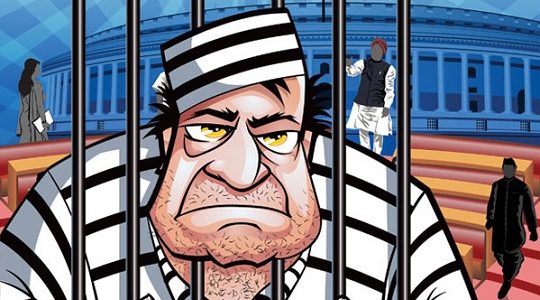
- Section 62(5): This controversial clause explicitly denies the right to vote to any person who is confined in a prison or is in the lawful custody of the police.
- Representation of the People Act, 1950 (RPA, 1950):
When Did Universal Adult Franchise Begin in India?
The journey to universal voting rights in India was a landmark achievement, marking a sharp break from the restrictive practices of the colonial era.
- Pre-Independence Era:
- During British rule, the right to vote was extremely limited.
- The Indian Councils Act of 1909 (Morley-Minto Reforms) introduced an elective element but the franchise was very narrow.
- The Government of India Act of 1919 provided for direct elections but granted voting rights only to a small fraction of the population based on high qualifications like property ownership, payment of income tax, or land holdings.
- Post-Independence Era:
- In a remarkable act of democratic faith, independent India adopted Universal Adult Franchise immediately upon independence in 1947.
- This was a radical step, especially considering that India’s literacy rate was less than 20% at the time. In contrast, many developed Western nations granted universal suffrage only after decades of struggle.
- The principle was formally enshrined in the Constitution of India, adopted on November 26, 1949.
- The first general elections held in 1951-52 were a massive exercise based on this principle, with every adult citizen having the right to vote regardless of caste, creed, race, or gender.
- Initially, the voting age was 21 years. It was lowered to 18 years by the 61st Constitutional Amendment Act, 1988.
Who is Eligible to Vote in India?
The eligibility criteria for voting are clearly defined by the Constitution and electoral laws, aiming for broad inclusivity.
- Basic Eligibility Criteria:
- A person must be a citizen of India. Non-citizens are disqualified from being enrolled in the electoral roll under Section 16 of the RPA, 1950.
- A person must not be less than 18 years of age.
- A person must be an ordinary resident of the constituency where they wish to be registered as a voter.
- Grounds for Disqualification:
- A person can be disqualified if they are found to be of unsound mind and declared so by a competent court.
- A person can be disqualified for being involved in certain corrupt or illegal practices related to elections.
- As per Section 62(5) of the RPA, 1951, individuals confined in a prison (whether convicted or under trial) or in police custody are not allowed to vote.
- This does not apply to persons under preventive detention.
What is the Controversy Surrounding Bihar’s Electoral Roll Revision?
Recent events in Bihar have highlighted the practical challenges and legal complexities surrounding the right to vote, particularly concerning the verification of citizenship and the integrity of electoral rolls.
- The Special Intensive Revision (SIR):
- The Election Commission of India (ECI) initiated a Special Intensive Revision (SIR) of electoral rolls in Bihar ahead of the state’s assembly elections.
- The stated purpose was to purify the electoral rolls by removing ineligible voters, such as deceased individuals, permanently shifted persons, and duplicate entries.
- The Supreme Court’s Intervention:
- Petitions were filed in the Supreme Court challenging the SIR process, raising concerns that it could lead to the wrongful disenfranchisement of genuine citizens.
- The court questioned the timing of the exercise and the burden of proof being placed on voters.
- The ECI assured the court that the SIR would not terminate anyone’s citizenship, as that is the prerogative of the Home Ministry, and that the process was aimed only at electoral roll purification.
- Key Issues in the Debate:
- Documentation: Concerns were raised that many rural and marginalized citizens might lack the specific documents required for verification, potentially leading to their exclusion. As of late July 2024, data suggested that over 61 lakh voters, including 7 lakh who had not submitted forms, could be out of the draft roll.
- Burden of Proof: The process was criticized for shifting the burden of proof of citizenship onto the voter, which critics argue is a violation of established legal principles.
- Voter Turnout: The controversy is particularly significant in Bihar, which recorded the lowest voter turnout among states in the 2024 Lok Sabha elections at just 56.19%. Any process that creates barriers could further depress this figure.
What is the Difference Between Constitutional and Statutory Rights?
Understanding the distinction between constitutional and statutory rights is fundamental to grasping the legal status of the right to vote.
| Feature | Constitutional Rights | Statutory Rights |
|---|---|---|
| Source | Derived directly from the Constitution of India. They are embedded in the foundational legal document of the country. | Created by a law (statute) passed by the Parliament or a State Legislature. They are subordinate to the Constitution. |
| Nature | More permanent and fundamental in nature. They form the basic structure of governance and citizen-state relations. | Flexible and can be altered. The legislature that creates the right can also modify or repeal it through a simple legislative process. |
| Amendment | Amending a constitutional right is a difficult and rigid process, often requiring a special majority in Parliament as per Article 368. | Amending a statutory right is a simple process, requiring only a simple majority in the concerned legislature. |
| Enforceability | Fundamental Rights (a subset of constitutional rights in Part III) can be directly enforced in the Supreme Court under Article 32. | Enforced through the mechanisms provided in the specific statute itself. The remedy lies in approaching lower courts or tribunals first. |
| Example | Right to Equality (Article 14), Right to Life (Article 21), Right to Property (Article 300A – a constitutional but not fundamental right). | Right to Vote (under RPA, 1951), Right to Information (under RTI Act, 2005), Right to Work (under MGNREGA, 2005). |
What are the Current Challenges to Voting Rights in India?
Despite being the world’s largest democracy with over 970 million registered electors for the 2024 general elections, India’s electoral system faces several persistent challenges that can impede the free and fair exercise of voting rights.
- Money and Muscle Power:
- The high cost of elections often favors wealthy candidates and parties, creating an uneven playing field.
- The use of money to influence voters through direct cash distribution or other inducements remains a significant problem.
- In some areas, the use of intimidation and muscle power to capture booths or prevent certain communities from voting still persists.
- Criminalization of Politics:
- A large number of candidates with criminal backgrounds contest and win elections. This undermines the integrity of the democratic process and affects policy-making.
- Misinformation and Social Media:
- The rapid spread of fake news and propaganda through social media platforms is a major challenge, often used to polarize voters and manipulate public opinion.
- Electoral Roll Errors:
- The issue of faulty electoral rolls, as highlighted in the Bihar SIR case, is a nationwide problem.
- Inclusion of bogus voters and exclusion of genuine voters can significantly impact election outcomes.
- Voter Apathy:
- Despite high-stakes elections, voter turnout can be low in certain areas, particularly among urban populations. The overall turnout in the 2024 Lok Sabha polls was 65.79%, indicating that a large portion of the electorate did not vote.
What is the Way Forward for Strengthening Voting Rights?
Strengthening the right to vote requires continuous electoral reforms aimed at enhancing transparency, inclusivity, and the integrity of the process.
- Electoral Reforms:
- Implementing recommendations from bodies like the Law Commission of India and the Election Commission to decriminalize politics and curb the influence of money power.
- Strengthening laws to counter the spread of misinformation during election campaigns.
- Improving Electoral Roll Accuracy:
- Leveraging technology to create a more robust and error-free system for voter registration and verification, ensuring no eligible citizen is left out.
- Conducting regular and transparent revision exercises without placing an undue burden on citizens.
- Enhancing Voter Awareness:
- Continuing and expanding voter education programs (SVEEP) to increase participation and encourage informed voting, especially in regions with historically low turnout.
- Re-evaluating Legal Provisions:
- There is a need for a wider debate on provisions like Section 62(5) of the RPA, 1951, which disenfranchises prisoners. Many democracies allow prisoners to vote, and the blanket ban in India is often questioned on grounds of human rights and reformation.
Conclusion
The right to vote in India stands as a cornerstone of its democracy, yet its legal status as a statutory right rather than a fundamental one creates a unique and complex dynamic. While the Constitution provides the grand vision of Universal Adult Franchise, the operational details are governed by parliamentary laws, making the right susceptible to legislative changes. The ongoing debates, whether in courtrooms over Bihar’s electoral rolls or in academic circles about judicial interpretations, underscore the delicate balance between constitutional ideals and statutory realities. As India’s democracy evolves, the challenge remains to protect and strengthen this vital right, ensuring that it is not just a legal provision but a lived reality for every eligible citizen, free from undue restrictions and procedural hurdles.
Q. Is the classification of the right to vote as a mere statutory right consistent with the democratic and republican character of the Indian polity? Critically analyze. (250 words)

Related Posts

If you like this post, please share your feedback in the comments section below so that we will upload more posts like this.

Responses