
Ordinarily Resident in Electoral Rolls: Meaning, Significance and Challenges


From Current Affairs Notes for UPSC » Editorials & In-depths » This topic
In July 2025, the Election Commission of India (ECI) launched a Special Intensive Revision (SIR) of Bihar’s electoral rolls — the first such exercise in two decades — renewing debate on what constitutes being “ordinarily resident” for voter registration. This door-to-door drive to update voter lists ahead of state elections has raised questions about the status of migrant workers and other voters absent from their home addresses under this criterion. While the ECI maintains that the exercise will improve roll accuracy and include all genuine voters, opposition parties fear that strict proof-of-residence requirements could disenfranchise up to two crore voters. The issue has drawn attention to the definition of ‘ordinarily resident’ and the balance between electoral integrity and inclusive democracy.
What does ‘ordinarily resident’ mean in electoral rolls?
The Representation of the People Act, 1950 requires a person to be “ordinarily resident” in a constituency to register as a voter there (Section 19). In simple terms, this means the constituency is the person’s usual home. The law clarifies that merely owning a house in an area is not enough to qualify (one must actually live there), and that a temporary absence from one’s home (for work, education, etc.) doesn’t cause loss of residency. Practically, a person can be enrolled in only one place at a time, anchoring each voter to a single constituency.
Why is the ‘ordinarily resident’ requirement necessary for voter registration?
- It roots voters in the community where they live, so that leaders are elected by people who have a genuine stake in local affairs. This fosters accountability, as representatives know they are answerable to residents who actually reside in the area.
- It safeguards the integrity of elections by minimizing fraud and duplication. Requiring ordinary residence means each person can register in only one constituency, which prevents multiple voting. It also ensures only legitimate voters (local residents who are Indian citizens) determine the outcome in a constituency, keeping out ineligible or non-local influences.
Where does the ‘ordinarily resident’ criterion apply in elections?
The requirement of ordinary residence applies across all levels of elections in India. Whether it is a parliamentary constituency, an assembly segment, or a local municipal ward, a person must register to vote where they actually reside.
When was the ‘ordinarily resident’ rule established, and how has it evolved over time?
- The ordinary residence criterion has been in place since India’s first general elections. It was incorporated in 1950 as a foundational rule for preparing electoral rolls, reflecting the belief that voters should have a fixed locality.
- Over time, the concept has been adjusted to accommodate changing circumstances. For example, a 2010 amendment added Section 20A, enabling Non-Resident Indians (NRIs) to register and vote in Indian elections at their home address despite living abroad for long periods. In recent years, efforts like the 2025 special revision in Bihar have brought this once-obscure term into public debate, highlighting the need to interpret it in step with modern realities.
Who is considered an ‘ordinarily resident’ for voting purposes?
- General rule: An individual is deemed ordinarily resident in a constituency if they are an Indian citizen aged 18 or above who usually lives there with an intention to remain. This fundamental condition allows one to register as a voter of that constituency.
- Besides local residents, certain citizens are deemed ordinarily resident of their home constituency even while living elsewhere: armed forces personnel, state armed police serving outside their state, central government employees on foreign postings, and persons holding specific offices declared by the President (in consultation with ECI) fall in this category. These service voters (and their spouses residing with them) can vote via postal ballot or proxy from their home constituency.
- Overseas voters (NRIs): Since 2010, Indian citizens residing abroad can be enrolled at their last address in India (as stated in their passport) as overseas electors. They are considered ordinarily resident at that address for voting, although they must travel to that constituency to cast their vote in person.
- However, certain situations do not confer ordinary residency: merely owning property in a place without living there, or being present in an area solely due to imprisonment or institutional stay, does not qualify someone as an ordinary resident of that location.
How does ‘ordinarily resident’ status vary across different scenarios?
| Scenario | Ordinary Residence Status and Voting Implication |
|---|---|
| Temporarily away (student, worker) | Still counted as resident at home (if intent to return); remains on home roll. |
| Armed forces/government posted away | Deemed resident at original home (service voter); votes via postal/proxy. |
| NRI living abroad | Considered resident at Indian address (overseas elector); must travel home to vote. |
How is ‘ordinarily resident’ status determined and verified?
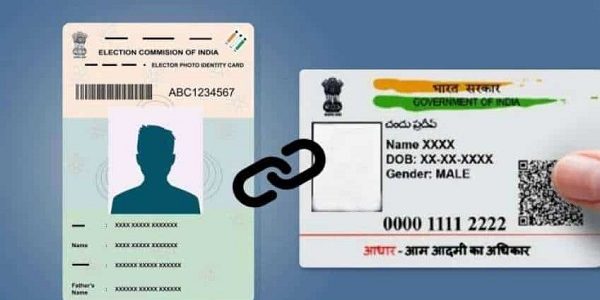
- Election authorities confirm a person’s ordinary residence through on-ground checks and documentation. Booth Level Officers (BLOs) conduct door-to-door visits to verify if the person actually resides at the claimed address. Officials also examine various address proofs (such as utility bills or ID cards) submitted by applicants, and cross-check databases to remove duplicates (for example, linking voter databases can flag duplicate registrations).
- If any doubt arises, it is resolved by considering all relevant facts case-by-case (as provided in RPA 1950’s rules). Judicial interpretations offer guidance: for instance, the Gauhati High Court (1999) noted that “ordinary residence” implies a permanent dwelling at a place, an intention to remain there, and recognition by others in the community as a resident. These criteria help determine a person’s true place of residence when disputes occur.
What is the significance of being ‘ordinarily resident’ in a constituency?
- Authentic local representation: The ordinary resident requirement ensures that voters in a constituency are the people who truly live there and are directly affected by local governance. This makes elected officials more accountable to genuine local constituents and strengthens the representative character of democracy.
- Integrity of the electoral roll: Linking voting rights to actual residence helps keep voter lists accurate by excluding fictitious or non-resident entries. It reduces opportunities for fraudulent voting (such as voters casting ballots in areas where they don’t reside) and prevents manipulation like mobilizing outsiders to influence an election. It bolsters trust that each constituency’s results reflect its bona fide population.
What are the limitations of the current ‘ordinarily resident’ rules?
- Ambiguous definition: The term “ordinarily resident” lacks a clear-cut definition of how long or what conditions establish residency. This leads to inconsistent application and confusion.
- Dynamic population vs static rolls: In a country with high mobility, the system relies on people re-registering whenever they move, which often doesn’t happen. This results in outdated rolls (with names of people who have shifted out) and disenfranchisement of migrants (who might not vote anywhere because they haven’t transferred their registration). Administratively, tracking millions of address changes is very challenging and often cannot keep up with the pace of migration.
- Difficulties for those without proof or stable address: Citizens who lack formal rental agreements or documents for their address – for example, homeless individuals, nomadic groups, or migrant laborers in transient housing – struggle to convince authorities of their residency. Even though procedures exist for such cases, in practice these groups are often left out. Requiring strict documentation for ordinary residence can unintentionally exclude legitimate voters who live in informal circumstances.
What challenges arise in implementing the ‘ordinarily resident’ criterion?
- Huge migrant population: Internal migration in India is massive (tens of crores of people live outside their place of origin), making it difficult to keep voter lists accurate. Many migrants remain registered back home while living elsewhere, or fail to enroll at their new location, creating scope for errors and missed voters.
- Documentation and risk of disenfranchisement: Verification drives sometimes demand extensive paperwork to prove one’s residence (and implicitly, citizenship), which many eligible voters may not readily have. For instance, in the Bihar SIR, about 2.9 crore voters not on the 2003 rolls were asked to provide documents on short notice, sparking fears of mass disenfranchisement of those unable to produce such papers. A rushed verification, especially right before an election, risks dropping genuine voters due to lack of documents.
- Political sensitivities and trust deficit: Efforts to strictly enforce ordinary residence criteria can become highly politicized. Some fear these exercises act as a de facto citizenship test (like an NRC) aimed at certain communities under the guise of roll purification. In Bihar, opposition leaders argued the drive could disproportionately affect particular groups of voters. This highlights the need for the process to be transparent and neutral, so the public trusts that the goal is merely to clean the rolls, not to exclude any segment unfairly.
What is the way forward on the ‘ordinarily resident’ issue?
- Use technology for dynamic rolls: Employ IT solutions to keep voter lists updated as people move. For instance, linking voter ID databases with other government databases can help automatically detect and remove duplicate entries and update addresses when citizens relocate. Such digital integration would reduce the need for large-scale manual verifications.
- Enable remote voting for migrants: To include internal migrants and overseas citizens in the electoral process, options like postal ballots, proxy voting, or secure online voting should be provided. Allowing people to vote in their home constituency without physically being there (through carefully designed remote voting methods) would ensure mobility does not equal loss of franchise.
- Clear and inclusive processes: The rules for determining ordinary residence should be made clear and uniform nationwide. The ECI can issue detailed guidelines so that field officials apply the criteria consistently. At the same time, documentation requirements should be simplified. A wider range of proofs (including informal documents or affidavits) should be accepted, and special outreach drives can help register those without formal addresses. Public awareness campaigns can encourage voters to update their addresses in time.
Conclusion
“Ordinarily resident” has long been a cornerstone of India’s electoral system, tying voters to their local community and thereby upholding accountable, integrity-driven elections. However, in an era of greater mobility, this requirement faces new tests. The recent Bihar experience shows that procedures must adapt so that no genuine voter is disenfranchised even as outdated or illegitimate entries are pruned. Going forward, the challenge is to strike a balance that preserves the integrity of the rolls while accommodating the reality of migration and diverse living situations in modern India.
Q. Critically examine the challenges in implementing the ‘ordinarily resident’ criterion for voter registration in India. Suggest measures to enhance inclusivity and accuracy of electoral rolls. (250 words)

Related Posts



If you like this post, please share your feedback in the comments section below so that we will upload more posts like this.

Responses