[Newsbits] 13.02.2024: Egg Freezing, Floor Test, SWATI POrtal & More

newsbits mindmap notes
/ Biotechnology
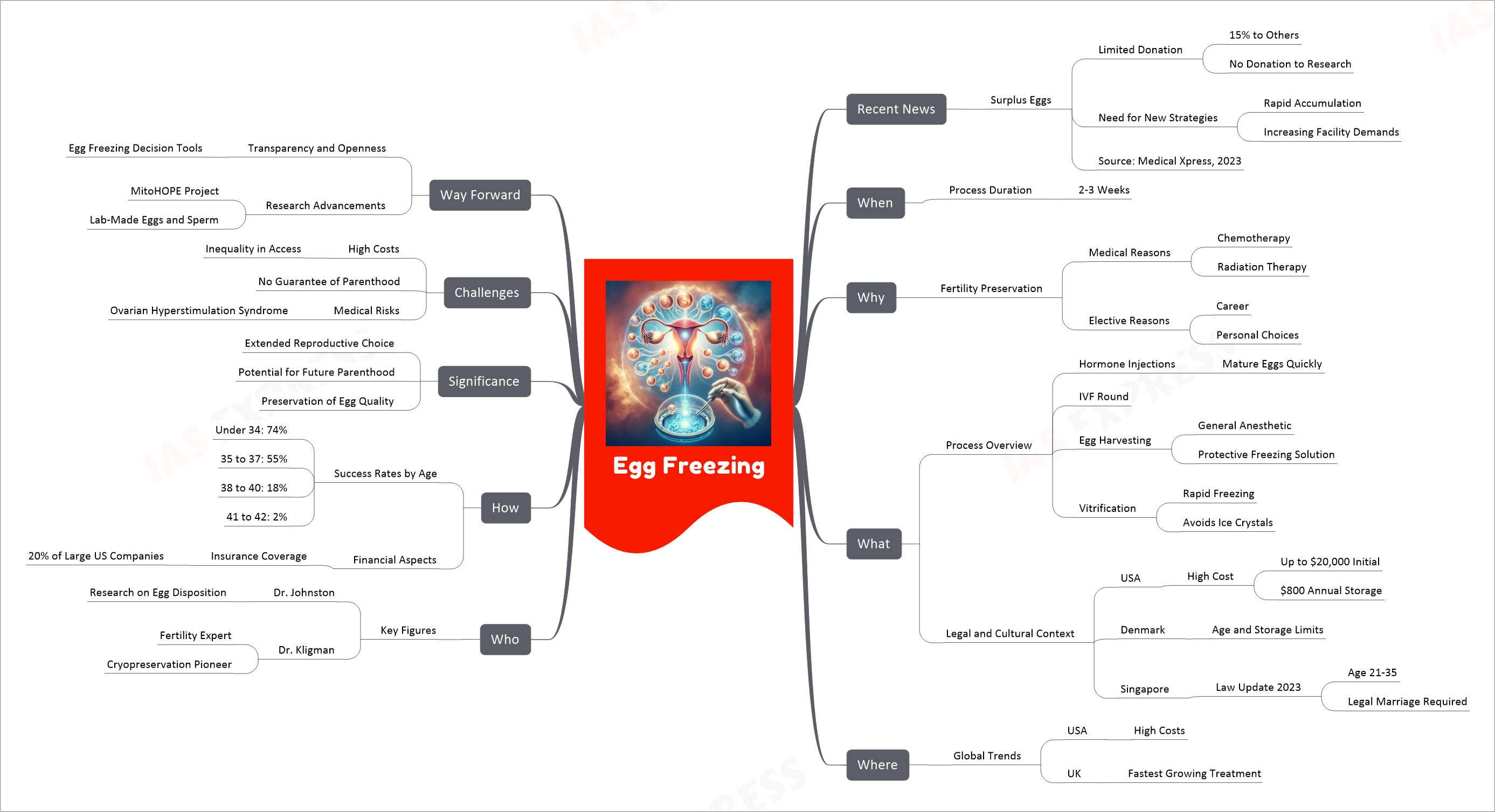
Egg Freezing mind map
  Recent News
    Surplus Eggs
      Limited Donation
        15% to Others
        No Donation to Research
      Need for New Strategies
        Rapid Accumulation
        Increasing Facility Demands
      Source: Medical Xpress, 2023
  When
    Process Duration
      2-3 Weeks
  Why
    Fertility Preservation
      Medical Reasons
        Chemotherapy
        Radiation Therapy
      Elective Reasons
        Career
        Personal Choices
  What
    Process Overview
      Hormone Injections
        Mature Eggs Quickly
      IVF Round
      Egg Harvesting
        General Anesthetic
        Protective Freezing Solution
      Vitrification
        Rapid Freezing
        Avoids Ice Crystals
    Legal and Cultural Context
      USA
        High Cost
          Up to $20,000 Initial
          $800 Annual Storage
      Denmark
        Age and Storage Limits
      Singapore
        Law Update 2023
          Age 21-35
          Legal Marriage Required
  Where
    Global Trends
      USA
        High Costs
      UK
        Fastest Growing Treatment
  Who
    Key Figures
      Dr. Johnston
        Research on Egg Disposition
      Dr. Kligman
        Fertility Expert
        Cryopreservation Pioneer
  How
    Success Rates by Age
      Under 34: 74%
      35 to 37: 55%
      38 to 40: 18%
      41 to 42: 2%
    Financial Aspects
      Insurance Coverage
        20% of Large US Companies
  Significance
    Extended Reproductive Choice
    Potential for Future Parenthood
    Preservation of Egg Quality
  Challenges
    High Costs
      Inequality in Access
    No Guarantee of Parenthood
    Medical Risks
      Ovarian Hyperstimulation Syndrome
  Way Forward
    Transparency and Openness
      Egg Freezing Decision Tools
    Research Advancements
      MitoHOPE Project
      Lab-Made Eggs and Sperm

Egg freezing, also known as cryopreservation, is a process where a woman’s eggs are extracted, rapidly frozen, and stored for future use. This fertility preservation technique, developed initially for patients undergoing treatments like chemotherapy, has become more widely available and is now an option for women who wish to delay childbearing for various reasons, including career or personal choices. The process involves hormone injections to mature eggs, followed by an IVF round and the harvesting of eggs under anesthesia. Despite its rising popularity and technological advancements, egg freezing presents challenges such as high costs, unequal access, and no guaranteed success. Recent data shows success rates decrease with age, highlighting the importance of informed decision-making in this personal and complex choice.
/ Australia
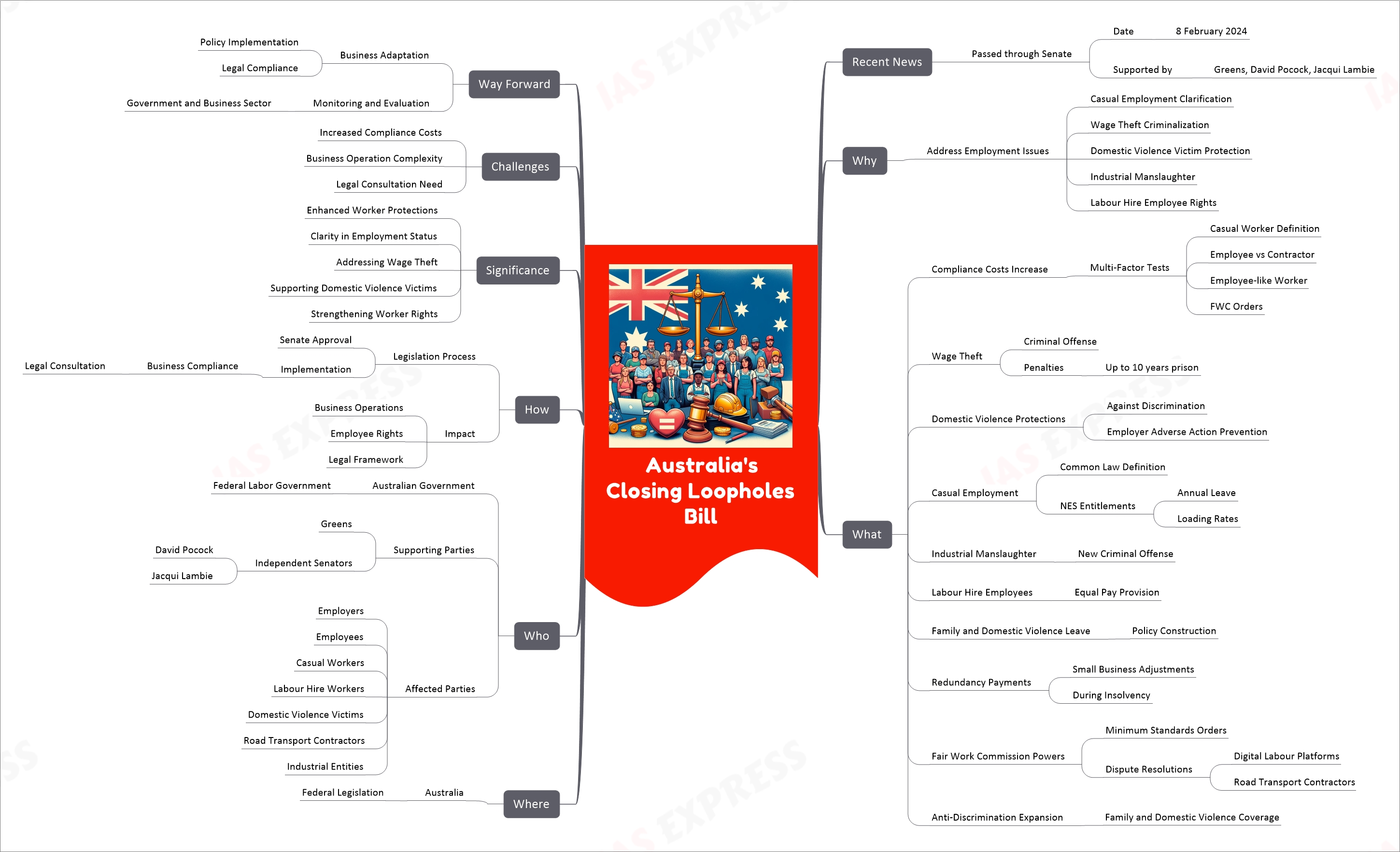
Australia's Closing Loopholes Bill mind map
  Recent News
    Passed through Senate
      Date
        8 February 2024
      Supported by
        Greens, David Pocock, Jacqui Lambie
  Why
    Address Employment Issues
      Casual Employment Clarification
      Wage Theft Criminalization
      Domestic Violence Victim Protection
      Industrial Manslaughter
      Labour Hire Employee Rights
  What
    Compliance Costs Increase
      Multi-Factor Tests
        Casual Worker Definition
        Employee vs Contractor
        Employee-like Worker
        FWC Orders
    Wage Theft
      Criminal Offense
      Penalties
        Up to 10 years prison
    Domestic Violence Protections
      Against Discrimination
      Employer Adverse Action Prevention
    Casual Employment
      Common Law Definition
      NES Entitlements
        Annual Leave
        Loading Rates
    Industrial Manslaughter
      New Criminal Offense
    Labour Hire Employees
      Equal Pay Provision
    Family and Domestic Violence Leave
      Policy Construction
    Redundancy Payments
      Small Business Adjustments
      During Insolvency
    Fair Work Commission Powers
      Minimum Standards Orders
      Dispute Resolutions
        Digital Labour Platforms
        Road Transport Contractors
    Anti-Discrimination Expansion
      Family and Domestic Violence Coverage
  Where
    Australia
      Federal Legislation
  Who
    Australian Government
      Federal Labor Government
    Supporting Parties
      Greens
      Independent Senators
        David Pocock
        Jacqui Lambie
    Affected Parties
      Employers
      Employees
      Casual Workers
      Labour Hire Workers
      Domestic Violence Victims
      Road Transport Contractors
      Industrial Entities
  How
    Legislation Process
      Senate Approval
      Implementation
        Business Compliance
          Legal Consultation
    Impact
      Business Operations
      Employee Rights
      Legal Framework
  Significance
    Enhanced Worker Protections
    Clarity in Employment Status
    Addressing Wage Theft
    Supporting Domestic Violence Victims
    Strengthening Worker Rights
  Challenges
    Increased Compliance Costs
    Business Operation Complexity
    Legal Consultation Need
  Way Forward
    Business Adaptation
      Policy Implementation
      Legal Compliance
    Monitoring and Evaluation
      Government and Business Sector

The Closing Loopholes Bill in Australia, passed in February 2024, represents a significant overhaul of the country’s industrial relations framework. The legislation aims to address key employment issues, including clarifying the definition of casual employment, criminalizing wage theft, protecting domestic violence victims, introducing industrial manslaughter as a criminal offense, and ensuring equal pay for labour hire employees. It also expands the jurisdiction of the Fair Work Commission and anti-discrimination provisions. The bill’s passage, supported by the Greens, David Pocock, and Jacqui Lambie, signifies a major shift in Australian employment law, emphasizing enhanced protections for workers and greater clarity in employment status, albeit with increased compliance costs and operational complexities for businesses.
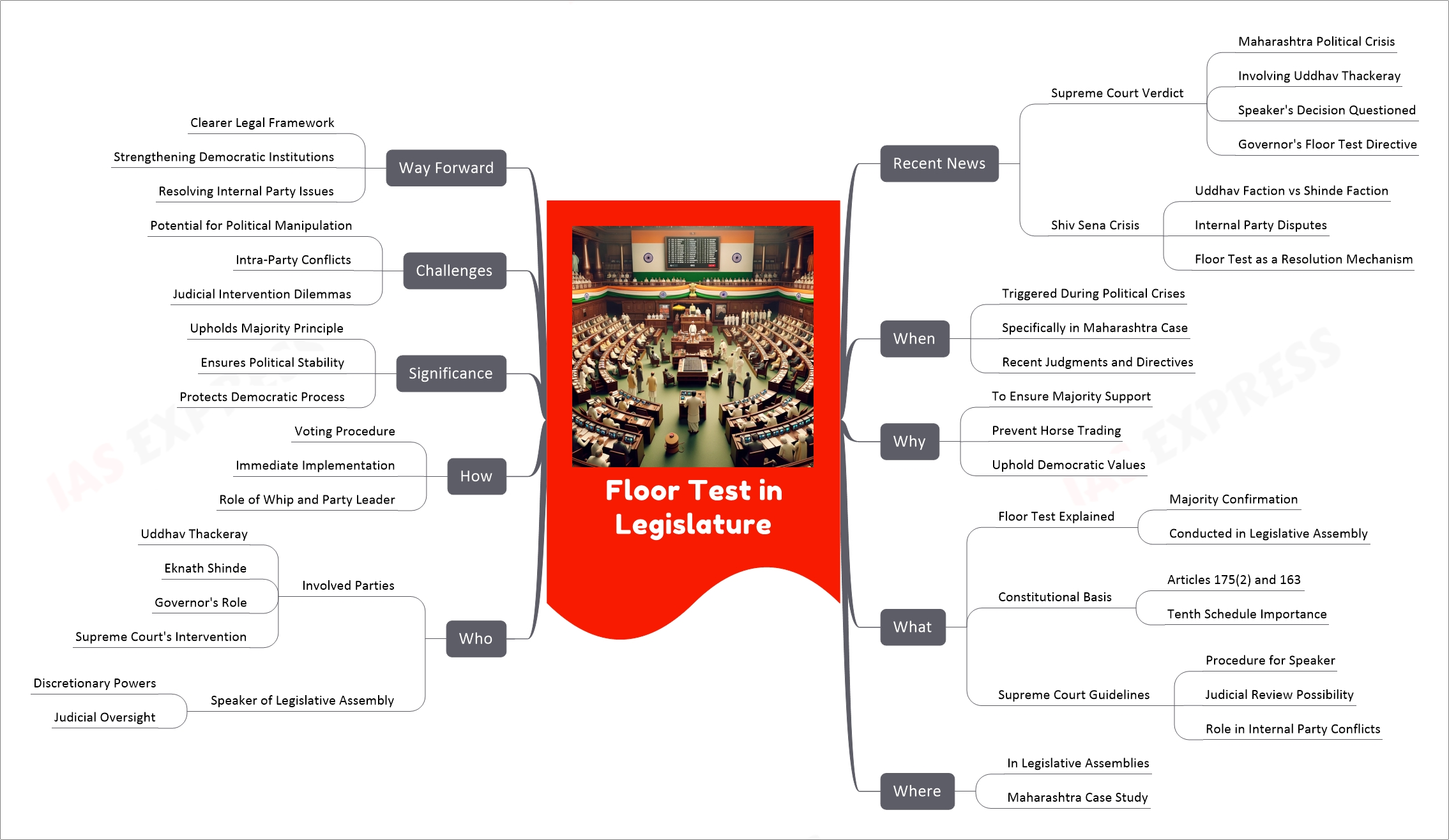
Floor Test in Legislature mind map
  Recent News
    Supreme Court Verdict
      Maharashtra Political Crisis
      Involving Uddhav Thackeray
      Speaker's Decision Questioned
      Governor's Floor Test Directive
    Shiv Sena Crisis
      Uddhav Faction vs Shinde Faction
      Internal Party Disputes
      Floor Test as a Resolution Mechanism
  When
    Triggered During Political Crises
    Specifically in Maharashtra Case
    Recent Judgments and Directives
  Why
    To Ensure Majority Support
    Prevent Horse Trading
    Uphold Democratic Values
  What
    Floor Test Explained
      Majority Confirmation
      Conducted in Legislative Assembly
    Constitutional Basis
      Articles 175(2) and 163
      Tenth Schedule Importance
    Supreme Court Guidelines
      Procedure for Speaker
      Judicial Review Possibility
      Role in Internal Party Conflicts
  Where
    In Legislative Assemblies
    Maharashtra Case Study
  Who
    Involved Parties
      Uddhav Thackeray
      Eknath Shinde
      Governor's Role
      Supreme Court's Intervention
    Speaker of Legislative Assembly
      Discretionary Powers
      Judicial Oversight
  How
    Voting Procedure
    Immediate Implementation
    Role of Whip and Party Leader
  Significance
    Upholds Majority Principle
    Ensures Political Stability
    Protects Democratic Process
  Challenges
    Potential for Political Manipulation
    Intra-Party Conflicts
    Judicial Intervention Dilemmas
  Way Forward
    Clearer Legal Framework
    Strengthening Democratic Institutions
    Resolving Internal Party Issues

A floor test in a legislature is a procedure used to determine whether the executive (government) enjoys the support of the majority of legislators. It is typically conducted through a vote in the legislative assembly. This mechanism becomes crucial during political crises, such as the recent one in Maharashtra, India, involving factions within the Shiv Sena party. The floor test is intended to uphold democratic values by ensuring that the government has the majority support necessary to govern effectively. It helps prevent political instability and practices like horse trading. The role of the Speaker and the Governor, along with guidelines from the Supreme Court, play a significant role in the process and outcome of a floor test.
Climate Tipping Points mind map
  Recent News
    Catastrophic Change Looms
      Earth nears climate tipping points
      Reports highlight urgency
    June Extremes
      Start of big climate system change
      Global indicators show red warnings
    IPCC Report AR6
      Revised estimates on tipping points
      Likelihood of reaching between 1°C and 2°C warming
    New Research
      Costs of climate tipping points explored
      Focus on response options
  When
    June 2023
      Notable for climate change indicators
    Historical Context
      First major assessment in 2008
      Recent IPCC assessments update views
  Why
    Global Warming
      Exceeds 1.5°C threshold
      Multiple tipping points triggered
    Human Activities
      Carbon emissions
      Deforestation
      Pollution
  What
    Major Tipping Points
      Melting of ice sheets
        Greenland and West Antarctic
      Die-offs of warm-water reefs
      North Atlantic subpolar gyre circulation
      Thawing of permafrost
    ENSO
      El Niño-Southern Oscillation
      Impact on global climate
    Interaction Between Tipping Points
      Melting ice sheets affecting ocean currents
      Changes in one system affecting others
  Where
    Global Impact
      Affects diverse regions worldwide
    Specific Areas
      Arctic and Antarctic ice sheets
      Tropical Pacific (ENSO)
      Amazon rainforest
  Who
    Scientists and Researchers
      Study climate tipping points
    International Organizations
      IPCC, UNU
    Public Perception
      Growing awareness and concern
  How
    Climate Modeling
      Advanced tools for prediction
    Observations and Records
      Historical and current data analysis
  Significance
    Awareness and Action
      Increased understanding of risks
      Drives policy and behavioral changes
    Technological Advancements
      Potential solutions and mitigation
  Challenges
    Irreversible Changes
      Risk of permanent ecological damage
    Social and Political Hurdles
      Need for global cooperation and action
  Way Forward
    Immediate Emission Reductions
      Essential to keep warming below 2°C
    Positive Tipping Points
      Focus on technology, economy, society
    Social Change
      Shifts in behavior and thinking
    Technological Solutions
      Emphasis on innovation and adaptation

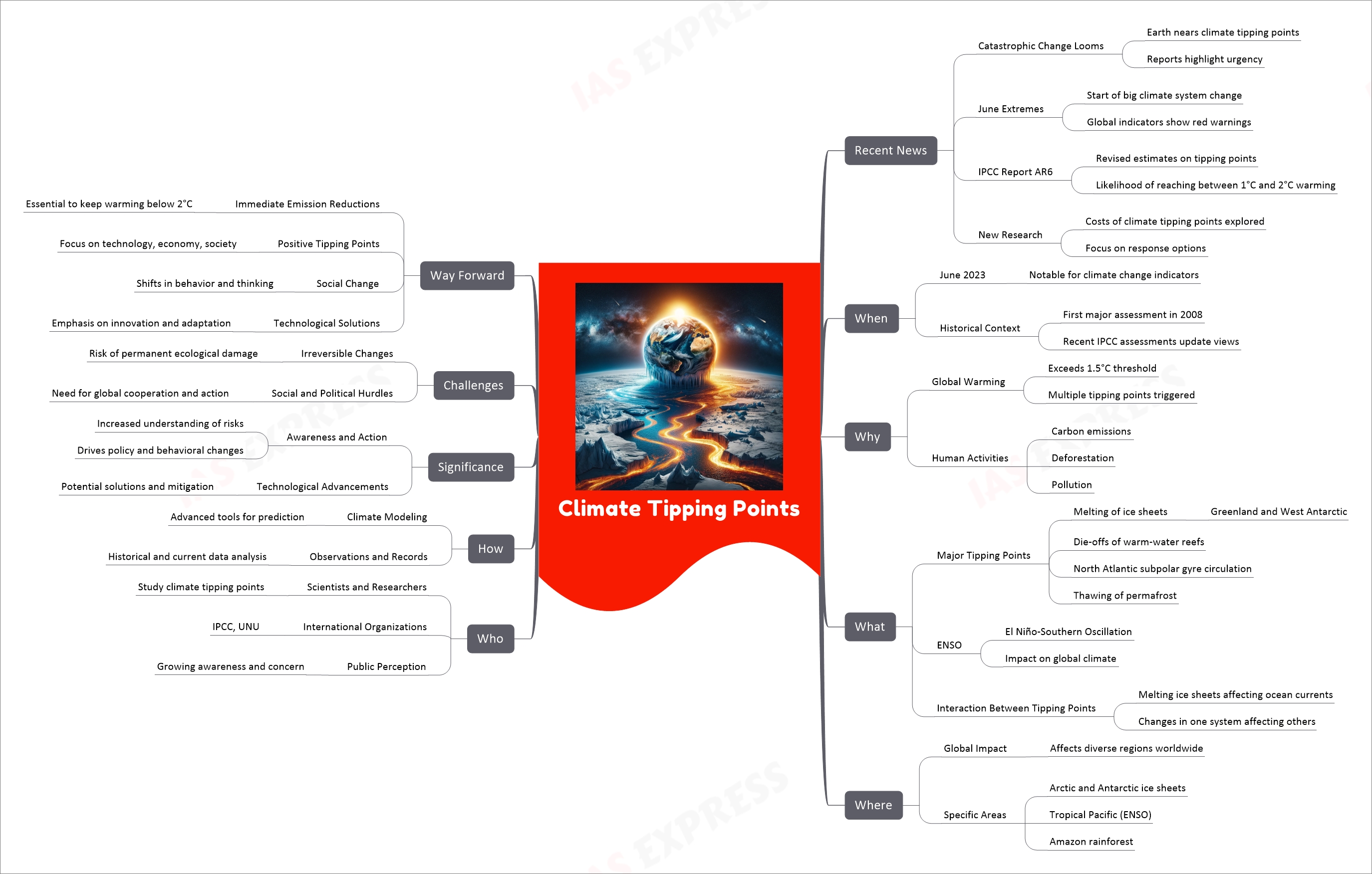
Climate tipping points refer to critical thresholds in the Earth’s climate system, beyond which significant and potentially irreversible changes occur. Recent news highlights an increased likelihood of reaching these points due to global warming exceeding 1.5°C. Key tipping points include the melting of major ice sheets, changes in ocean currents, and the thawing of permafrost. The interaction between different tipping points, like the El Niño-Southern Oscillation (ENSO) and ice sheet melting, can lead to cascading effects. Awareness of these risks is growing among scientists, international organizations, and the public, leading to calls for immediate emission reductions and the exploration of technological solutions and positive social changes to mitigate these effects.
/ Conservation Areas
Biodiversity Heritage Sites (BHS) mind map
    Definition
        Unique ecosystems
        Rich biodiversity
            Wild species
            Domesticated species
            Intra-specific categories
        Features
            High endemism
            Rare and Threatened species
            Keystone species
            Evolutionary significance
            Wild ancestors of domestic species
            Fossil beds
            Cultural and Aesthetic values
    Biological Diversity Act 2002
        Legal Framework
        Protection and Conservation
        Management Guidelines
    Gupteswar Forest, Odisha
        Recent News
            Designation as BHS
            Chief Minister Naveen Patnaik's announcement
        Location
            Adjacent to Gupteswar cave shrine
            Koraput district
        Area
            350 hectares
        Biodiversity
            608 faunal species
            Floral Diversity
                182 species of trees
                76 species of shrubs
                177 species of herbs
                69 species of climbers
                14 species of orchids
                Threatened medicinal plants
        Conservation Significance
            Endangered and Endemic species protection
            Long-term conservation strategy
    Other BHS in Odisha
        Mandasaru Hills, Kandhamal
        Mahendragiri Hills, Gajapati
        Gandhamardan Hills, Balangir and Bargarh

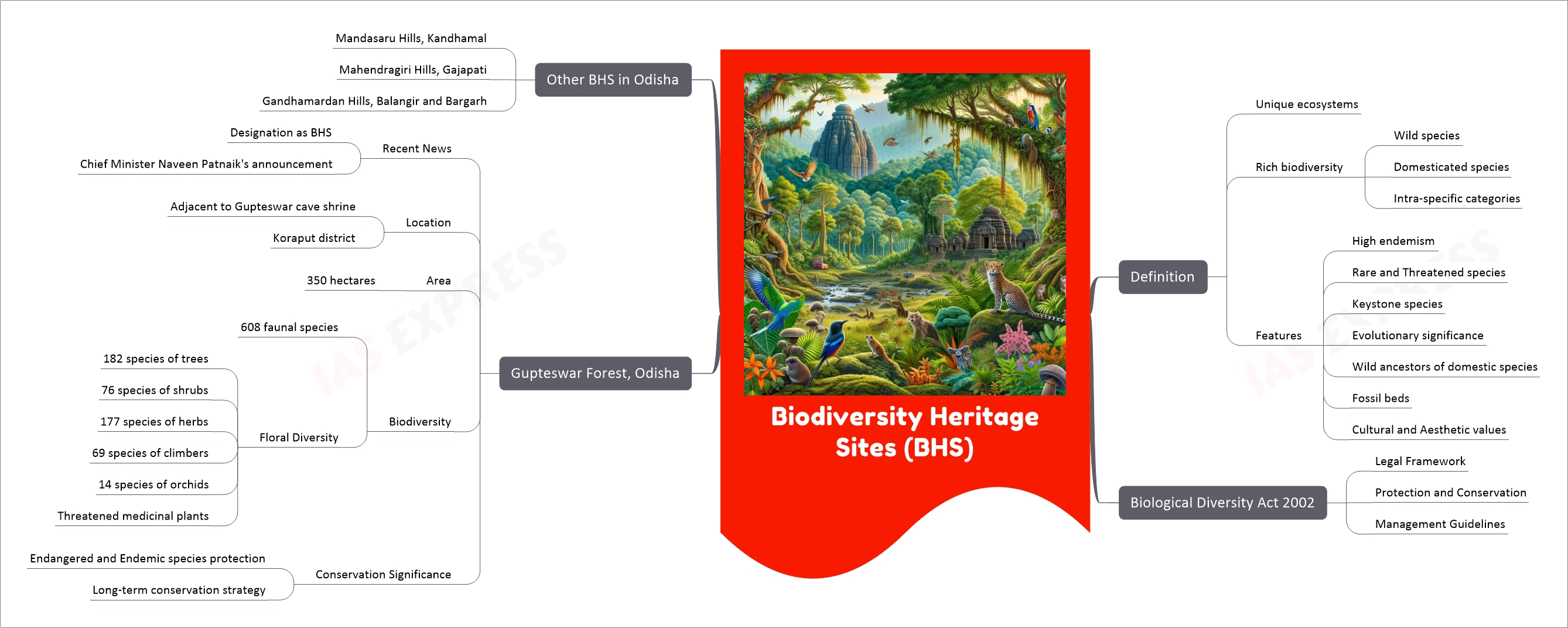
Biodiversity Heritage Sites (BHS) are unique ecosystems characterized by their rich biodiversity, including a variety of wild and domesticated species. Under the Biological Diversity Act 2002, these sites are legally protected and managed for conservation. Recently, the Gupteswar Forest in Odisha’s Koraput district was designated as a BHS, joining other significant sites in the state like the Mandasaru, Mahendragiri, and Gandhamardan Hills. Spread over 350 hectares, Gupteswar Forest is home to 608 faunal species and a wide range of flora, playing a crucial role in the conservation of endangered and endemic species.
286th Law Commission Report mind map
  Recent News
    Released recently
  Epidemic Plan and SOP
    Recommendations
      Formulate Epidemic Plan
        Define roles
          Central government
          State government
          Local authorities
        Consultation required
          With stakeholders
          Including private hospitals
          Involve experts
        Plan Provisions
          Quarantine measures
          Privacy-friendly surveillance
          Transportation of medical supplies
          Public information dissemination
      Standard Operating Procedure (SOP)
        Ensures coordinated response
        Across different government levels
      Empowerment of Authorities
        State governments
          Take preventive measures locally
        Central government
          Frame binding regulations
          During escalated threats
      Amendment of EDA
        Enforcement
          Preparation
          Revision
          Implementation of Epidemic Plan
    Purpose of the Report
      Demarcate roles and powers
      Quick and coordinated response
      Protection of rights during public health emergencies
      Robust legal frameworks for epidemic management
  About Epidemic Diseases Act of 1897 (EDA)
    Historical context
      Enacted by British Raj
      Colonial-era law
    Main provisions
      Special measures for outbreaks
      Regulations include
        Inspection
        Isolation
        Quarantine
    Use in modern times
      Invoked during COVID-19 pandemic in 2020

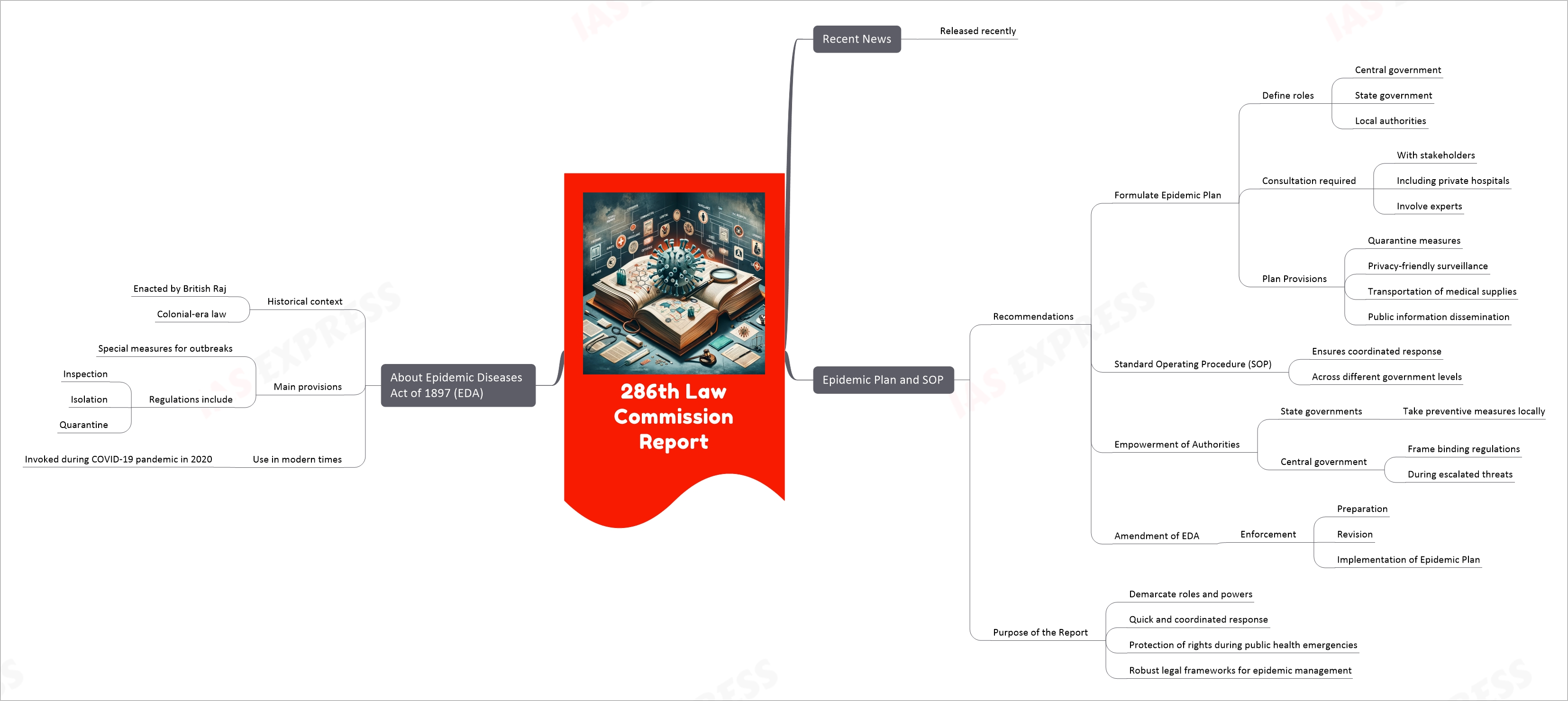
The 286th Law Commission Report emphasizes the need for a comprehensive Epidemic Plan and Standard Operating Procedure (SOP) to effectively address future epidemics. It critiques the limitations of the Epidemic Diseases Act of 1897 (EDA), highlighting its outdatedness and lack of clarity on power division between the central and state governments, leading to uncoordinated epidemic responses. The report’s key recommendations include formulating a detailed Epidemic Plan delineating the roles of central, state, and local authorities, and consulting stakeholders in its drafting. The plan should encompass aspects like quarantine, surveillance, transport of medical supplies, and public information dissemination. An SOP is proposed for a coordinated government response at different levels, with states empowered to act during initial outbreaks and the central government taking over as threats escalate. The report suggests amending the EDA to mandate the preparation, revision, and implementation of the Epidemic Plan. These recommendations aim to establish clear roles and powers for authorities, ensuring quick, coordinated, and rights-protecting responses in future public health crises, highlighting the importance of robust legal frameworks in an interconnected world.
/ Biodiversity
Global Biodiversity Framework Fund mind map
  Launch
    August 2023
    7th Assembly of GEF
    Vancouver, Canada
  Ratification
    By 186 countries
  Goals
    Halt and Reverse Biodiversity Loss by 2030
    Recovery Path by 2050
  Kunming-Montreal Global Biodiversity Framework
    Foundation for GBFF
  Funding
    Public, Private, Philanthropic
    Quick Disbursement
    Enhanced Indigenous Peoples and Local Communities Support
  Governance
    GBF Fund Council
      Members
        16 Developing Countries
        14 Developed Countries
        2 Central and Eastern Europe, Former Soviet Union
      Decision-Making
        Consensus-based
  Sunset Provisions
    Until 2030 unless decided otherwise
  Financial Goals
    USD 200 billion per year by 2030
    Double International Flows by 2025
    At least USD 30 billion/yr by 2030
  Initial Contributions
    Canada
      200 Million Canadian Dollars
    United Kingdom
      10 Million Pounds
  Partners
    Countries
    GEF Agencies
    Conventions
    Civil Society Organizations
    Private Sector
  Challenges
    Need for More Donors
    Meeting Financing Targets
    Diverse Needs of IPLCs
  Significance
    Agrifood Systems
    Climate Action
    Biodiversity Conservation
    Indigenous-Led Initiatives
      20% Resources Allocation

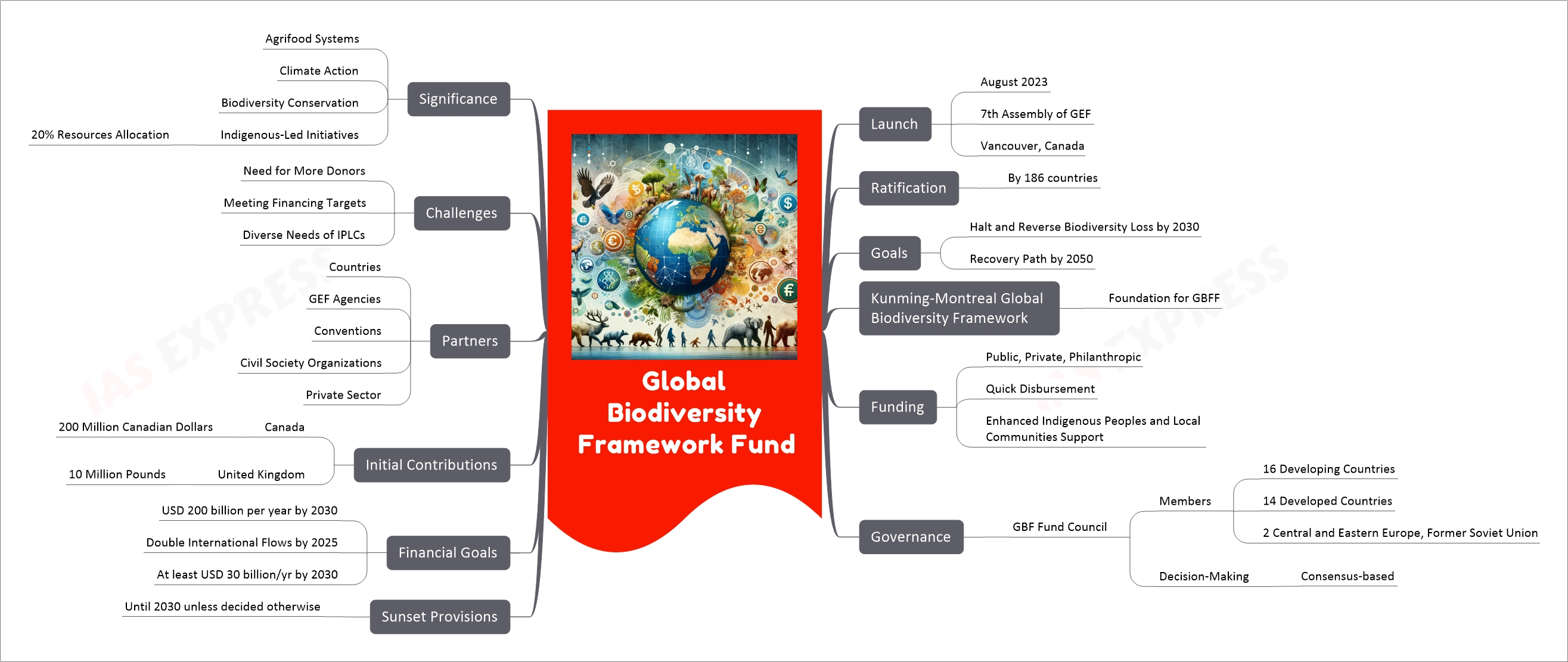
The Global Biodiversity Framework Fund (GBFF), launched in August 2023 at the 7th Assembly of the Global Environment Facility in Vancouver, Canada, represents a significant global initiative to combat biodiversity loss. Ratified by 186 countries, the GBFF aims to halt and reverse biodiversity loss by 2030 and set nature on a recovery path by 2050. Grounded in the Kunming-Montreal Global Biodiversity Framework, it focuses on streamlined funding from public, private, and philanthropic sources, with special attention to Indigenous Peoples and local communities. Governed by a diverse council, it seeks to mobilize USD 200 billion annually by 2030. Despite its ambitious goals, the GBFF faces challenges like securing sufficient funding and addressing the diverse needs of Indigenous Peoples and local communities.
/ Women
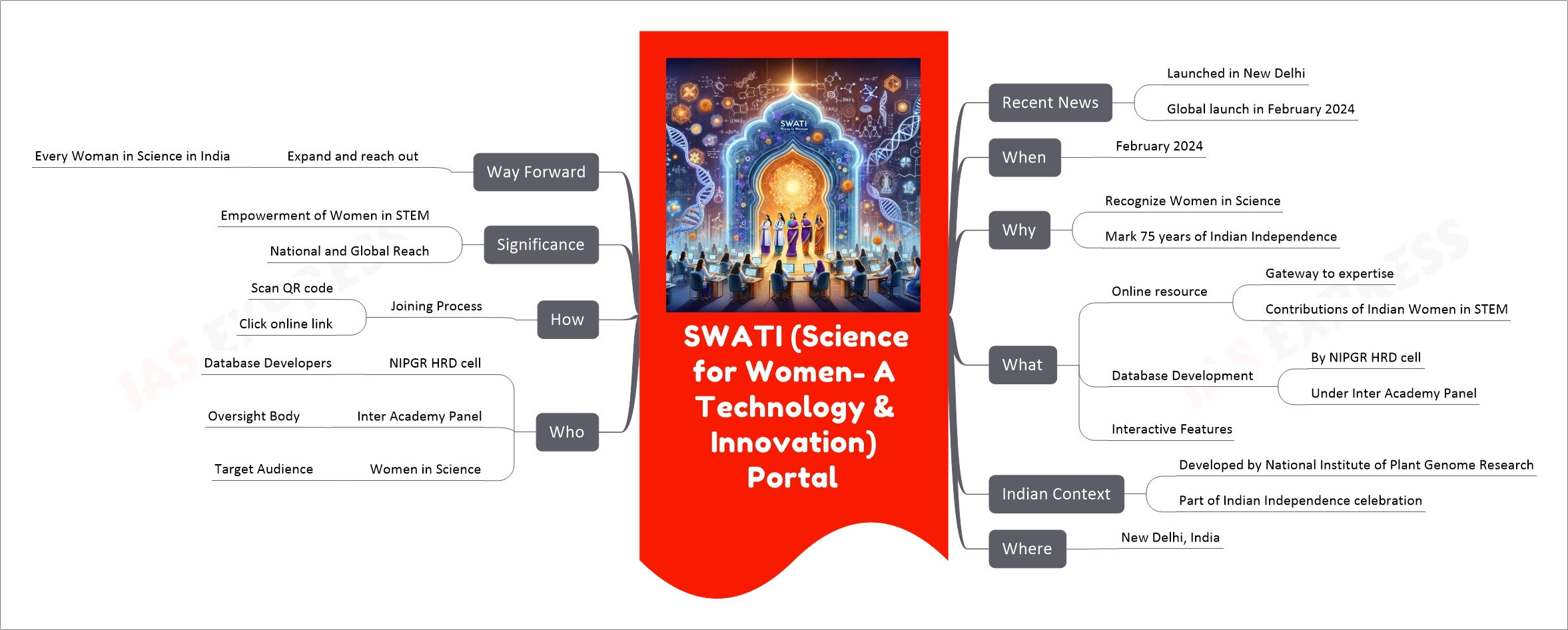
SWATI (Science for Women- A Technology & Innovation) Portal mind map
  Recent News
    Launched in New Delhi
    Global launch in February 2024
  When
    February 2024
  Why
    Recognize Women in Science
    Mark 75 years of Indian Independence
  What
    Online resource
      Gateway to expertise
      Contributions of Indian Women in STEM
    Database Development
      By NIPGR HRD cell
      Under Inter Academy Panel
    Interactive Features
  Indian Context
    Developed by National Institute of Plant Genome Research
    Part of Indian Independence celebration
  Where
    New Delhi, India
  Who
    NIPGR HRD cell
      Database Developers
    Inter Academy Panel
      Oversight Body
    Women in Science
      Target Audience
  How
    Joining Process
      Scan QR code
      Click online link
  Significance
    Empowerment of Women in STEM
    National and Global Reach
  Way Forward
    Expand and reach out
      Every Woman in Science in India

The SWATI Portal, short for Science for Women- A Technology & Innovation, is a significant initiative launched in New Delhi to acknowledge and promote the contributions of women in the fields of Science, Technology, Engineering, Mathematics, and Medicine (STEMM). It was developed under the Inter Academy Panel and by the National Institute of Plant Genome Research (NIPGR) HRD cell, specifically to mark the 75th anniversary of Indian Independence. This interactive online resource serves as a comprehensive database and a gateway to the expertise and accomplishments of Indian women in STEM, aiming to empower them and increase their visibility in these fields. The portal, which will be globally launched in February 2024, is open for registration through a simple process involving a QR code or an online link.
/ Bangladesh
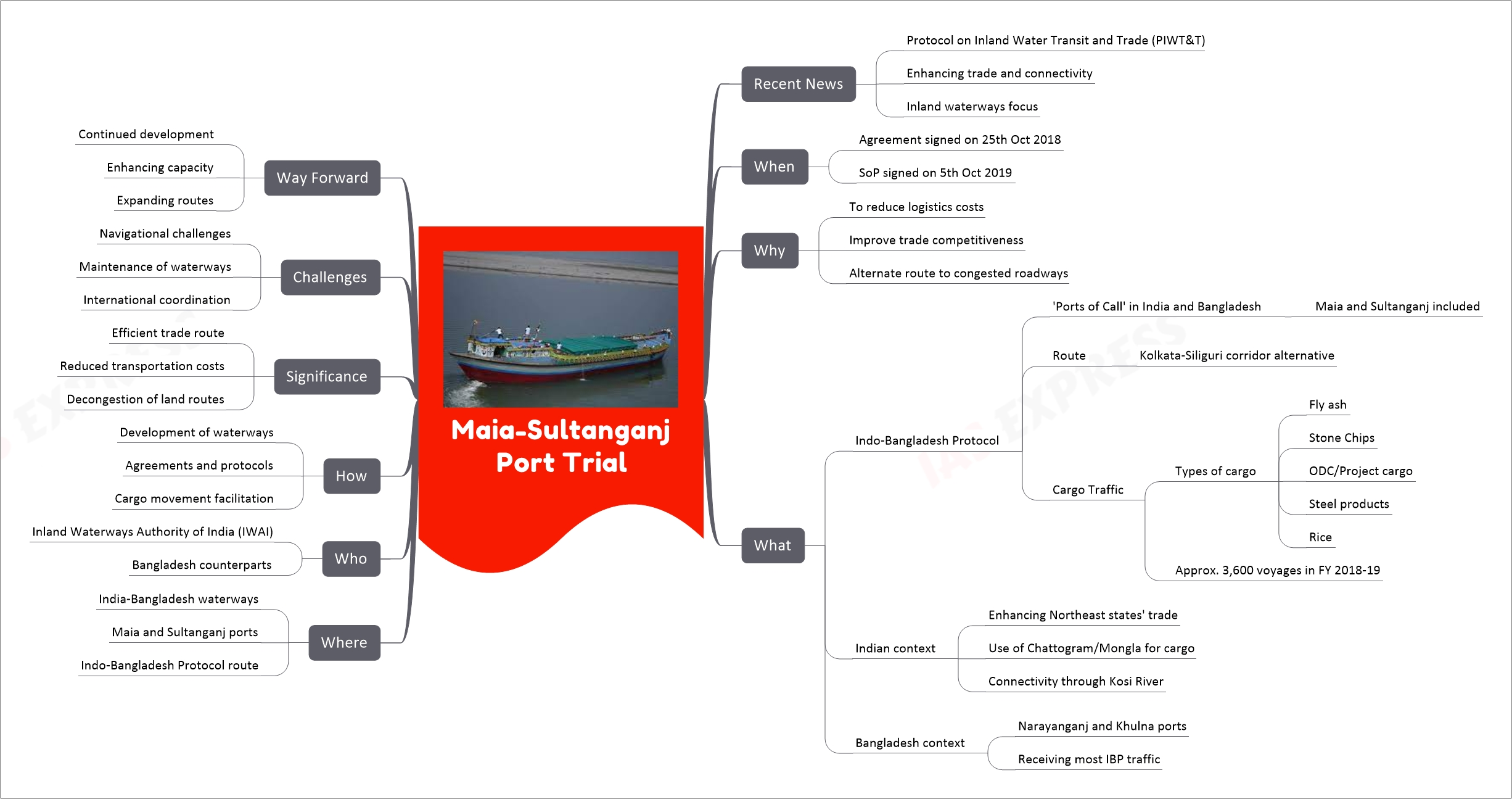
Maia-Sultanganj Port Trial mind map
  Recent News
    Protocol on Inland Water Transit and Trade (PIWT&T)
    Enhancing trade and connectivity
    Inland waterways focus
  When
    Agreement signed on 25th Oct 2018
    SoP signed on 5th Oct 2019
  Why
    To reduce logistics costs
    Improve trade competitiveness
    Alternate route to congested roadways
  What
    Indo-Bangladesh Protocol
      'Ports of Call' in India and Bangladesh
        Maia and Sultanganj included
      Route
        Kolkata-Siliguri corridor alternative
      Cargo Traffic
        Types of cargo
          Fly ash
          Stone Chips
          ODC/Project cargo
          Steel products
          Rice
        Approx. 3,600 voyages in FY 2018-19
    Indian context
      Enhancing Northeast states' trade
      Use of Chattogram/Mongla for cargo
      Connectivity through Kosi River
    Bangladesh context
      Narayanganj and Khulna ports
      Receiving most IBP traffic
  Where
    India-Bangladesh waterways
    Maia and Sultanganj ports
    Indo-Bangladesh Protocol route
  Who
    Inland Waterways Authority of India (IWAI)
    Bangladesh counterparts
  How
    Development of waterways
    Agreements and protocols
    Cargo movement facilitation
  Significance
    Efficient trade route
    Reduced transportation costs
    Decongestion of land routes
  Challenges
    Navigational challenges
    Maintenance of waterways
    International coordination
  Way Forward
    Continued development
    Enhancing capacity
    Expanding routes

The Maia-Sultanganj Port Trial is a key component of the Protocol on Inland Water Transit and Trade (PIWT&T) between India and Bangladesh, aimed at enhancing trade and connectivity through inland waterways. It involves the development of ‘Ports of Call’ in both countries, including Maia and Sultanganj, to provide an efficient alternative to congested road routes. This initiative is significant for reducing logistics costs and improving trade competitiveness, especially for India’s northeastern states. It represents a collaborative effort in developing waterways and facilitating cargo movement between the two nations.

If you like this post, please share your feedback in the comments section below so that we will upload more posts like this.

Responses

🖍️ Highlight
HomeCoursesPlansAccount