
[Newsbits] 21+22+23.12.2023: UPI Lite X, Paat-Mitro App, Polar Stratospheric Clouds (PSCs) & More

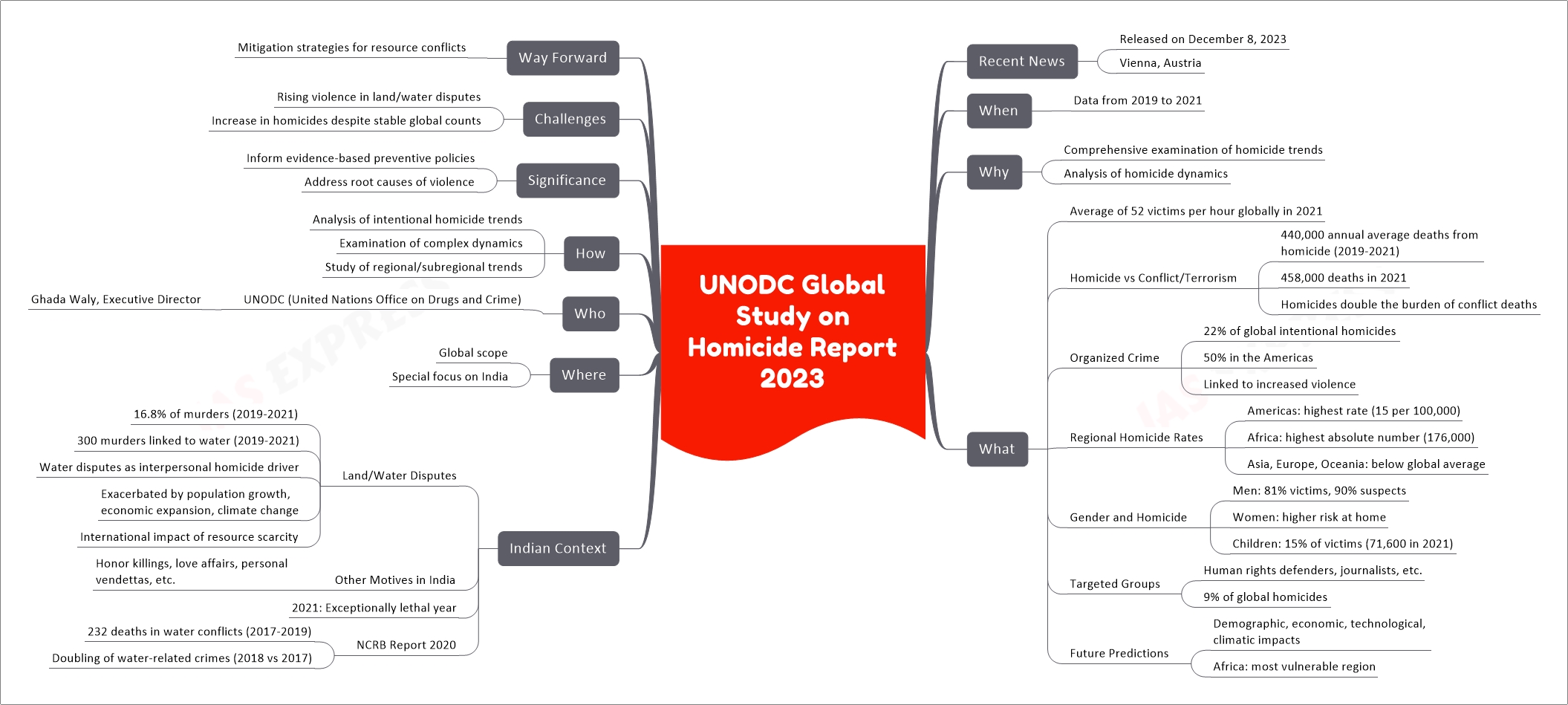
The UNODC’s Global Study on Homicide Report 2023 provides a comprehensive analysis of global homicide trends, highlighting the prevalence and patterns of intentional homicides. The report, released in December 2023, shows an average of 52 homicide victims per hour worldwide in 2021, with homicide accounting for more deaths than armed conflict and terrorism combined. It emphasizes the significant role of organized crime in these homicides, particularly in the Americas, and the varied homicide rates across regions, with the Americas and Africa having the highest rates. The study also sheds light on gender disparities in homicide victims and perpetrators, the risks faced by certain groups like human rights defenders, and the future impact of demographic and environmental changes on homicide rates. Significantly, the report includes a special focus on India, noting the rise in homicides related to land and water disputes, exacerbated by factors like population growth and climate change. The study aims to inform evidence-based preventive policies and address the root causes of violence.
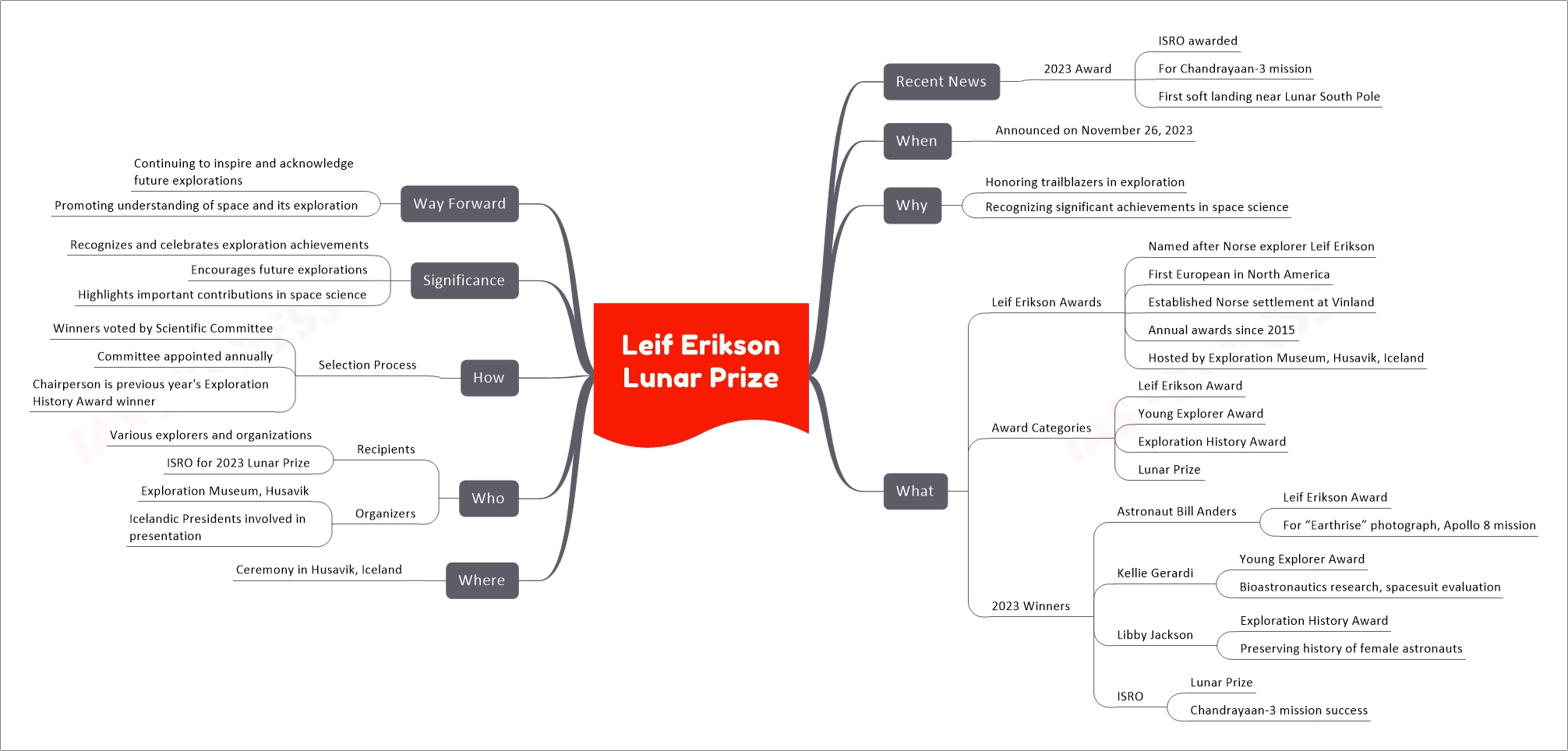
The Leif Erikson Lunar Prize is an annual award presented by the Exploration Museum in Húsavík, Iceland, as part of the Leif Erikson Awards. Named after the Norse explorer Leif Erikson, the awards recognize achievements in exploration and work in the field of exploration history. The Leif Erikson Lunar Prize specifically honors significant accomplishments in lunar exploration. In 2023, the Indian Space Research Organisation (ISRO) received this prize for the successful Chandrayaan-3 mission, which achieved a soft landing near the Moon’s South Pole. The award ceremony, part of the Húsavík Explorers Festival, also includes other categories such as the Leif Erikson Award, the Young Explorer Award, and the Exploration History Award, acknowledging various explorers and organizations for their contributions to space science and exploration history. The winners are selected by the Scientific Committee of the Exploration Museum, emphasizing the global recognition of trailblazing achievements in the realm of space exploration.
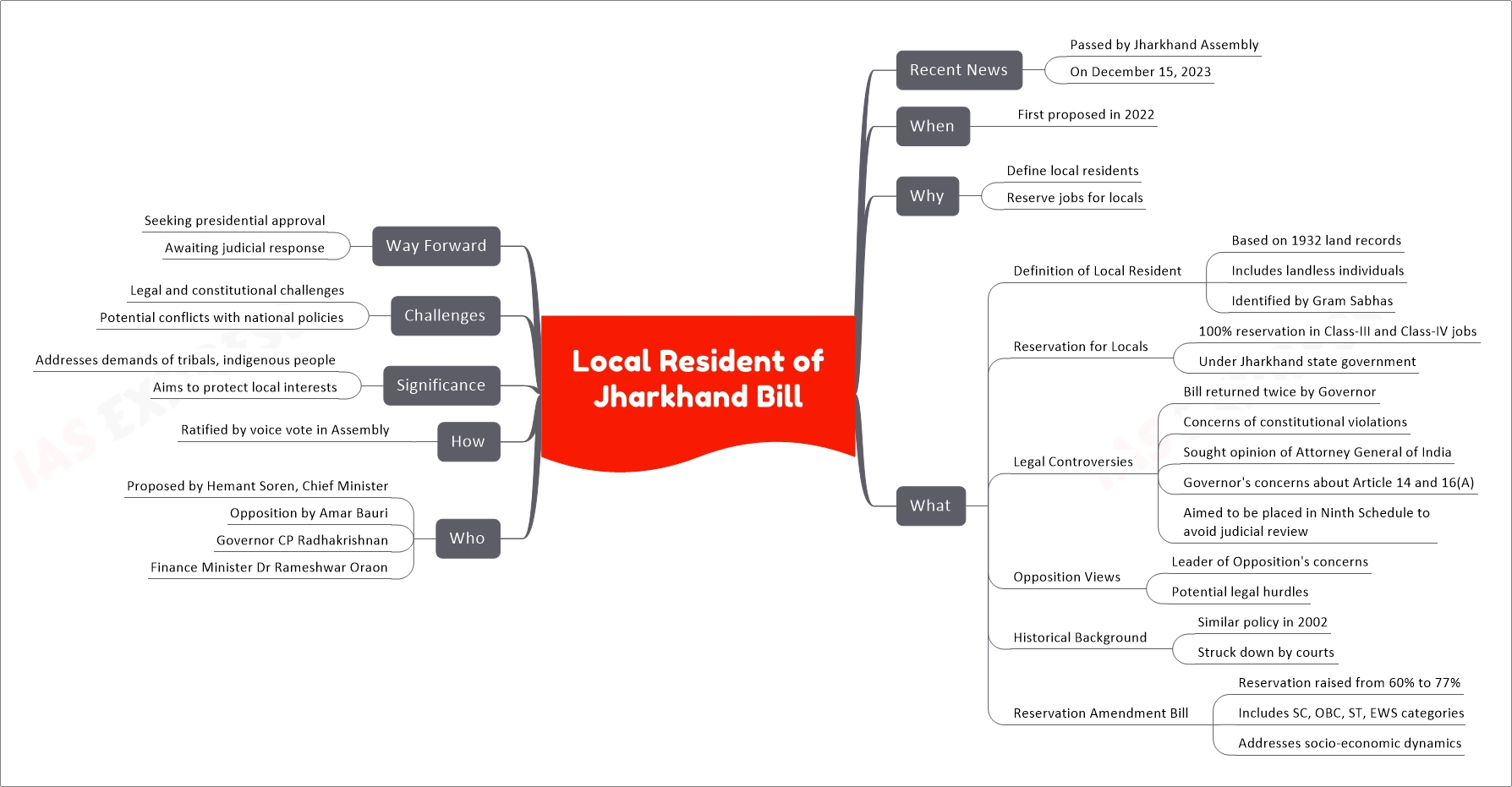
The Local Resident of Jharkhand Bill, passed by the Jharkhand Assembly in December 2023, aims to define ‘local resident’ based on land records from 1932 or earlier, including provisions for landless individuals identified by Gram Sabhas. This bill paves the way for 100% reservation for locals in Class-III and Class-IV state government jobs. The bill faced opposition and was returned twice for reconsideration due to constitutional concerns raised by Governor CP Radhakrishnan, particularly regarding potential violations of Articles 14 and 16(A) of the Indian Constitution. Chief Minister Hemant Soren’s government aims to place the bill in the Ninth Schedule to avoid judicial review, despite its controversial nature and similarity to a policy introduced in 2002, which was struck down by the courts. Additionally, the Jharkhand Assembly ratified an amendment bill increasing reservations from 60% to 77%, covering various social categories. The bill now awaits presidential approval and a judicial response to the legal challenges it faces.
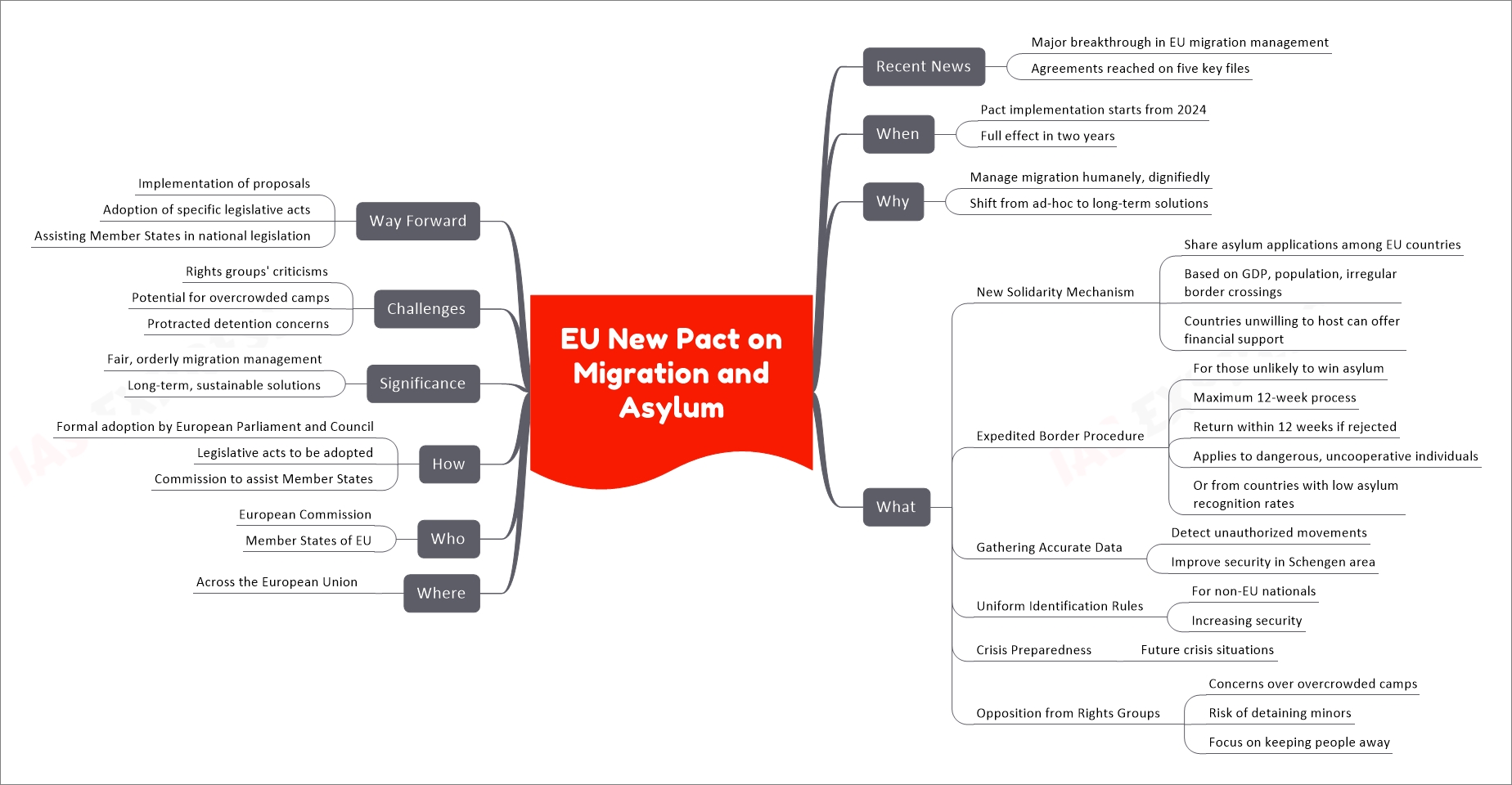
The EU’s New Pact on Migration and Asylum, agreed upon in 2023, marks a significant advancement in the European Union’s approach to managing migration. The pact encompasses several key provisions aimed at establishing a more humane, dignified, and effective system. These include a new solidarity mechanism for sharing asylum applications among EU countries based on various criteria, an expedited border procedure for processing and potentially returning individuals unlikely to win asylum, measures for gathering more accurate data to detect unauthorized movements, the creation of uniform rules for the identification of non-EU nationals to enhance security within the Schengen area, and preparedness for future crisis situations.
Despite these measures, the pact has faced criticism from rights groups concerned about the potential for overcrowded migration camps and the protracted detention of minors. The implementation of the pact, starting from 2024 and expected to take full effect within two years, will involve the formal adoption of these proposals by the European Parliament and Council, followed by the adoption of specific legislative acts. The European Commission will assist member states in implementing the new rules in their national legislation, moving towards long-term and sustainable solutions for migration management in the EU.
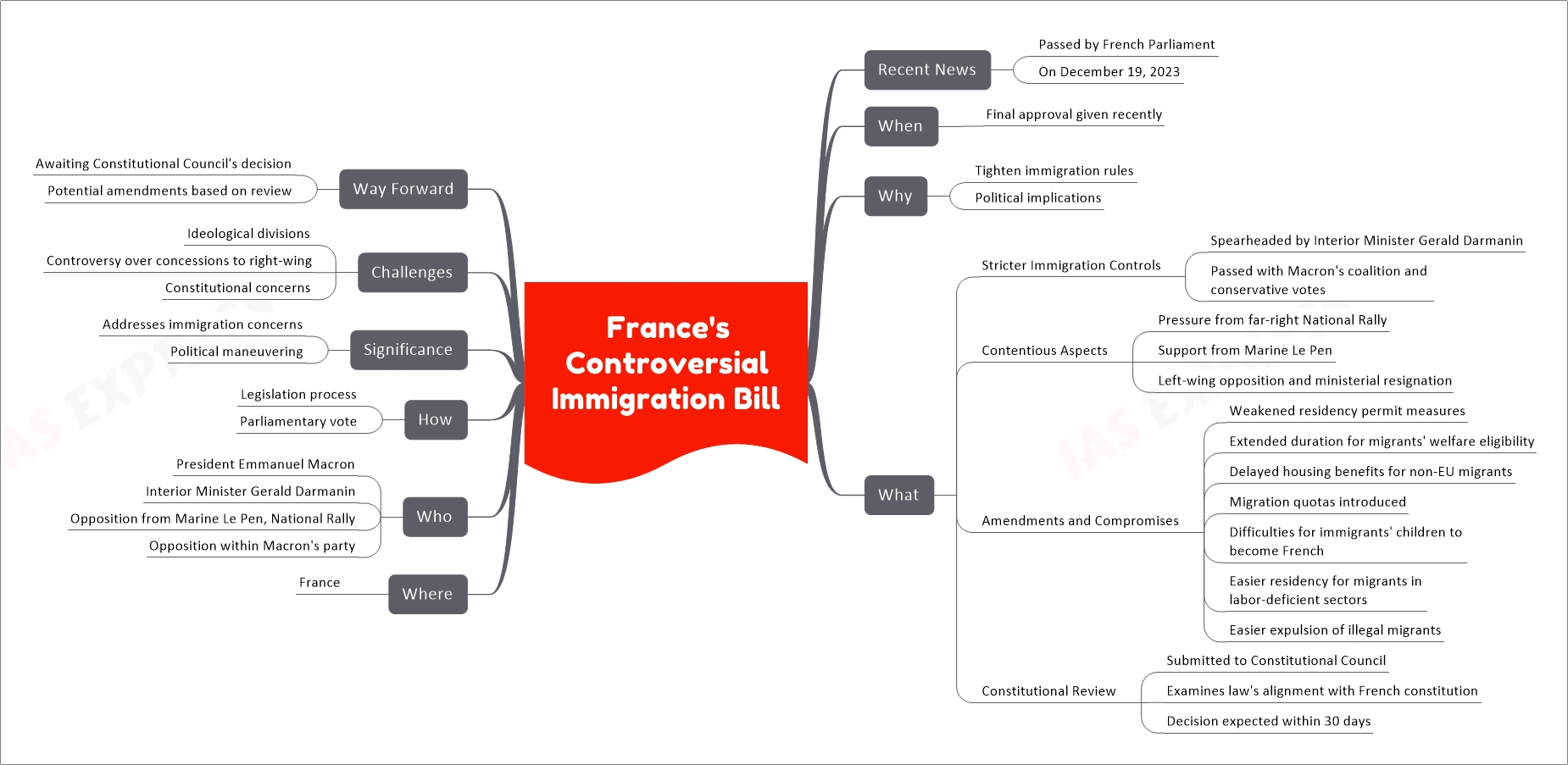
France’s controversial immigration bill, which passed in December 2023, aims to introduce stricter controls on migration. Spearheaded by Interior Minister Gerald Darmanin and backed by President Emmanuel Macron’s centrist coalition and conservative lawmakers, the bill has been subject to significant political maneuvering and ideological division. The support from Marine Le Pen’s far-right National Rally, and the opposition within Macron’s own party, including the resignation of a minister, highlight the contentious nature of the legislation.
The bill has undergone various amendments to make it more agreeable to the right, including weakening measures for residency permits and extending the eligibility duration for migrants to access welfare benefits. It also introduces measures such as delaying housing benefits for non-EU migrants, implementing migration quotas, and making it more difficult for immigrants’ children to become French. At the same time, the bill facilitates residency for migrants working in sectors with labor shortages and makes it easier to expel illegal migrants.
Given the controversy and constitutional concerns, the bill has been submitted to the Constitutional Council for review. This body will examine whether the law aligns with the French constitution and decide whether it can be enforced in its current form or requires amendment. The decision is expected within 30 days, marking the next step in the ongoing debate and implementation of this significant piece of legislation in France.
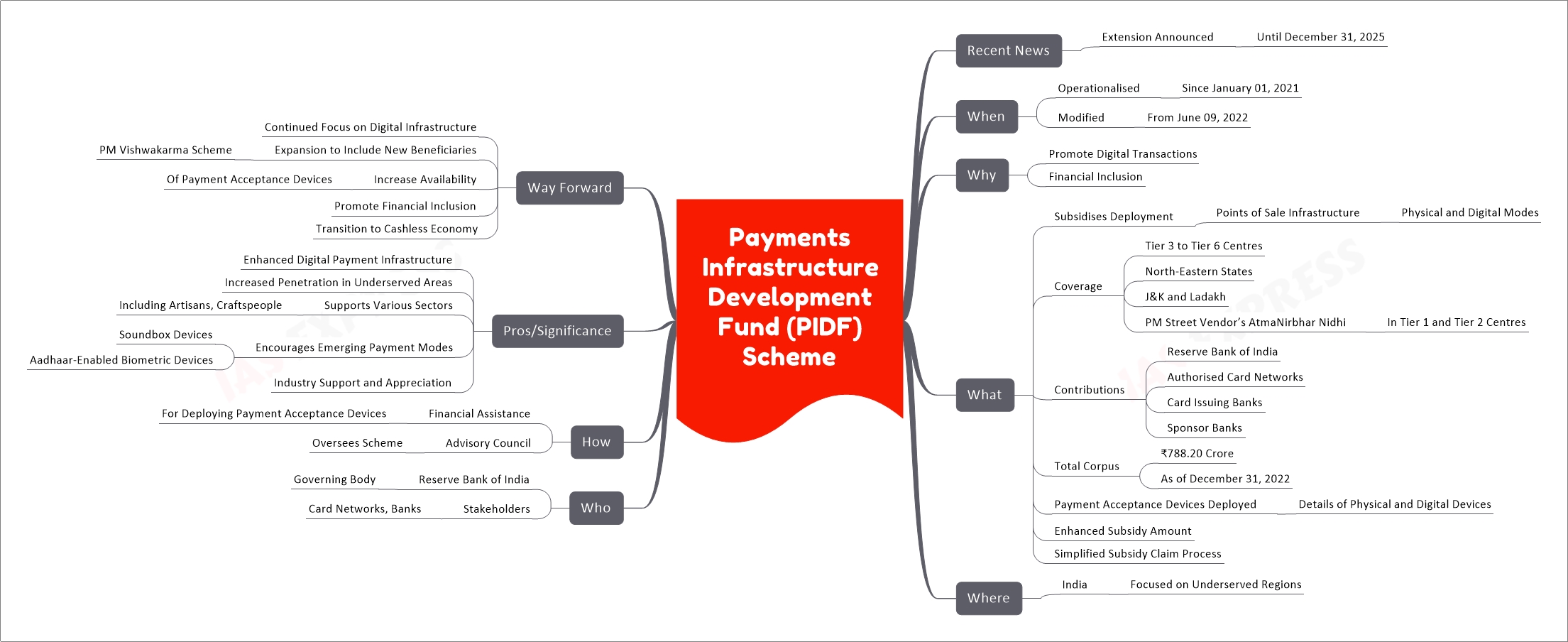
The Payments Infrastructure Development Fund (PIDF) Scheme, operational since January 2021 and extended until December 31, 2025, aims to subsidize the deployment of Points of Sale (PoS) infrastructure across India, particularly in underserved areas like tier-3 to tier-6 centres and the northeastern states. It has been expanded to include beneficiaries of the PM Street Vendor’s AtmaNirbhar Nidhi in tier-1 and tier-2 centres, with the Reserve Bank of India, card networks, and banks contributing to its corpus. The scheme’s modification in 2022 to enhance subsidy amounts and simplify the subsidy claim process reflects its commitment to boosting digital transaction facilities and financial inclusion, especially at the grassroots level.
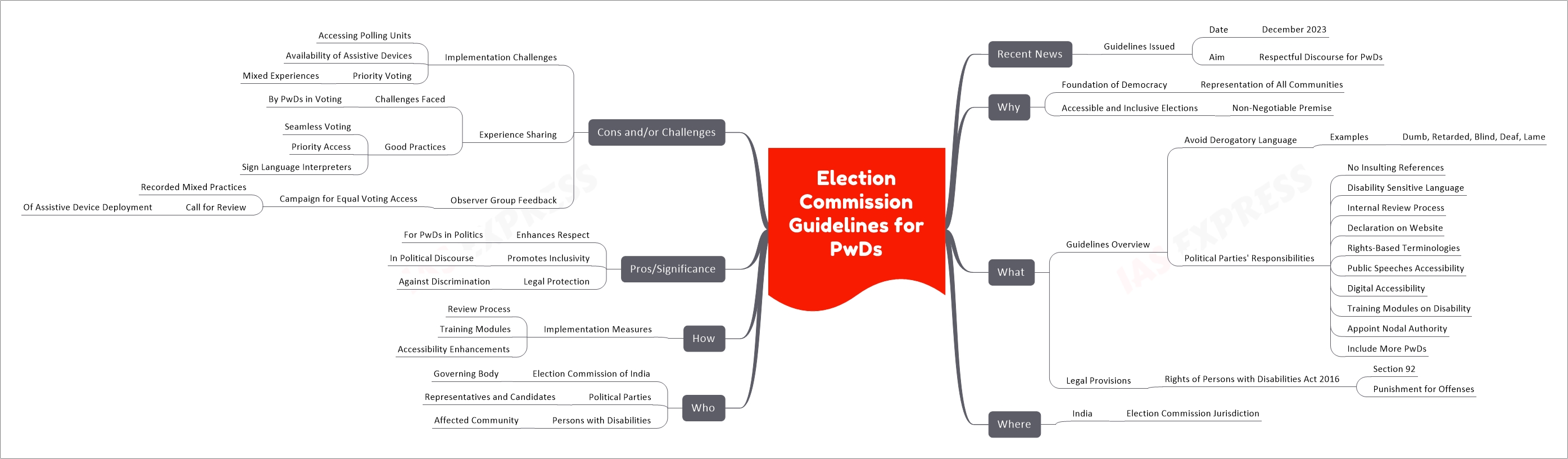
The Election Commission of India’s guidelines for ensuring the equal participation of Persons with Disabilities (PwDs) in the electoral process focus on promoting respectful and inclusive political discourse. These guidelines mandate political parties to avoid derogatory language, ensure disability-sensitive communication, and provide accessible campaign materials. The guidelines are part of the Commission’s effort to uphold the democratic principle of representation for all communities. While they signify progress in inclusivity, implementation challenges persist, such as difficulty accessing polling units and a lack of necessary assistive devices. Despite these challenges, some positive experiences highlight the potential for successful inclusive practices in elections.
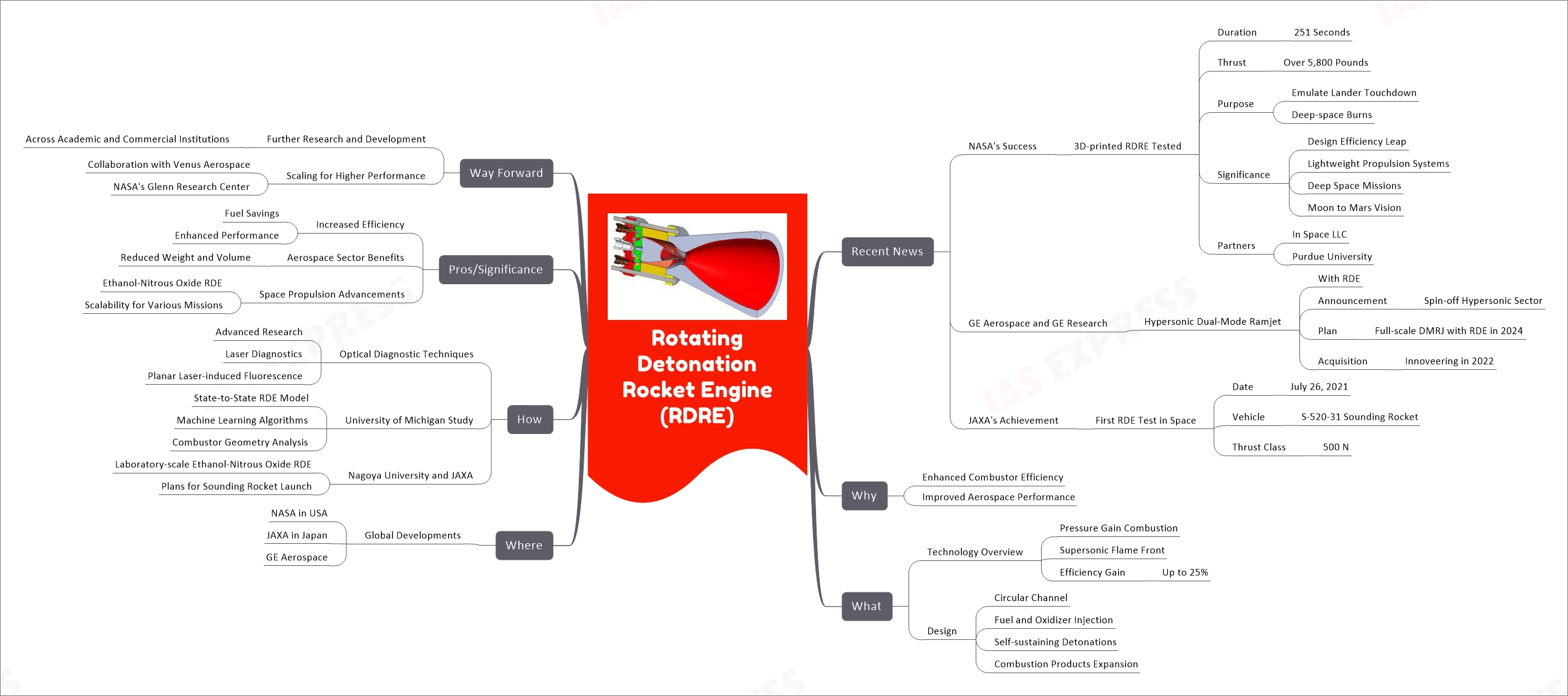
The Rotating Detonation Rocket Engine (RDRE) represents a significant advancement in rocket propulsion technology. It utilizes pressure gain combustion, where detonations continuously travel around an annular channel, achieving supersonic flame front expansion. This method is theoretically more efficient than traditional deflagrative combustion, potentially offering up to 25% efficiency gains. In 2023, NASA successfully tested a novel, 3D-printed RDRE, producing over 5,800 pounds of thrust, demonstrating the potential for lightweight propulsion systems for deep space missions. GE Aerospace and GE Research have also shown interest in RDE technology, planning to demonstrate a full-scale hypersonic dual-mode ramjet with RDE in 2024. Furthermore, JAXA achieved a milestone by testing an RDE in space for the first time. This ongoing research and development across various institutions aim to enhance combustor efficiency and performance, significantly benefiting the aerospace sector.
![UK Supreme Court Ruling on AI and Patent Rights mind map
Recent News
Supreme Court Ruling
Date
December 2023
Case Name
Thaler v Comptroller-General of Patents, Designs and Trade Marks [2023]
When
Initial Filings
Year
2018
High Court and Court of Appeal Dismissal
Year
2021
Why
Legal Interpretation
Inventor Definition
Must Be a Natural Person
AI as Inventor
Not Recognized
What
Patents Act 1977
Inventor Requirement
Natural Person
Case Details
Appellant
Dr. Stephen Thaler
AI System
DABUS
Claims
AI Devised Inventions
IPO Refusal
Based on Legal Grounds
Court's Decision
Rejected AI as Inventor
Dismissed Doctrine of Accession
Broader Context
EU AI Act
Trustworthy AI Framework
AI Safety Summit
Held in the UK
Where
United Kingdom
Supreme Court Jurisdiction
Who
Dr. Stephen Thaler
Filed Patent Applications
UK Intellectual Property Office (IPO)
Refused Patents
UK Supreme Court
Unanimous Decision
How
Legal Process
High Court
Court of Appeal
Supreme Court
Legal Analysis
Case Law Authorities
Interpretation of "Inventor"
Pros/Significance
Legal Clarity
On AI and Patent Rights
Impact on AI Landscape
Significant Development
Challenges
Not Addressed
Future of AI in Patent Law
Way Forward
Monitoring AI Regulations
By UK Government
AI Act Developments
EU's Regulatory Framework](https://www.iasexpress.net/wp-content/uploads/2023/12/UK-Supreme-Court-Ruling-on-AI-and-Patent-Rights.jpeg)
The UK Supreme Court’s unanimous decision in December 2023, in the case of “Thaler v Comptroller-General of Patents, Designs and Trade Marks [2023],” established that under the Patents Act 1977, an “inventor” must be a natural person, not artificial intelligence (AI). Dr. Stephen Thaler’s attempt to register patents for inventions claimed to be created by his AI system, DABUS, was rejected. The Court maintained that the legal definition of an inventor could not extend to machines or AI. This ruling aligns with similar decisions in other jurisdictions and marks a significant development in the AI landscape, particularly considering the evolving AI regulations in the EU and the AI Safety Summit. The case underscores the current legal framework’s limitations in accommodating the growing role of AI in innovation.
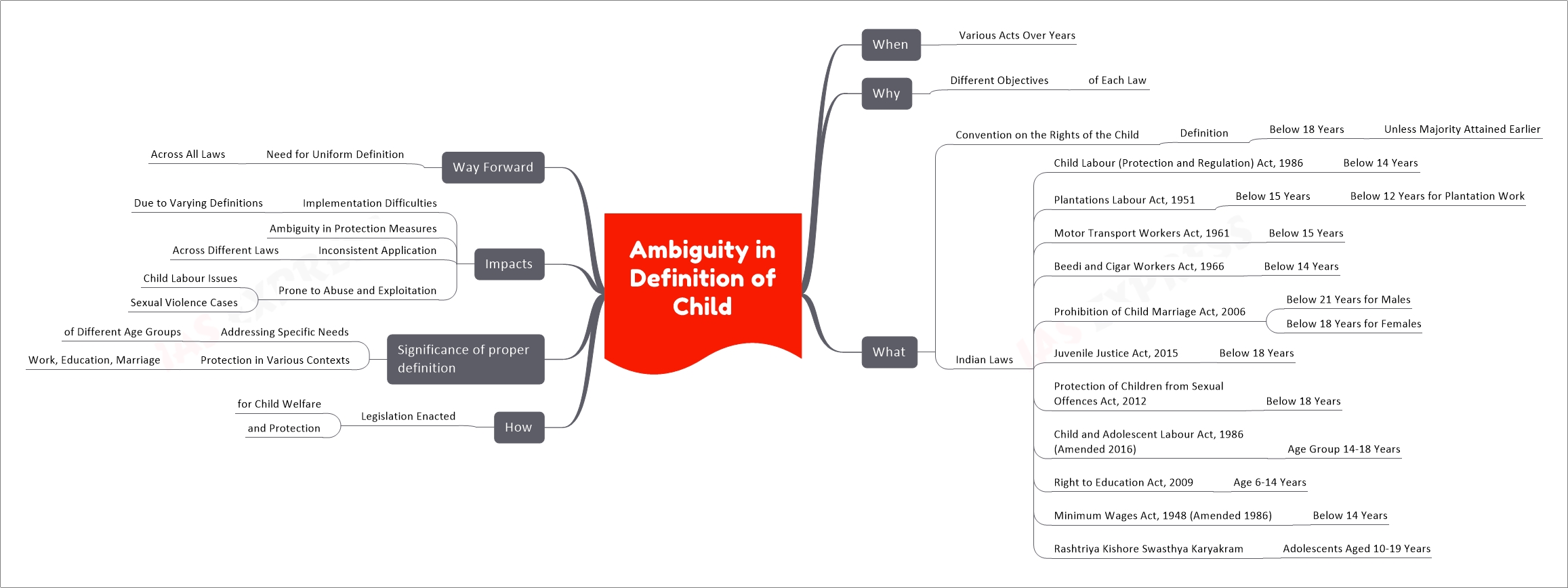
To summarize, the definition of a ‘child’ in Indian laws varies across different acts, each tailored to its specific context and objectives. This variance ranges from under 14 years in labor-related laws to under 18 years in juvenile justice and sexual offenses laws, with special provisions in laws concerning education and marriage. While these diverse definitions aim to cater to the unique needs of different age groups, they also create challenges in implementing child protection uniformly, leading to potential loopholes and inconsistencies in safeguarding children’s rights. The way forward suggests a harmonized definition of ‘child’ across all legislations to ensure coherent and effective child protection measures.

If you like this post, please share your feedback in the comments section below so that we will upload more posts like this.

Responses