Ambiguity in Definition of Child

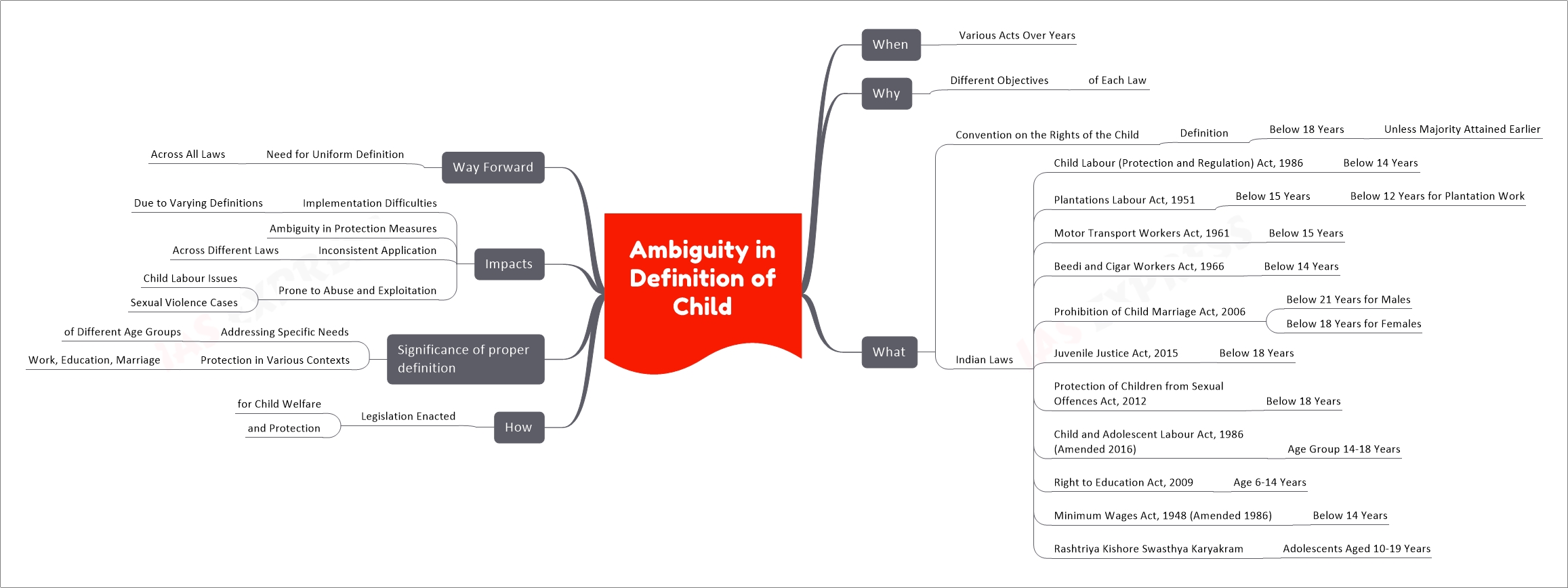
Ambiguity in Definition of Child mind map

  When
    Various Acts Over Years
  Why
    Different Objectives
      of Each Law
  What
    Convention on the Rights of the Child
      Definition
        Below 18 Years
          Unless Majority Attained Earlier
    Indian Laws
      Child Labour (Protection and Regulation) Act, 1986
        Below 14 Years
      Plantations Labour Act, 1951
        Below 15 Years
          Below 12 Years for Plantation Work
      Motor Transport Workers Act, 1961
        Below 15 Years
      Beedi and Cigar Workers Act, 1966
        Below 14 Years
      Prohibition of Child Marriage Act, 2006
        Below 21 Years for Males
        Below 18 Years for Females
      Juvenile Justice Act, 2015
        Below 18 Years
      Protection of Children from Sexual Offences Act, 2012
        Below 18 Years
      Child and Adolescent Labour Act, 1986 (Amended 2016)
        Age Group 14-18 Years
      Right to Education Act, 2009
        Age 6-14 Years
      Minimum Wages Act, 1948 (Amended 1986)
        Below 14 Years
      Rashtriya Kishore Swasthya Karyakram
        Adolescents Aged 10-19 Years
  How
    Legislation Enacted
      for Child Welfare
      and Protection
  Significance of proper definition
    Addressing Specific Needs
      of Different Age Groups
    Protection in Various Contexts
      Work, Education, Marriage
  Impacts
    Implementation Difficulties
      Due to Varying Definitions
    Ambiguity in Protection Measures
    Inconsistent Application
      Across Different Laws
    Prone to Abuse and Exploitation
      Child Labour Issues
      Sexual Violence Cases
  Way Forward
    Need for Uniform Definition
      Across All Laws

To summarize, the definition of a ‘child’ in Indian laws varies across different acts, each tailored to its specific context and objectives. This variance ranges from under 14 years in labor-related laws to under 18 years in juvenile justice and sexual offenses laws, with special provisions in laws concerning education and marriage. While these diverse definitions aim to cater to the unique needs of different age groups, they also create challenges in implementing child protection uniformly, leading to potential loopholes and inconsistencies in safeguarding children’s rights. The way forward suggests a harmonized definition of ‘child’ across all legislations to ensure coherent and effective child protection measures.

Related Posts
If you like this post, please share your feedback in the comments section below so that we will upload more posts like this.

Responses

🖍️ Highlight
HomeCoursesPlansAccount