
Manual Scavenging in India – Reasons and Responses

From Current Affairs Notes for UPSC » Editorials & In-depths » This topic
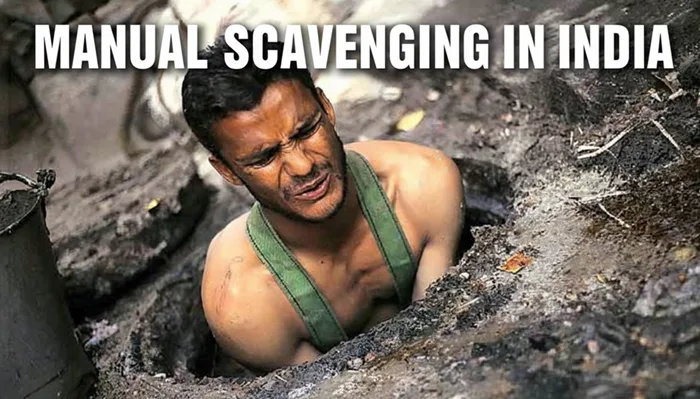
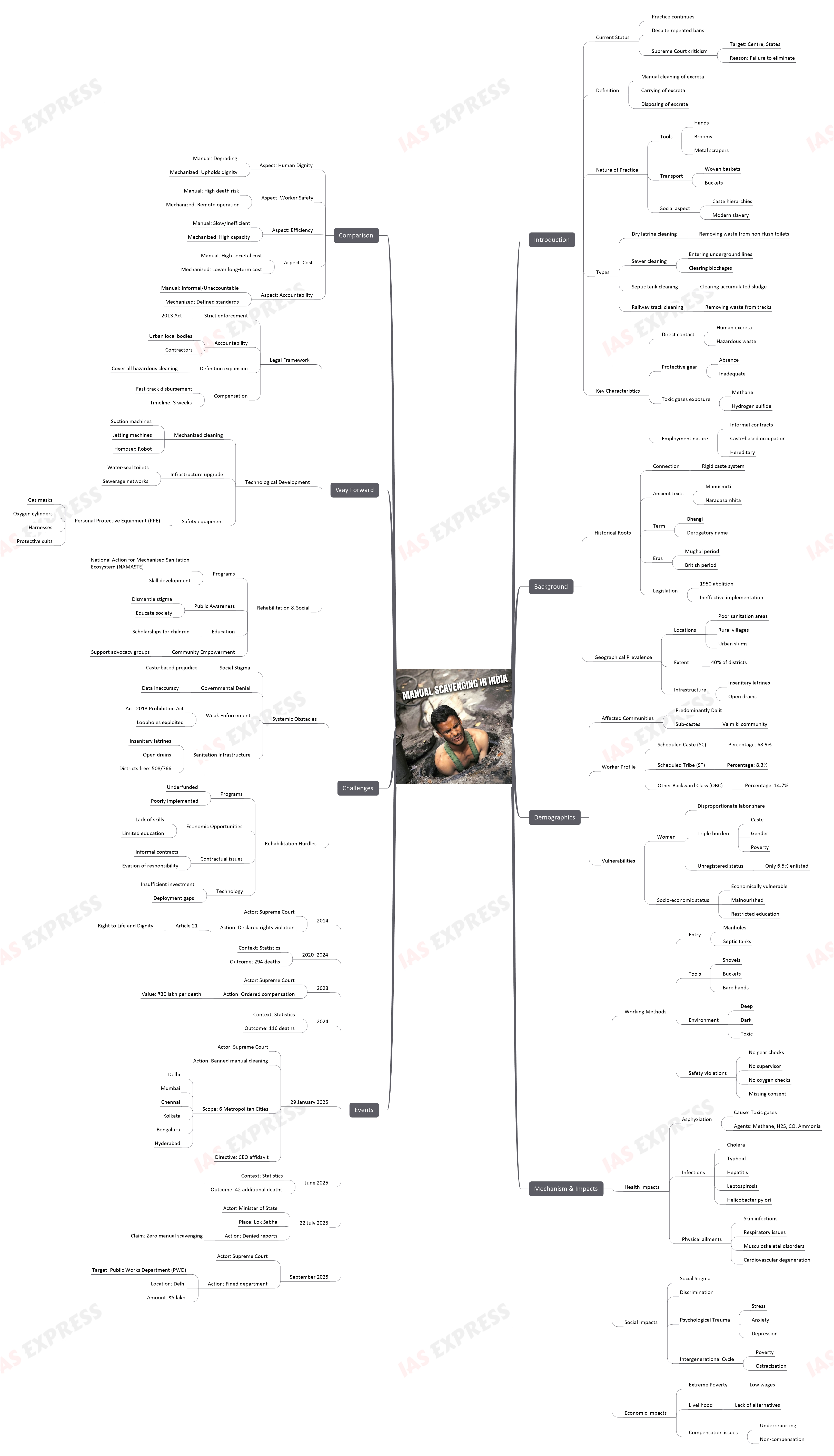
Despite repeated bans, judicial interventions, and national policy commitments, manual scavenging continues across India. The Supreme Court has again criticised the Centre and states for failing to eliminate this degrading and hazardous practice, highlighting a deep-seated societal issue that legal frameworks alone have struggled to address. This persistent problem underscores systemic failures, social injustices, and a critical human rights concern that demands immediate and comprehensive action. The ongoing struggle reflects complex socio-economic factors and deeply entrenched caste-based discrimination that trap vulnerable communities in this inhumane work.
What is Manual Scavenging and How is it Defined?
- Understanding the Practice
- Manual scavenging involves the manual cleaning, carrying, and disposing of human excreta from dry latrines, open drains, railway tracks, and sewers.
- Workers use only their hands, often with basic tools like brooms or metal scrapers, to gather waste.
- The collected waste is typically transported in woven baskets or buckets to disposal sites.
- It is a practice deeply entrenched in caste hierarchies and social complicity, recognized globally as a form of modern slavery.
- Types of Manual Scavenging
- Dry latrine cleaning: Involves removing human waste from toilets not connected to a flush or sewage system.
- Sewer cleaning: Entry into underground sewer lines to clear blockages, often involving direct contact with raw sewage.
- Septic tank cleaning: Clearing accumulated sludge and waste from septic tanks, typically in residential or commercial buildings.
- Railway track cleaning: Removing human waste directly from railway tracks, where open defecation often occurs.
- Key Characteristics
- Direct contact with human excreta and hazardous waste.
- Absence of protective gear, or the provision of inadequate and outdated equipment.
- Exposure to toxic gases such as methane and hydrogen sulfide, leading to severe health risks.
- Often conducted under informal contracts, circumventing legal safeguards and accountability.
- A caste-based and hereditary occupation, primarily forced upon Dalit communities.
Where and When Did Manual Scavenging Start in India?
- Historical Roots and Caste System
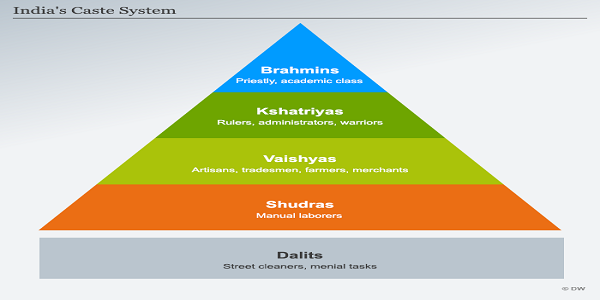
- The origins of manual scavenging in India are deeply intertwined with the rigid Indian caste system, where historically marginalized communities were compelled into this degrading work due to deep-rooted social prejudices.
- Some historians attribute its genesis to ancient texts like the Manusmrti and even references in the Naradasamhita, which list manual scavenging among other practices, linking it to caste-based occupational roles.
- The term “Bhangi” is a derogatory name for people from the caste traditionally responsible for manual scavenging, illustrating the social stigma attached to this work.
- The practice continued and was perhaps exacerbated during the Mughal and British periods, as sanitation systems often remained rudimentary for the general populace.
- Despite the legislative abolition of the caste system in 1950 and subsequent laws, discrimination persists, and Dalit communities continue to be economically disadvantaged, often with limited alternative opportunities outside this work.
- Geographical Prevalence and Timelines
- Manual scavenging has been prevalent across various parts of India, particularly in areas with poor sanitation infrastructure, such as many rural villages and urban slums where dry latrines and open drains are common.
- Even today, approximately 40% of Indian districts still report manual scavenging, demonstrating its widespread persistence.
- The practice continues to exist across many states despite legal bans, often under disguised forms, making its elimination challenging.
- The issue is not confined to specific regions but is found wherever insanitary latrines or inadequate sewerage systems exist.
Who is Involved in Manual Scavenging in India?
- Predominantly Marginalized Communities
- The vast majority of individuals engaged in manual scavenging belong to Dalit communities, particularly specific sub-castes like the Valmiki community.
- This work is primarily forced upon them due to deeply entrenched caste-based discrimination and a lack of alternative livelihoods.
- The practice is often hereditary, spanning generations, with children of manual scavengers facing entrenched social and economic challenges, including limited access to education and healthcare.
- Government data from over 3,000 urban local bodies indicates that 91.9% of profiled sewer and septic tank workers belong to Scheduled Caste (68.9%), Scheduled Tribe (8.3%), or Other Backward Class (14.7%) communities.
- Demographics and Vulnerabilities
- Both men and women are involved, but women from Dalit communities bear a disproportionate share of the labor, often working in isolated conditions.
- These women frequently face a triple burden of caste, gender, and poverty, enduring daily humiliation, discrimination, and severe health risks without access to proper healthcare or education.
- Many manual scavengers, especially women, are unregistered, limiting their access to rehabilitation benefits and official recognition. Only 6.5% of surveyed women manual scavengers were officially enlisted under the relevant rehabilitation act.
- The individuals involved are typically economically vulnerable, malnourished, and have restricted educational opportunities, perpetuating a cycle of poverty and exploitation.
How is Manual Scavenging Carried Out and What are its Impacts?
- Working Mechanisms and Methods
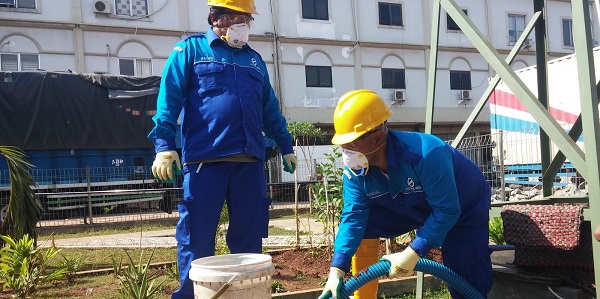
- Workers often enter manholes and septic tanks without safety equipment, relying on rudimentary tools like shovels, buckets, and their bare hands to remove waste.
- They may use ropes to descend into deep, dark, and highly toxic environments, where visibility is poor and harmful gases accumulate.
- The process involves scooping out thick sludge and solid waste, manually dislodging blockages, and carrying the collected waste to disposal points.
- Precautions such as periodical checks of protective gears, supervisor presence, and checking oxygen levels to prevent asphyxia are rarely followed.
- In many cases, consent or counseling before hazardous cleaning is missing in over 50% of audited cases, highlighting a severe disregard for worker safety.
- Severe Health, Social, and Economic Impacts
- Health Impacts:
- Asphyxiation: The most immediate and deadly risk, caused by inhalation of toxic gases like methane, hydrogen sulfide, carbon monoxide, and ammonia present in sewers and septic tanks. For instance, in one year, 150 deaths were reported due to hazardous sewer cleaning, with 49 out of 54 audited deaths occurring without safety equipment.
- Infections: Direct contact with human waste leads to a high risk of contracting infectious diseases such as cholera, typhoid, hepatitis, leptospirosis, and Helicobacter pylori infections.
- Skin and Respiratory Issues: Workers frequently suffer from severe skin infections, rashes, respiratory problems, and altered pulmonary function due to prolonged exposure to irritants and pathogens.
- Musculoskeletal Disorders: Prolonged bending and strenuous physical labor result in cardiovascular degeneration, osteoarthritic changes, and intervertebral disc herniation.
- Social Impacts:
- Social Stigma and Discrimination: Manual scavengers endure profound social stigma and discrimination due to the nature of their work, leading to isolation and exclusion from mainstream society.
- Psychological Trauma: The dehumanizing conditions, constant exposure to death, and societal contempt cause severe psychological trauma, stress, anxiety, and depression.
- Intergenerational Cycle: Children of manual scavengers often face similar social ostracization and limited opportunities, perpetuating the cycle of poverty and marginalization across generations.
- Economic Impacts:
- Extreme Poverty: Manual scavengers are often paid extremely low wages for their hazardous work; for example, one worker died cleaning a choked sewer for only 2,000 rupees.
- Lack of Livelihood Alternatives: Due to caste-based discrimination and limited education, they often have few other options for employment, trapping them in this profession.
- Underreporting and Non-Compensation: Many are hired on informal contracts, leading to underreported deaths and a lack of compensation for injuries or fatalities, despite judicial directives for compensation.
- Health Impacts:
What is the Latest News Regarding Manual Scavenging in India?
- Recent Supreme Court Interventions
- On January 29, 2025, the Supreme Court of India issued a landmark order banning manual scavenging and hazardous manual cleaning of sewers and septic tanks in six major metropolitan cities: Delhi, Mumbai, Chennai, Kolkata, Bengaluru, and Hyderabad.
- This directive came in response to a petition seeking the complete eradication of manual scavenging, following previous judicial pronouncements and persistent failures in implementation.
- The Court ordered the Chief Executive Officer of each of these six cities to file an affidavit detailing how and when manual scavenging would be stopped.
- This latest ruling builds on previous Supreme Court directives, including a 2014 declaration that manual scavenging violates Article 21 (Right to Life and Dignity) and a 2023 order for the immediate cessation of the practice and ₹30 lakh compensation for each death.
- The Supreme Court also directed states and Union Territories to disburse compensation for deaths from manual scavenging within three weeks of the incident, aiming to ensure timely justice for victims’ families.
- Government Responses and Reality on the Ground
- Despite the Supreme Court’s stringent orders and continued fatalities, the government’s official stance often maintains that manual scavenging does not exist. On July 22, 2025, the Minister of State for Social Justice and Empowerment stated in the Lok Sabha that no reports of manual scavenging have been received from any state or Union Territory.
- This official denial starkly contrasts with the reality, as fatalities continue. Between 2020 and 2024, 294 deaths of workers cleaning sewers and septic tanks were officially reported, and in 2024 alone, at least 116 manual scavengers died. By June 2025, an additional 42 deaths occurred.
- Delhi was identified as the worst-affected city for manual scavenger deaths in 2025, despite being one of the cities specifically targeted by the Supreme Court’s ban.
- In September 2025, the Delhi Public Works Department was fined ₹5 lakh by the Supreme Court after its laborers were found cleaning sewers outside the court premises, highlighting ongoing violations even in proximity to the highest judicial authority.
- Recent incidents include three workers dying in Kolkata, a father and son in Bengaluru, and two men in Chennai, all due to toxic gas inhalation during sewer cleaning.
What are the Challenges and Limitations to Eradicating Manual Scavenging?
- Systemic and Societal Obstacles
- Social Stigma and Caste-Based Discrimination: The practice is deeply ingrained in India’s social fabric, with caste-based prejudice being a primary driver, making it difficult to shift societal attitudes and provide alternative livelihoods for those traditionally forced into this work.
- Governmental Denial and Underreporting: The persistent official denial by both central and state governments about the existence of manual scavenging creates a significant barrier to accurate data collection, effective policy implementation, and recognition of victims. Many states report zero manual scavengers, despite evidence to the contrary.
- Weak Enforcement of Laws: Despite the Prohibition of Employment as Manual Scavengers and their Rehabilitation Act, 2013, enforcement remains weak and sporadic. Legal loopholes are often exploited, and many violations go unpunished.
- Lack of Proper Sanitation Infrastructure: Many areas still lack modern, flush-based sanitation systems, relying on insanitary latrines and open drains, thereby perpetuating the need for manual cleaning. Only 508 out of 766 districts in India have declared themselves free of manual scavenging, indicating significant infrastructure gaps.
- Rehabilitation and Economic Hurdles
- Inadequate Rehabilitation Programs: Existing rehabilitation schemes are often underfunded and poorly implemented, failing to provide manual scavengers with sustainable alternative employment, education, or skill development.
- Lack of Alternative Economic Opportunities: Many individuals trapped in manual scavenging have limited education and skills, making it challenging to transition to other professions, especially in the face of persistent social discrimination.
- Informal Contracts: The prevalence of informal contracting for sanitation work allows employers to evade responsibility for worker safety, compensation, and legal compliance. Over 90% of workers who died cleaning sewers in 2022–23 lacked safety gear, and most were informally contracted.
- Technological Gaps: Despite the availability of mechanized cleaning solutions, there is insufficient investment in and deployment of these technologies across the country, especially in smaller towns and rural areas.
What is the Way Forward to Eliminate Manual Scavenging?
- Strengthening Legal and Enforcement Frameworks
- Stricter Enforcement of Existing Laws: Implement the Prohibition of Employment as Manual Scavengers and their Rehabilitation Act, 2013, rigorously, ensuring that those who employ manual scavengers face severe penalties.
- Hold Local Bodies Accountable: Make urban local bodies and contractors directly responsible for ensuring mechanized cleaning and the safety of sanitation workers, with strict monitoring and audit mechanisms.
- Redefine Manual Scavenging Broadly: Broaden the legal definition to comprehensively cover all forms of hazardous manual cleaning of sewers, septic tanks, and waste pits, not just dry latrines.
- Fast-Track Compensation: Ensure prompt disbursement of compensation for deaths and injuries, as directed by the Supreme Court, within the stipulated three-week period.
- Technological Advancement and Infrastructure Development
- Promote Mechanized Cleaning: Invest heavily in the procurement and deployment of modern mechanized sanitation equipment, such as suction and jetting machines, robotic cleaners like Homosep Robot, and other safety devices to eliminate manual entry into sewers and septic tanks.
- Upgrade Sanitation Infrastructure: Accelerate the conversion of all dry latrines into water-seal toilets and expand comprehensive sewerage networks across urban and rural areas to prevent the accumulation of untreated waste.
- Provide Advanced Safety Gear: For unavoidable manual work (e.g., in inaccessible areas), ensure the mandatory provision of and training on state-of-the-art Personal Protective Equipment (PPE), including gas masks, oxygen cylinders, harnesses, and protective suits.
- Rehabilitation, Awareness, and Social Change
- Effective Rehabilitation Programs: Implement robust and adequately funded rehabilitation programs that offer skill development, alternative livelihood opportunities, and financial assistance to manual scavengers and their families. The NAMASTE program (National Action for Mechanised Sanitation Ecosystem) needs stronger implementation.
- Public Awareness Campaigns: Launch extensive public awareness campaigns to educate society about the dehumanizing nature of manual scavenging, the illegality of the practice, and the rights of sanitation workers, aiming to dismantle social stigma.
- Education and Mainstreaming: Provide educational support and scholarships for the children of manual scavengers to break the intergenerational cycle of poverty and exclusion.
- Community Empowerment: Support and empower advocacy groups and civil society organizations working on the ground to identify manual scavengers, assist in their rehabilitation, and monitor the implementation of laws.
How Does India Compare on Manual Scavenging Eradication Efforts?
While manual scavenging is a deeply entrenched social issue globally, particularly prevalent in South Asian countries, India’s efforts to eradicate it present a complex picture. Comparing various aspects can illustrate the challenges and progress.
| Aspect | Manual Scavenging (Past & Present India) | Mechanized Cleaning (Aspirations for India & Global Best Practices) |
|---|---|---|
| Human Dignity | Degrading and inhumane, violates human rights, perpetuates social injustice. | Upholds human dignity, ensures workers are not exposed to hazardous waste, aligns with human rights standards. |
| Worker Safety | Extremely hazardous, high risk of death (e.g., over 347 deaths in 5 years), injuries, and diseases due to toxic gases and direct waste contact, lack of protective gear. | Significantly safer, uses robotic or mechanical equipment, reducing direct human exposure. Workers operate machines remotely or with full protective gear and safety protocols. |
| Efficiency | Inefficient and slow, dependent on manual labor, limited capacity. | Highly efficient, can clean large networks quickly, uses powerful pumps and jets to clear blockages, improving sanitation system functionality. |
| Cost (Long-term) | Low upfront cost but high societal costs (healthcare, human lives, social welfare programs). | Higher initial investment in machinery, but lower long-term operational costs due to reduced health expenditures, increased efficiency, and avoidance of compensation payments for deaths. |
| Environmental Impact | Poor disposal practices can lead to environmental pollution. | Better waste management with contained systems, proper disposal, and potential for waste treatment, contributing to improved environmental health. |
| Social Acceptance | Perpetuates caste-based discrimination and social stigma. | Promotes social inclusion and eliminates the need for caste-based hazardous labor, fostering a more equitable society. |
| Accountability | Often falls into informal contracts, leading to lack of accountability for worker safety. | Clearer lines of accountability for municipal bodies and contractors responsible for mechanized operations, with defined safety standards and monitoring. |
Conclusion
Manual scavenging remains a stark and shameful reality in India, deeply rooted in historical caste discrimination and perpetuated by systemic failures and societal apathy. Despite robust legal prohibitions, numerous judicial interventions, and recent Supreme Court directives banning the practice in major cities and mandating compensation for victims, its persistence highlights a significant gap between policy and implementation. The dire health, social, and economic impacts on those forced into this work, often leading to tragic fatalities, underscore an urgent humanitarian crisis. Eradicating manual scavenging requires a multi-faceted approach combining stringent legal enforcement, massive investment in mechanized sanitation infrastructure, comprehensive rehabilitation programs for affected communities, and profound societal shifts to dismantle caste-based prejudices. Only through concerted and sustained efforts can India uphold the dignity and human rights of all its citizens and truly eliminate this barbaric practice.
Q. Discuss the socio-economic and ethical challenges that impede the complete eradication of manual scavenging in India, despite legal frameworks and judicial pronouncements. (250 words)
Related Posts

If you like this post, please share your feedback in the comments section below so that we will upload more posts like this.

Responses