Draft Omnibus Framework for recognizing SROs

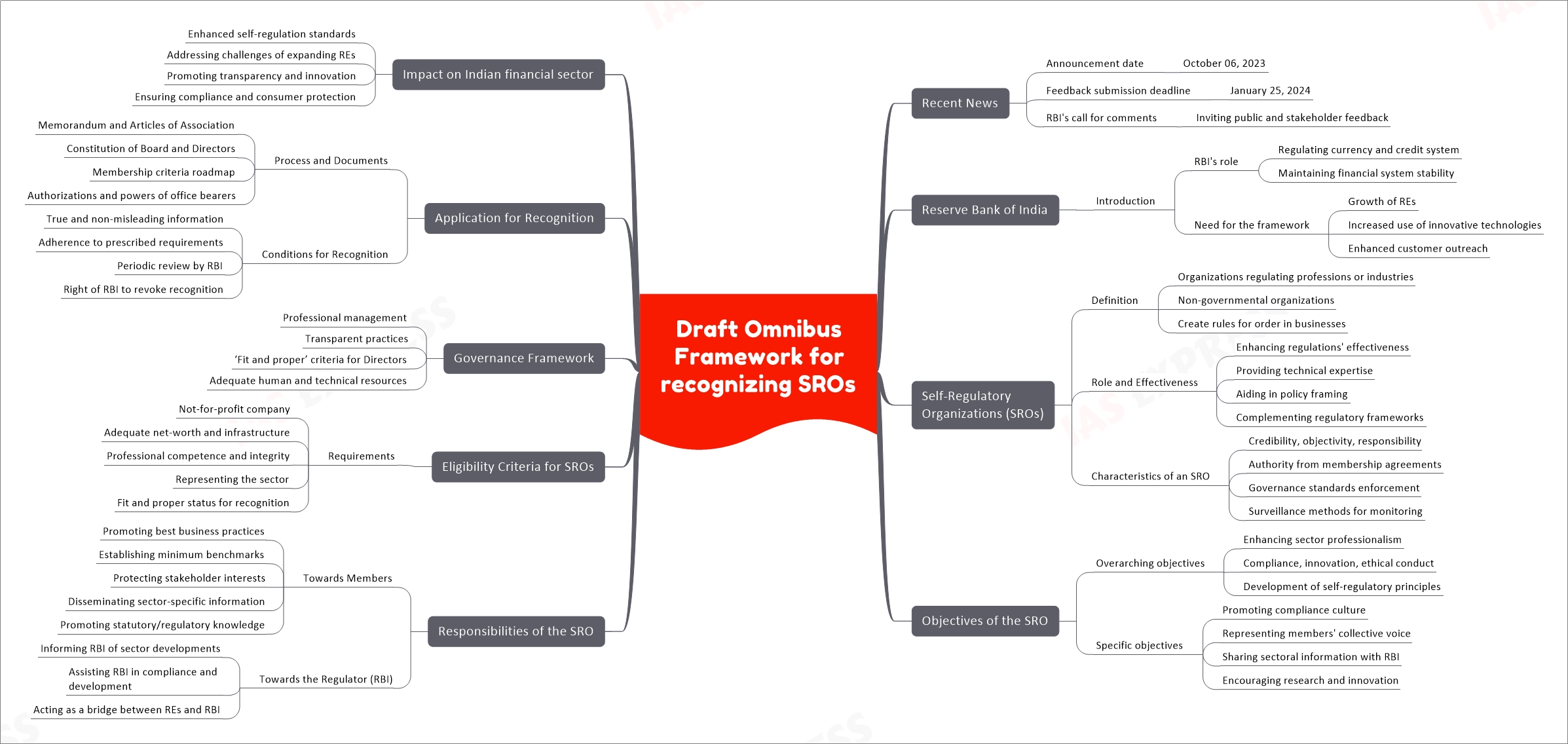
Draft Omnibus Framework for recognizing SROs mind map

  Reserve Bank of India
    Introduction
      RBI's role
        Regulating currency and credit system
        Maintaining financial system stability
      Need for the framework
        Growth of REs
        Increased use of innovative technologies
        Enhanced customer outreach
  Self-Regulatory Organizations (SROs)
    Definition
      Organizations regulating professions or industries
      Non-governmental organizations
      Create rules for order in businesses
    Role and Effectiveness
      Enhancing regulations' effectiveness
      Providing technical expertise
      Aiding in policy framing
      Complementing regulatory frameworks
    Characteristics of an SRO
      Credibility, objectivity, responsibility
      Authority from membership agreements
      Governance standards enforcement
      Surveillance methods for monitoring
  Objectives of the SRO
    Overarching objectives
      Enhancing sector professionalism
      Compliance, innovation, ethical conduct
      Development of self-regulatory principles
    Specific objectives
      Promoting compliance culture
      Representing members' collective voice
      Sharing sectoral information with RBI
      Encouraging research and innovation
  Responsibilities of the SRO
    Towards Members
      Promoting best business practices
      Establishing minimum benchmarks
      Protecting stakeholder interests
      Disseminating sector-specific information
      Promoting statutory/regulatory knowledge
    Towards the Regulator (RBI)
      Informing RBI of sector developments
      Assisting RBI in compliance and development
      Acting as a bridge between REs and RBI
  Eligibility Criteria for SROs
    Requirements
      Not-for-profit company
      Adequate net-worth and infrastructure
      Professional competence and integrity
      Representing the sector
      Fit and proper status for recognition
  Governance Framework
    Professional management
    Transparent practices
    ‘Fit and proper’ criteria for Directors
    Adequate human and technical resources
  Application for Recognition
    Process and Documents
      Memorandum and Articles of Association
      Constitution of Board and Directors
      Membership criteria roadmap
      Authorizations and powers of office bearers
    Conditions for Recognition
      True and non-misleading information
      Adherence to prescribed requirements
      Periodic review by RBI
      Right of RBI to revoke recognition
  Recent News
    Announcement date
      October 06, 2023
    Feedback submission deadline
      January 25, 2024
    RBI's call for comments
      Inviting public and stakeholder feedback
  Indian Context
    Impact on Indian financial sector
      Enhanced self-regulation standards
      Addressing challenges of expanding REs
      Promoting transparency and innovation
      Ensuring compliance and consumer protection

In simple terms, the Draft Omnibus Framework released by the RBI aims to establish improved standards for self-regulation in the financial sector by recognizing and regulating Self-Regulatory Organizations (SROs). These SROs are non-governmental bodies that will create rules to ensure order and ethical practices among businesses and organizations in various sectors. The framework outlines the roles, responsibilities, eligibility criteria, and governance standards for these SROs. It is part of RBI’s effort to enhance regulatory efficiency, foster innovation, and protect stakeholder interests in an increasingly complex and technologically advanced financial landscape.

Related Posts

If you like this post, please share your feedback in the comments section below so that we will upload more posts like this.

Responses

🖍️ Highlight
HomeCoursesPlansAccount