[Newsbits] 20.12.2023 – Lumpy Skin Disease, Great Unconformity, Indian Forest and Wood Certification Scheme & more

newsbits mindmap notes
/ Diseases
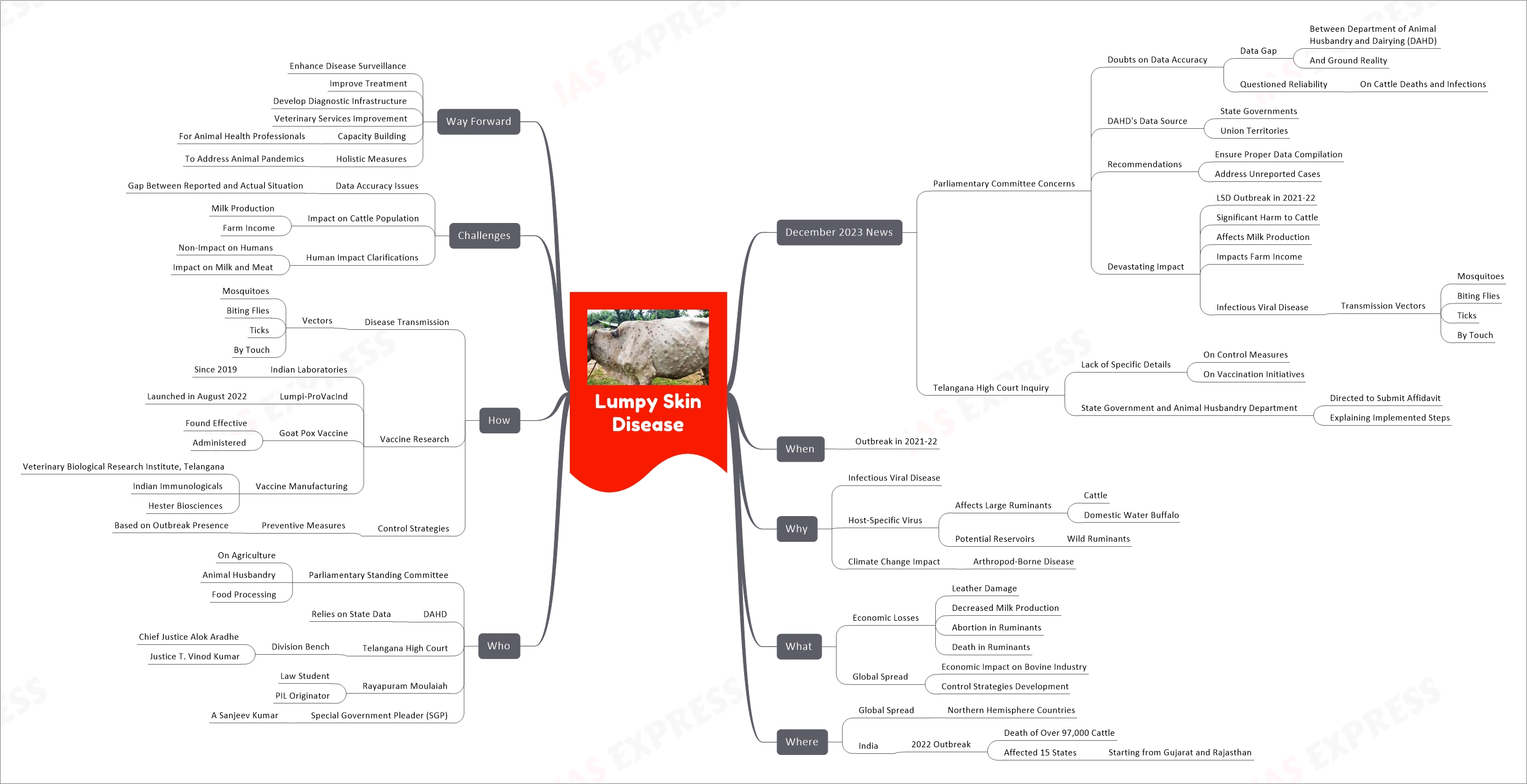
Lumpy Skin Disease mind map
  December 2023 News
    Parliamentary Committee Concerns
      Doubts on Data Accuracy
        Data Gap
          Between Department of Animal Husbandry and Dairying (DAHD)
          And Ground Reality
        Questioned Reliability
          On Cattle Deaths and Infections
      DAHD's Data Source
        State Governments
        Union Territories
      Recommendations
        Ensure Proper Data Compilation
        Address Unreported Cases
      Devastating Impact
        LSD Outbreak in 2021-22
        Significant Harm to Cattle
        Affects Milk Production
        Impacts Farm Income
        Infectious Viral Disease
          Transmission Vectors
            Mosquitoes
            Biting Flies
            Ticks
            By Touch
    Telangana High Court Inquiry
      Lack of Specific Details
        On Control Measures
        On Vaccination Initiatives
      State Government and Animal Husbandry Department
        Directed to Submit Affidavit
        Explaining Implemented Steps
  When
    Outbreak in 2021-22
  Why
    Infectious Viral Disease
    Host-Specific Virus
      Affects Large Ruminants
        Cattle
        Domestic Water Buffalo
      Potential Reservoirs
        Wild Ruminants
    Climate Change Impact
      Arthropod-Borne Disease
  What
    Economic Losses
      Leather Damage
      Decreased Milk Production
      Abortion in Ruminants
      Death in Ruminants
    Global Spread
      Economic Impact on Bovine Industry
      Control Strategies Development
  Where
    Global Spread
      Northern Hemisphere Countries
    India
      2022 Outbreak
        Death of Over 97,000 Cattle
        Affected 15 States
          Starting from Gujarat and Rajasthan
  Who
    Parliamentary Standing Committee
      On Agriculture
      Animal Husbandry
      Food Processing
    DAHD
      Relies on State Data
    Telangana High Court
      Division Bench
        Chief Justice Alok Aradhe
        Justice T. Vinod Kumar
    Rayapuram Moulaiah
      Law Student
      PIL Originator
    Special Government Pleader (SGP)
      A Sanjeev Kumar
  How
    Disease Transmission
      Vectors
        Mosquitoes
        Biting Flies
        Ticks
        By Touch
    Vaccine Research
      Indian Laboratories
        Since 2019
      Lumpi-ProVacInd
        Launched in August 2022
      Goat Pox Vaccine
        Found Effective
        Administered
      Vaccine Manufacturing
        Veterinary Biological Research Institute, Telangana
        Indian Immunologicals
        Hester Biosciences
    Control Strategies
      Preventive Measures
        Based on Outbreak Presence
  Challenges
    Data Accuracy Issues
      Gap Between Reported and Actual Situation
    Impact on Cattle Population
      Milk Production
      Farm Income
    Human Impact Clarifications
      Non-Impact on Humans
      Impact on Milk and Meat
  Way Forward
    Enhance Disease Surveillance
    Improve Treatment
    Develop Diagnostic Infrastructure
    Veterinary Services Improvement
    Capacity Building
      For Animal Health Professionals
    Holistic Measures
      To Address Animal Pandemics

Lumpy Skin Disease (LSD) is a significant infectious viral disease primarily affecting cattle and domestic water buffalo, with potential transmission to wild ruminants. Notably prevalent in the northern hemisphere, its emergence has been linked to climate change. The disease is characterized by severe economic losses due to cattle deaths, reduced milk production, and leather damage. In India, a notable outbreak in 2022 resulted in over 97,000 cattle deaths. Concerns about the accuracy of data on cattle deaths and infections have been raised, leading to recommendations for better data compilation and disease control. Efforts are ongoing to develop and administer effective vaccines, such as Lumpi-ProVacInd and the goat pox vaccine. The need for enhanced disease surveillance, improved veterinary services, and holistic measures to address such animal pandemics has been emphasized.
mind map

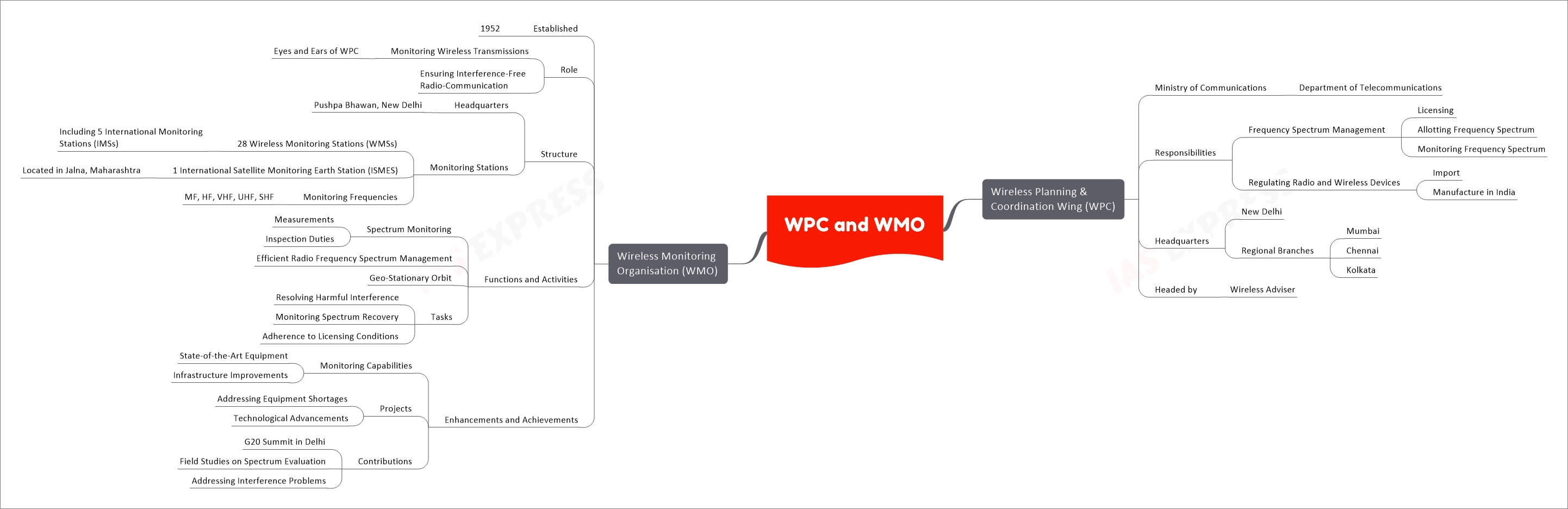
The Wireless Planning & Coordination Wing (WPC), functioning under the Ministry of Communications and the Department of Telecommunications in India, is responsible for managing the frequency spectrum, including licensing and monitoring. It also regulates the use and application of radio and wireless devices in India. WPC is headquartered in New Delhi and has regional branches in major cities.

The Wireless Monitoring Organisation (WMO), established in 1952, acts as the vigilant eye and ear of the WPC. It is responsible for monitoring all wireless transmissions in India and ensuring interference-free radio-communication services. The WMO comprises a network of 28 Wireless Monitoring Stations, including five International Monitoring Stations and one International Satellite Monitoring Earth Station located in Maharashtra. The organization plays a crucial role in spectrum monitoring, measurement, and inspection for efficient radio frequency spectrum management. Recent enhancements in the WMO include state-of-the-art equipment procurement, infrastructure improvements, and plans for further augmenting its capabilities, showcasing its commitment to technological advancements and operational efficiency.

In December 2023, the Wireless Planning & Coordination Wing (WPC) and the Wireless Monitoring Organisation (WMO) of India celebrated the International Monitoring Station (IMS) Day. This event, held on December 19, 2023, marks a significant milestone in the history of wireless monitoring and spectrum management in the country. It underscores the dedication of the personnel involved in ensuring an interference-free spectrum for public telecom services and wireless users in India.
/ Diseases
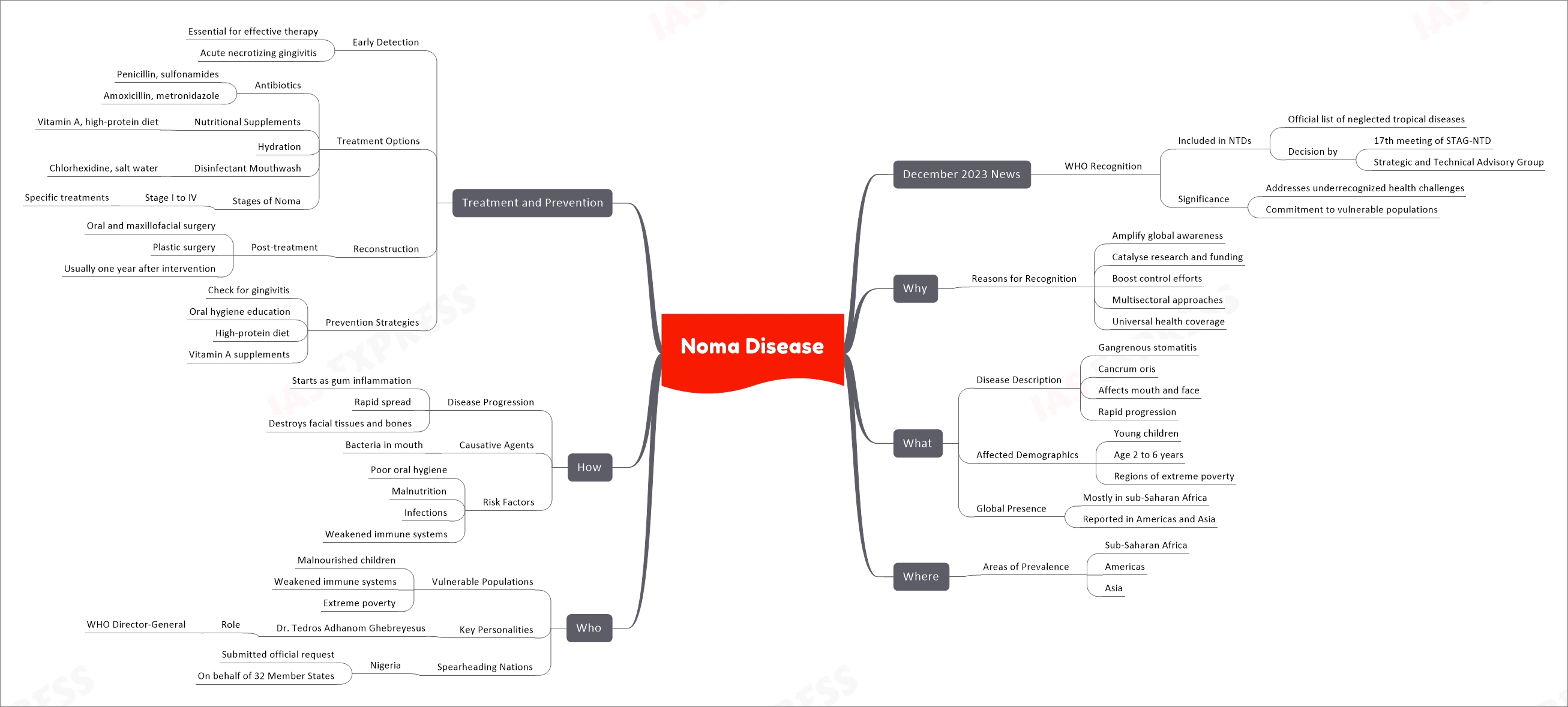
Noma Disease mind map
  December 2023 News
    WHO Recognition
      Included in NTDs
        Official list of neglected tropical diseases
        Decision by
          17th meeting of STAG-NTD
          Strategic and Technical Advisory Group
      Significance
        Addresses underrecognized health challenges
        Commitment to vulnerable populations
  Why
    Reasons for Recognition
      Amplify global awareness
      Catalyse research and funding
      Boost control efforts
      Multisectoral approaches
      Universal health coverage
  What
    Disease Description
      Gangrenous stomatitis
      Cancrum oris
      Affects mouth and face
      Rapid progression
    Affected Demographics
      Young children
      Age 2 to 6 years
      Regions of extreme poverty
    Global Presence
      Mostly in sub-Saharan Africa
      Reported in Americas and Asia
  Where
    Areas of Prevalence
      Sub-Saharan Africa
      Americas
      Asia
  Who
    Vulnerable Populations
      Malnourished children
      Weakened immune systems
      Extreme poverty
    Key Personalities
      Dr. Tedros Adhanom Ghebreyesus
        Role
          WHO Director-General
    Spearheading Nations
      Nigeria
        Submitted official request
        On behalf of 32 Member States
  How
    Disease Progression
      Starts as gum inflammation
      Rapid spread
      Destroys facial tissues and bones
    Causative Agents
      Bacteria in mouth
    Risk Factors
      Poor oral hygiene
      Malnutrition
      Infections
      Weakened immune systems
  Treatment and Prevention
    Early Detection
      Essential for effective therapy
      Acute necrotizing gingivitis
    Treatment Options
      Antibiotics
        Penicillin, sulfonamides
        Amoxicillin, metronidazole
      Nutritional Supplements
        Vitamin A, high-protein diet
      Hydration
      Disinfectant Mouthwash
        Chlorhexidine, salt water
      Stages of Noma
        Stage I to IV
          Specific treatments
    Reconstruction
      Post-treatment
        Oral and maxillofacial surgery
        Plastic surgery
        Usually one year after intervention
    Prevention Strategies
      Check for gingivitis
      Oral hygiene education
      High-protein diet
      Vitamin A supplements

Noma disease, recently recognized as a neglected tropical disease by WHO, is a severe gangrenous condition affecting the mouth and face, primarily impacting malnourished children aged 2 to 6 in poverty-stricken regions. Its rapid progression leads to facial tissue and bone destruction, often resulting in death or severe disfigurement. Noma is caused by oral bacteria, exacerbated by poor hygiene, malnutrition, and weakened immunity. Early detection and treatment, primarily through antibiotics and nutritional support, are crucial. WHO’s inclusion of noma as an NTD underscores its commitment to addressing this long-neglected health challenge, aiming to boost awareness, research, and multisectoral intervention efforts.
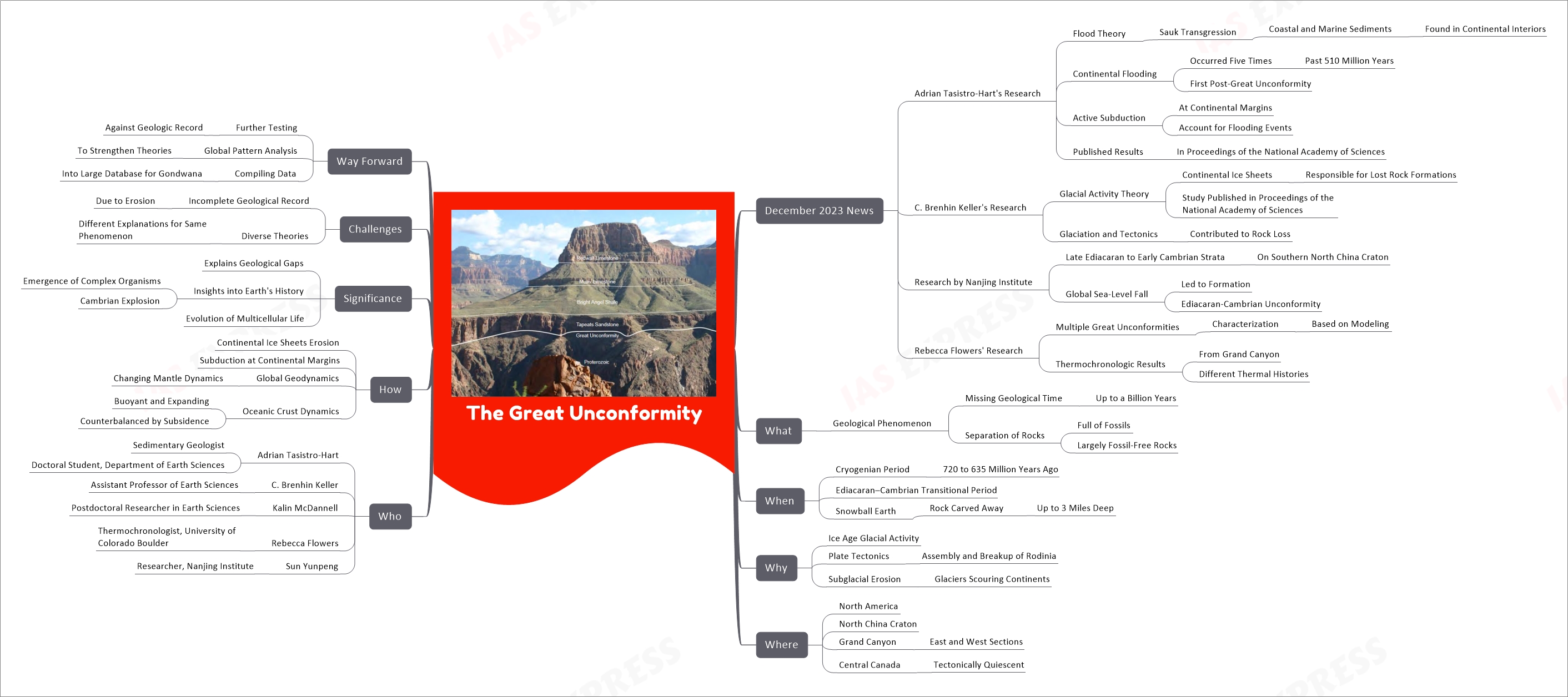
/ Geography
The Great Unconformity mind map
  December 2023 News
    Adrian Tasistro-Hart's Research
      Flood Theory
        Sauk Transgression
          Coastal and Marine Sediments
            Found in Continental Interiors
      Continental Flooding
        Occurred Five Times
          Past 510 Million Years
        First Post-Great Unconformity
      Active Subduction
        At Continental Margins
        Account for Flooding Events
      Published Results
        In Proceedings of the National Academy of Sciences
    C. Brenhin Keller's Research
      Glacial Activity Theory
        Continental Ice Sheets
          Responsible for Lost Rock Formations
        Study Published in Proceedings of the National Academy of Sciences
      Glaciation and Tectonics
        Contributed to Rock Loss
    Research by Nanjing Institute
      Late Ediacaran to Early Cambrian Strata
        On Southern North China Craton
      Global Sea-Level Fall
        Led to Formation
        Ediacaran-Cambrian Unconformity
    Rebecca Flowers' Research
      Multiple Great Unconformities
        Characterization
          Based on Modeling
      Thermochronologic Results
        From Grand Canyon
        Different Thermal Histories
  What
    Geological Phenomenon
      Missing Geological Time
        Up to a Billion Years
      Separation of Rocks
        Full of Fossils
        Largely Fossil-Free Rocks
  When
    Cryogenian Period
      720 to 635 Million Years Ago
    Ediacaran–Cambrian Transitional Period
    Snowball Earth
      Rock Carved Away
        Up to 3 Miles Deep
  Why
    Ice Age Glacial Activity
    Plate Tectonics
      Assembly and Breakup of Rodinia
    Subglacial Erosion
      Glaciers Scouring Continents
  Where
    North America
    North China Craton
    Grand Canyon
      East and West Sections
    Central Canada
      Tectonically Quiescent
  Who
    Adrian Tasistro-Hart
      Sedimentary Geologist
      Doctoral Student, Department of Earth Sciences
    C. Brenhin Keller
      Assistant Professor of Earth Sciences
    Kalin McDannell
      Postdoctoral Researcher in Earth Sciences
    Rebecca Flowers
      Thermochronologist, University of Colorado Boulder
    Sun Yunpeng
      Researcher, Nanjing Institute
  How
    Continental Ice Sheets Erosion
    Subduction at Continental Margins
    Global Geodynamics
      Changing Mantle Dynamics
    Oceanic Crust Dynamics
      Buoyant and Expanding
      Counterbalanced by Subsidence
  Significance
    Explains Geological Gaps
    Insights into Earth's History
      Emergence of Complex Organisms
      Cambrian Explosion
    Evolution of Multicellular Life
  Challenges
    Incomplete Geological Record
      Due to Erosion
    Diverse Theories
      Different Explanations for Same Phenomenon
  Way Forward
    Further Testing
      Against Geologic Record
    Global Pattern Analysis
      To Strengthen Theories
    Compiling Data
      Into Large Database for Gondwana

The Great Unconformity is a significant geological phenomenon characterized by a massive gap in the Earth’s geological record, spanning up to a billion years. It separates fossil-rich rocks from older, largely fossil-free rocks. Recent studies in 2023, including those by Adrian Tasistro-Hart and C. Brenhin Keller, have proposed different theories to explain this enigma. Tasistro-Hart suggests that continental flooding caused by active subduction at continental margins, particularly during the Sauk Transgression, contributed to the Great Unconformity. Keller’s research points to the role of glaciation during the Cryogenian period. Other researchers, like Rebecca Flowers, argue that there could be multiple Great Unconformities caused by a combination of factors, including glaciation and tectonics. These studies not only attempt to explain the geological gaps but also explore the implications for Earth’s history and the evolution of complex life.
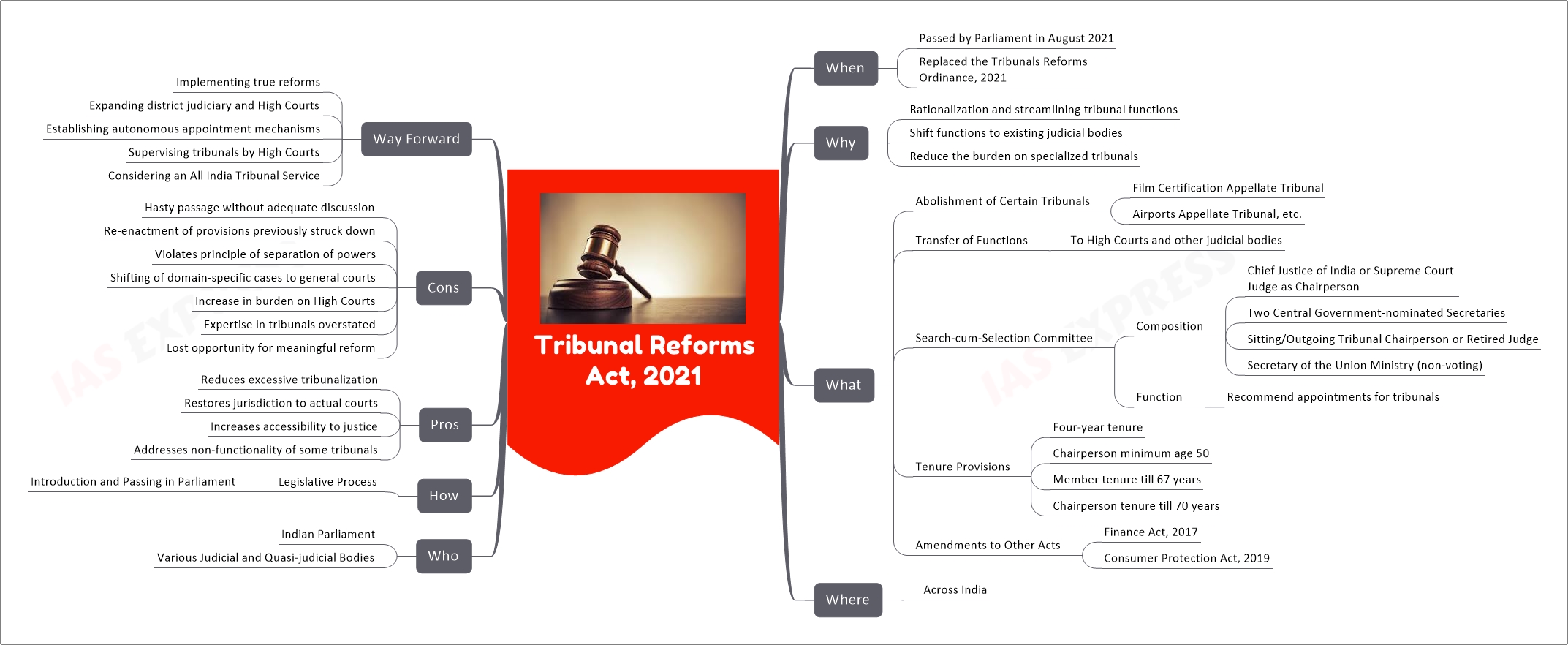
/ Judiciary/Justice
Tribunal Reforms Act, 2021 comprehensive mind map
  When
    Passed by Parliament in August 2021
    Replaced the Tribunals Reforms Ordinance, 2021
  Why
    Rationalization and streamlining tribunal functions
    Shift functions to existing judicial bodies
    Reduce the burden on specialized tribunals
  What
    Abolishment of Certain Tribunals
      Film Certification Appellate Tribunal
      Airports Appellate Tribunal, etc.
    Transfer of Functions
      To High Courts and other judicial bodies
    Search-cum-Selection Committee
      Composition
        Chief Justice of India or Supreme Court Judge as Chairperson
        Two Central Government-nominated Secretaries
        Sitting/Outgoing Tribunal Chairperson or Retired Judge
        Secretary of the Union Ministry (non-voting)
      Function
        Recommend appointments for tribunals
    Tenure Provisions
      Four-year tenure
      Chairperson minimum age 50
      Member tenure till 67 years
      Chairperson tenure till 70 years
    Amendments to Other Acts
      Finance Act, 2017
      Consumer Protection Act, 2019
  Where
    Across India
  Who
    Indian Parliament
    Various Judicial and Quasi-judicial Bodies
  How
    Legislative Process
      Introduction and Passing in Parliament
  Pros
    Reduces excessive tribunalization
    Restores jurisdiction to actual courts
    Increases accessibility to justice
    Addresses non-functionality of some tribunals
  Cons
    Hasty passage without adequate discussion
    Re-enactment of provisions previously struck down
    Violates principle of separation of powers
    Shifting of domain-specific cases to general courts
    Increase in burden on High Courts
    Expertise in tribunals overstated
    Lost opportunity for meaningful reform
  Way Forward
    Implementing true reforms
    Expanding district judiciary and High Courts
    Establishing autonomous appointment mechanisms
    Supervising tribunals by High Courts
    Considering an All India Tribunal Service

Summary: The Tribunal Reforms Act, 2021, represents an attempt to streamline the tribunal system in India by abolishing certain tribunals and transferring their functions to existing judicial bodies. While it aims to reduce the burden on specialized tribunals and increase accessibility to justice, the Act has faced criticism for its hasty passage, potential violation of the principle of separation of powers, and for reintroducing provisions previously struck down by the Supreme Court. The way forward includes implementing true reforms, expanding the judiciary, and establishing autonomous mechanisms for appointments and oversight.
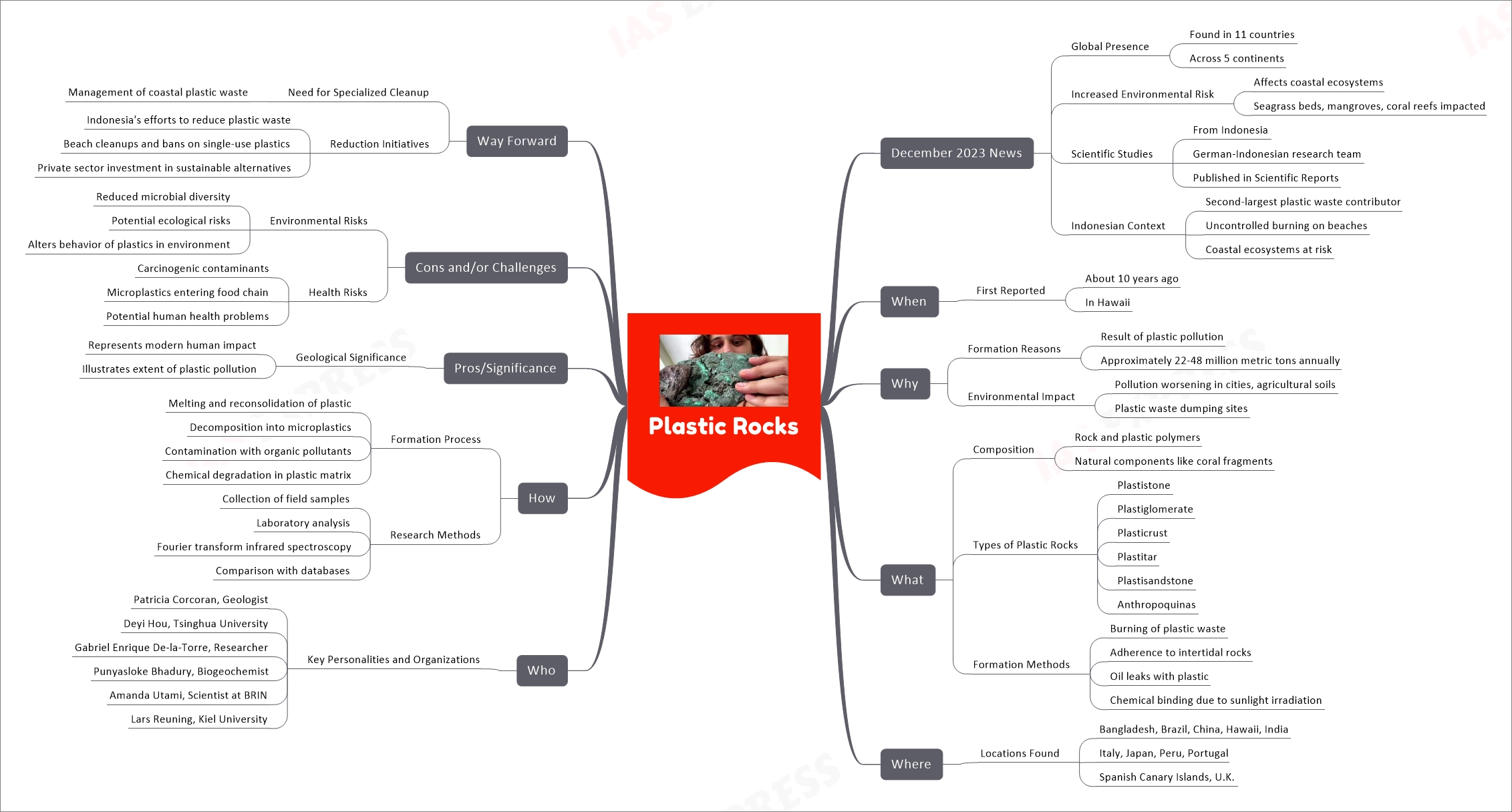
mind map

Summary:- Plastic rocks, a novel and alarming form of pollution, have been found globally, across 11 countries and 5 continents, illustrating the severe extent of plastic pollution. First reported about a decade ago in Hawaii, these rocks form from the combination of rock and plastic polymers, mainly due to human waste. Various types, including plastistone, plastiglomerate, and plasticrust, have been identified. They are often created through burning plastic waste or its adherence to rocks, among other methods.

This phenomenon poses significant environmental risks, including the degradation of coastal ecosystems and marine life due to microplastic formation and toxic chemical release. It also highlights the health risks associated with carcinogenic contaminants. The formation of plastic rocks represents a substantial ecological footprint of modern human activity.

Addressing this issue requires a specialized approach to manage coastal plastic waste. Indonesia, a major plastic waste contributor, is actively working towards reducing this impact through beach cleanups, single-use plastic bans, and sustainable alternatives. These efforts are crucial in mitigating the environmental and health risks posed by plastic rocks.
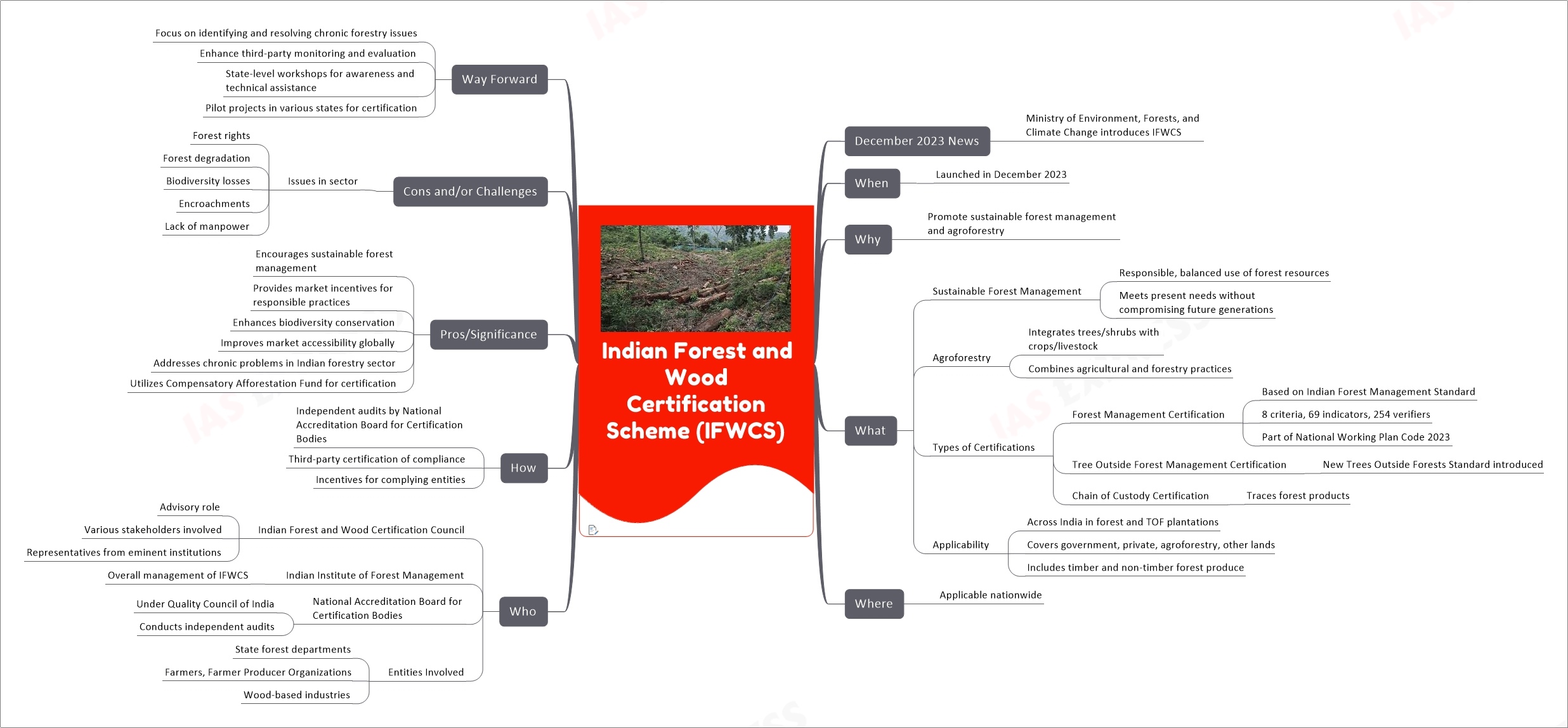
Indian Forest and Wood Certification Scheme (IFWCS) mind map
  December 2023 News
    Ministry of Environment, Forests, and Climate Change introduces IFWCS
  When
    Launched in December 2023
  Why
    Promote sustainable forest management and agroforestry
  What
    Sustainable Forest Management
      Responsible, balanced use of forest resources
      Meets present needs without compromising future generations
    Agroforestry
      Integrates trees/shrubs with crops/livestock
      Combines agricultural and forestry practices
    Types of Certifications
      Forest Management Certification
        Based on Indian Forest Management Standard
        8 criteria, 69 indicators, 254 verifiers
        Part of National Working Plan Code 2023
      Tree Outside Forest Management Certification
        New Trees Outside Forests Standard introduced
      Chain of Custody Certification
        Traces forest products
    Applicability
      Across India in forest and TOF plantations
      Covers government, private, agroforestry, other lands
      Includes timber and non-timber forest produce
  Where
    Applicable nationwide
  Who
    Indian Forest and Wood Certification Council
      Advisory role
      Various stakeholders involved
      Representatives from eminent institutions
    Indian Institute of Forest Management
      Overall management of IFWCS
    National Accreditation Board for Certification Bodies
      Under Quality Council of India
      Conducts independent audits
    Entities Involved
      State forest departments
      Farmers, Farmer Producer Organizations
      Wood-based industries
  How
    Independent audits by National Accreditation Board for Certification Bodies
    Third-party certification of compliance
    Incentives for complying entities
  Pros/Significance
    Encourages sustainable forest management
    Provides market incentives for responsible practices
    Enhances biodiversity conservation
    Improves market accessibility globally
    Addresses chronic problems in Indian forestry sector
    Utilizes Compensatory Afforestation Fund for certification
  Cons and/or Challenges
    Issues in sector
      Forest rights
      Forest degradation
      Biodiversity losses
      Encroachments
      Lack of manpower
  Way Forward
    Focus on identifying and resolving chronic forestry issues
    Enhance third-party monitoring and evaluation
    State-level workshops for awareness and technical assistance
    Pilot projects in various states for certification

Summary: The Indian Forest and Wood Certification Scheme is a national initiative aimed at promoting sustainable forest management and agroforestry. It includes certifications for forest management, tree outside forest management, and chain of custody. This scheme is applicable throughout India and involves multiple stakeholders, including state forest departments, farmers, and wood-based industries. The scheme’s implementation is expected to provide market incentives for entities adhering to sustainable practices, thereby addressing various challenges in the forestry sector such as forest rights issues, forest degradation, and biodiversity losses.
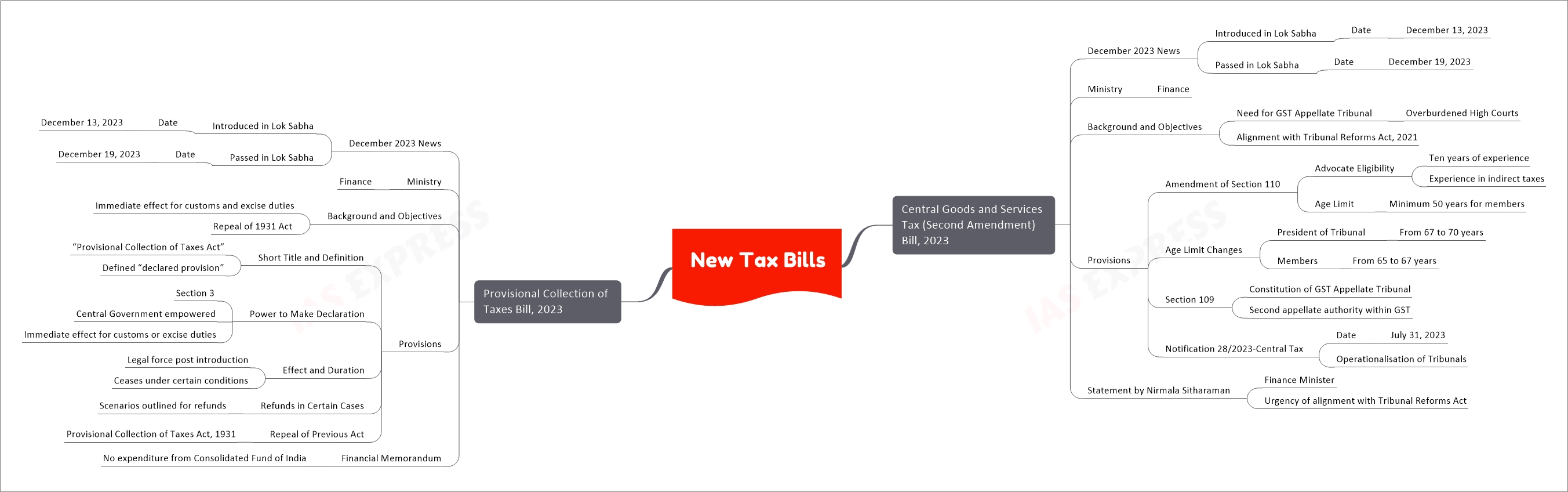
New Tax Bills mind map
  Central Goods and Services Tax (Second Amendment) Bill, 2023
    December 2023 News
      Introduced in Lok Sabha
        Date
          December 13, 2023
      Passed in Lok Sabha
        Date
          December 19, 2023
    Ministry
      Finance
    Background and Objectives
      Need for GST Appellate Tribunal
        Overburdened High Courts
      Alignment with Tribunal Reforms Act, 2021
    Provisions
      Amendment of Section 110
        Advocate Eligibility
          Ten years of experience
          Experience in indirect taxes
        Age Limit
          Minimum 50 years for members
      Age Limit Changes
        President of Tribunal
          From 67 to 70 years
        Members
          From 65 to 67 years
      Section 109
        Constitution of GST Appellate Tribunal
        Second appellate authority within GST
      Notification 28/2023-Central Tax
        Date
          July 31, 2023
        Operationalisation of Tribunals
    Statement by Nirmala Sitharaman
      Finance Minister
      Urgency of alignment with Tribunal Reforms Act
  Provisional Collection of Taxes Bill, 2023
    December 2023 News
      Introduced in Lok Sabha
        Date
          December 13, 2023
      Passed in Lok Sabha
        Date
          December 19, 2023
    Ministry
      Finance
    Background and Objectives
      Immediate effect for customs and excise duties
      Repeal of 1931 Act
    Provisions
      Short Title and Definition
        “Provisional Collection of Taxes Act”
        Defined “declared provision”
      Power to Make Declaration
        Section 3
        Central Government empowered
        Immediate effect for customs or excise duties
      Effect and Duration
        Legal force post introduction
        Ceases under certain conditions
      Refunds in Certain Cases
        Scenarios outlined for refunds
      Repeal of Previous Act
        Provisional Collection of Taxes Act, 1931
    Financial Memorandum
      No expenditure from Consolidated Fund of India

The Central Goods and Services Tax (Second Amendment) Bill, 2023, and the Provisional Collection of Taxes Bill, 2023, are significant legislative developments introduced in December 2023. The former amends the Central Goods and Services Tax Act, 2017, primarily to establish a Goods and Services Tax Appellate Tribunal, aligning the Act with the Tribunal Reforms Act of 2021. This tribunal aims to relieve the burden on High Courts and provide a second appellate authority within the GST framework. Key changes include modifications in the qualifications for tribunal members and adjustments to age limits. The latter bill repeals the Provisional Collection of Taxes Act, 1931, and focuses on providing immediate effect to certain customs and excise duty provisions. It ensures fiscal responsibility by not involving expenditure from the Consolidated Fund of India. Both bills reflect the Indian government’s efforts to streamline tax legislation and administration.

If you like this post, please share your feedback in the comments section below so that we will upload more posts like this.

Responses

🖍️ Highlight
HomeCoursesPlansAccount