
5.3.2 Role of Multinational Corporations (MNCs) in Economic Growth and Development
Multinational Corporations (MNCs) play a pivotal role in shaping the economic landscape of developing countries like India. As carriers of foreign direct investment, advanced technology, and global business practices, MNCs have become vital drivers of industrialization, employment, and integration into global markets. Their presence influences multiple dimensions of development—from boosting exports and modernizing supply chains to reshaping consumer behavior and labor markets. However, their operations also bring challenges such as market dominance, environmental degradation, profit repatriation, and potential policy influence. Understanding and managing this dual impact is essential for ensuring that MNCs contribute meaningfully to inclusive and sustainable national development.
MNCs as Conduits of Foreign Direct Investment and Capital Formation
- The primary and most direct impact of Multinational Corporations on a host economy is through the infusion of Foreign Direct Investment (FDI), which serves as a critical source of non-debt-creating capital. This inflow is vital for countries like India, which historically face a domestic savings-investment gap.
- FDI acts as a supplement to domestic capital, enhancing the overall rate of investment and capital formation within the economy. The Harrod-Domar model, despite its limitations, provides a basic framework to understand this, where growth is a function of the savings/investment rate. The model is expressed as [latex]g = s/k[/latex], where [latex]g[/latex] is the growth rate of GDP, [latex]s[/latex] is the savings rate, and [latex]k[/latex] is the capital-output ratio. FDI inflows effectively increase [latex]s[/latex], thereby augmenting the potential growth rate.
- India has witnessed a significant surge in FDI, crossing the landmark of US$1.03 trillion in cumulative inflows between April 2000 and September 2024. A substantial portion of this, over 69 percent, has been received since 2014, indicating an accelerating trend.
- In the fiscal year 2024-25 alone, India recorded FDI inflows of US$81.04 billion, marking a 14% increase from the previous year. This consistent inflow helps in financing the current account deficit and maintaining a stable balance of payments position.
- The nature of FDI is often more stable than that of Foreign Portfolio Investment (FPI). FDI involves a long-term interest in the host economy, typically through the establishment of production facilities, whereas FPI is often speculative and can be withdrawn quickly, leading to capital flight and macroeconomic instability.
- FDI acts as a supplement to domestic capital, enhancing the overall rate of investment and capital formation within the economy. The Harrod-Domar model, despite its limitations, provides a basic framework to understand this, where growth is a function of the savings/investment rate. The model is expressed as [latex]g = s/k[/latex], where [latex]g[/latex] is the growth rate of GDP, [latex]s[/latex] is the savings rate, and [latex]k[/latex] is the capital-output ratio. FDI inflows effectively increase [latex]s[/latex], thereby augmenting the potential growth rate.
- The sectoral distribution of FDI brought in by MNCs reveals the strategic priorities of global capital and shapes the industrial landscape of the host country.
- In India, the services sector has consistently been the largest recipient of FDI, accounting for approximately 16 percent of total cumulative inflows, which amounts to around US$\text{115.19 billion. This includes high-growth areas like financial services, information technology, and business process outsourcing.
- For the fiscal year 2024-25, the services sector attracted 19 percent of the total FDI equity inflows, demonstrating its continued dominance.
- Following services, the computer software and hardware sector received 16 percent, and the trading sector received 8 percent of the FDI equity inflows in FY 2024-25.
- There is a growing trend of FDI flowing into manufacturing, bolstered by government initiatives like ‘Make in India’ and Production-Linked Incentive (PLI) schemes.
- FDI in the manufacturing sector grew by 18\% to reach USD 19.04 billion in FY 2024-25.
- Emerging sectors like non-conventional energy are also gaining traction, with FDI in the renewable energy sector rising by 50\% to USD 3.76 billion in FY 2023-24.
- In India, the services sector has consistently been the largest recipient of FDI, accounting for approximately 16 percent of total cumulative inflows, which amounts to around US$\text{115.19 billion. This includes high-growth areas like financial services, information technology, and business process outsourcing.
- The geographical distribution of FDI within a large federal country like India is often skewed, leading to regional disparities in development.
- A few states with better infrastructure, skilled labour, and proactive governance tend to attract the bulk of FDI inflows.
- In FY 2024-25, Maharashtra was the leading recipient, accounting for a remarkable 39\% of the total FDI equity inflows.
- Karnataka followed with 13\%, and Delhi with 12\%, showcasing a concentration of foreign investment in these developed states.
- This concentration can exacerbate regional inequalities, as states with lower FDI inflows may lag in industrial development and job creation.
- A few states with better infrastructure, skilled labour, and proactive governance tend to attract the bulk of FDI inflows.
- The source countries of FDI are also concentrated, reflecting global economic power dynamics and bilateral investment relationships.
- Historically, a significant portion of FDI into India has been routed through countries with favourable tax treaties, such as Mauritius and Singapore.
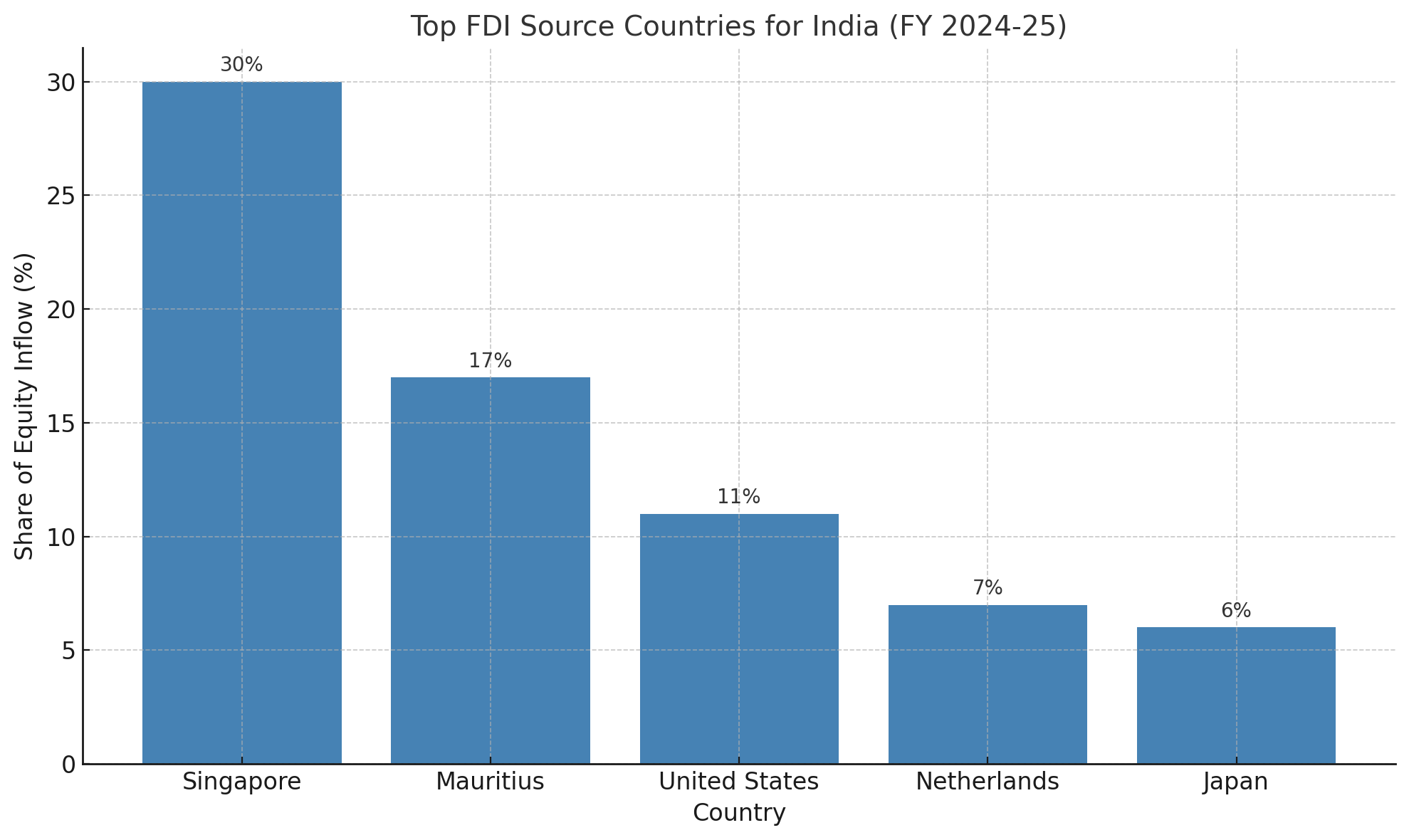
- Between April 2000 and March 2025, Mauritius was the largest source, contributing 25\% of total FDI, followed closely by Singapore at 24\%.
- In the more recent fiscal year of 2024-25, Singapore took the lead with a 30\% share of inflows, followed by Mauritius (17\%) and the United States (11\%). The continued prominence of these small island nations highlights the role of tax planning and treaty shopping in global investment flows.
- Historically, a significant portion of FDI into India has been routed through countries with favourable tax treaties, such as Mauritius and Singapore.
- Numerical Problem:
- Suppose the FDI inflow into a country was US}$70 billion in FY 2023-24 and increased to US$81.04 billion in FY 2024-25. Calculate the percentage growth rate of FDI inflows.
- Solution:
- The formula for percentage growth rate is: [latex]\text{Growth Rate} = \frac{(\text{Current Year Value} – \text{Previous Year Value})}{\text{Previous Year Value}} \times 100[/latex]
- Plugging in the values: [latex]\text{Growth Rate} = \frac{(81.04 – 70)}{70} \times 100[/latex]
- [latex]\text{Growth Rate} = \frac{11.04}{70} \times 100[/latex]
- [latex]\text{Growth Rate} \approx 15.77%[/latex]
- However, official reports often use slightly different base figures or calculation methods, leading to the reported 14% growth. This calculation demonstrates the basic method.
Technology Transfer and Spillover Effects
- MNCs are primary vehicles for the international transfer of technology, which is a crucial determinant of productivity growth and economic development. This transfer occurs through various channels, both formal and informal.
- Formal channels of technology transfer include:
- Foreign Direct Investment: When an MNC sets up a subsidiary or a joint venture in a host country, it brings with it advanced production processes, machinery, and equipment. This is often referred to as embodied technology transfer.
- Licensing and Franchising: MNCs may license their patents, trademarks, or production techniques to domestic firms in exchange for royalties. This allows local firms to access advanced technology without direct foreign ownership.
- Technical Agreements: MNCs often enter into specific agreements for technical assistance, training of local personnel, and sharing of managerial expertise.
- Informal channels, often termed ‘spillover effects’, are externalities that benefit domestic firms and the broader economy without direct compensation to the MNC. These are often the most significant long-term benefits.
- Demonstration Effect: Local firms observe the superior technologies and management practices of MNCs and are induced to imitate them to remain competitive.
- Labour Turnover: When employees trained by MNCs move to domestic firms or start their own businesses, they carry with them valuable skills, knowledge, and work culture. This diffusion of human capital is a powerful spillover mechanism.
- Competition Effect: The entry of efficient MNCs forces domestic firms to innovate, adopt new technologies, and improve their operational efficiency to survive. This competitive pressure can be a strong catalyst for technological upgrading across an entire industry.
- Formal channels of technology transfer include:
- The extent and effectiveness of technology transfer and spillovers depend on the ‘absorptive capacity’ of the host country.
- Absorptive capacity refers to the ability of a host country’s firms and institutions to identify, assimilate, and exploit new technology. Key determinants include:
- Human Capital: The level of education and technical skills of the local workforce is paramount. A skilled labour force can more easily learn and adapt to new technologies. India’s large pool of engineers and technical graduates is a major attraction for R&D-intensive MNCs.
- Domestic R&D Efforts: Firms that invest in their own R&D are better equipped to understand and adapt foreign technologies to local conditions.
- Infrastructure: Reliable power, transportation, and communication infrastructure are necessary for the effective deployment of modern technologies.
- Policy Environment: Government policies related to intellectual property rights (IPR), trade openness, and competition affect the willingness of MNCs to transfer technology and the ability of local firms to absorb it.
- Absorptive capacity refers to the ability of a host country’s firms and institutions to identify, assimilate, and exploit new technology. Key determinants include:
- Technology spillovers can be categorized based on the linkages between MNCs and domestic firms.
- Backward Linkages: These occur when MNCs source raw materials, components, or services from local suppliers. To meet the stringent quality and delivery standards of MNCs, these local suppliers are often compelled to upgrade their technology and production processes. The MNC may provide direct technical assistance, training, and quality control support to its suppliers.
- For example, in the Indian automotive industry, global automakers like Suzuki (through Maruti Suzuki) and Hyundai have fostered a robust ecosystem of local auto-ancillary suppliers, transferring technology and best practices in areas like just-in-time manufacturing and total quality management.
- Forward Linkages: These occur when domestic firms purchase intermediate goods or services from local MNC affiliates. For instance, a local food processing company might benefit from high-quality, specialized packaging materials produced by an MNC subsidiary in India.
- Backward Linkages: These occur when MNCs source raw materials, components, or services from local suppliers. To meet the stringent quality and delivery standards of MNCs, these local suppliers are often compelled to upgrade their technology and production processes. The MNC may provide direct technical assistance, training, and quality control support to its suppliers.
- Despite the potential benefits, technology transfer is not automatic and can be limited by several factors.
- MNC Strategy: MNCs may be reluctant to transfer their most advanced, cutting-edge technologies, especially to wholly-owned subsidiaries in countries with weak IPR protection, for fear of leakage to competitors. They might transfer older or standardized technologies.
- Technology Gap: If the technological gap between the MNC and domestic firms is too wide, local firms may lack the necessary absorptive capacity to learn and benefit from the foreign technology. A moderate gap is often considered optimal for maximizing spillovers.
- Enclave Economies: In some cases, MNCs may operate in isolated enclaves, with minimal linkages to the domestic economy. This is common in sectors like mining or specialized export processing zones, where most inputs are imported and outputs are exported, limiting the potential for backward and forward linkages.
Research & Development (R&D) Ecosystem and MNCs
- The globalization of R&D has led to many MNCs establishing research facilities outside their home countries, and India has emerged as a major global hub for these activities.
- The presence of MNC R&D centers contributes significantly to the host country’s innovation ecosystem. It is estimated that over 150 major international companies have established R&D operations in India.
- Cities like Bangalore, Hyderabad, and Pune have become epicenters for this activity. Bangalore, for instance, accounted for 35% of the global in-house centres (GICs) in India in 2016.
- The total value of R&D work conducted in India is estimated to be around US$40 billion, a figure that is expected to grow as more complex and high-value research is offshored to the country.
- MNCs like Google, Microsoft, Adobe, Samsung, and Intel have large-scale R&D facilities in India, employing thousands of local scientists and engineers.
- Adobe, for example, employs nearly 4,500 people in India, with a significant portion of its Bengaluru workforce engaged in R&D.
- These centers are not merely for adapting products to the local market but are often integrated into the MNC’s global R&D network, contributing to core product development and basic research.
- The presence of MNC R&D centers contributes significantly to the host country’s innovation ecosystem. It is estimated that over 150 major international companies have established R&D operations in India.
- However, the R&D spending by MNC subsidiaries in India is often a fraction of the global R&D expenditure of their parent companies, highlighting a potential disparity in the depth of research conducted.
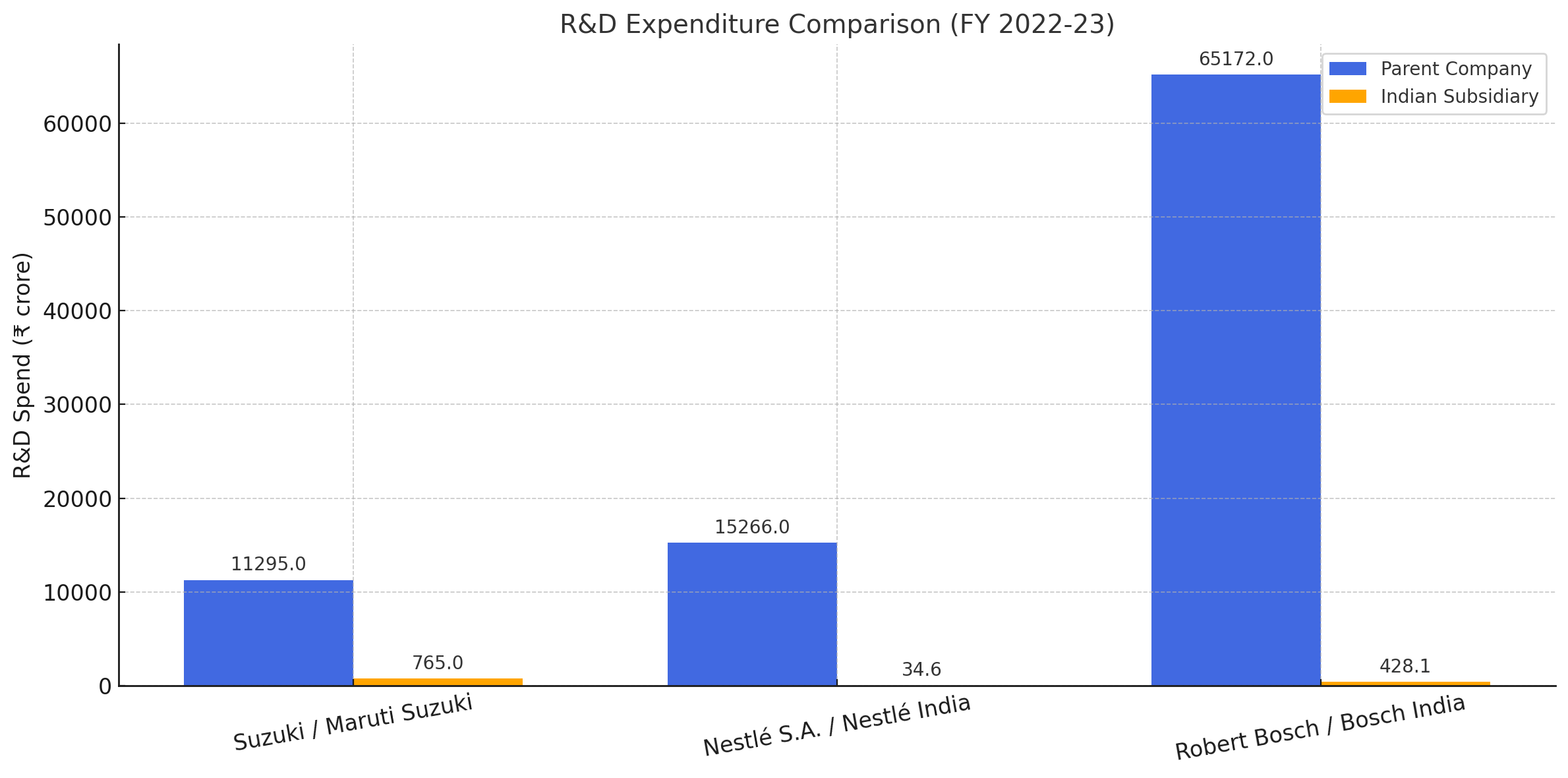
- A comparative analysis reveals a stark difference:
- In FY 2022-23, Suzuki Motor Corporation’s global R&D expenditure was approximately ₹11,295 crore, while its Indian subsidiary, Maruti Suzuki, spent ₹765 crore on R&D.
- The contrast is even more pronounced for a company like Nestlé. The parent company, Nestlé S.A., spent over ₹15,266 crore on R&D, whereas Nestlé India’s expenditure was a mere ₹34.62 crore.
- Similarly, Robert Bosch’s global R&D spend was over ₹65,172 crore, compared to Bosch India’s spend of ₹428.1 crore.
- This data suggests that while India is a significant location for R&D execution, a large part of the strategic, high-cost, and frontier research may still be concentrated in the MNCs’ home countries or other developed nations.
- A comparative analysis reveals a stark difference:
- The R&D activities of MNCs in India have a dual impact on the domestic innovation landscape.
- Positive Impacts:
- Creation of a High-Skilled Talent Pool: MNC R&D centers train a large number of Indian professionals in cutting-edge technologies and global R&D processes, enhancing the national talent pool.
- Ecosystem Development: The presence of major MNC R&D centers attracts other firms, startups, and venture capital, creating a vibrant innovation cluster.
- University-Industry Linkages: MNCs often collaborate with Indian universities and research institutes on specific projects, fostering a much-needed link between academia and industry.
- Potential Negative Impacts:
- Brain Drain: While it provides local employment, it can also be seen as a form of internal brain drain, where the country’s top talent works on innovations for foreign companies, with the resulting intellectual property and profits owned by the MNC.
- Limited Spillovers: If the R&D is conducted in a highly secretive and enclosed environment, the knowledge spillovers to the broader domestic economy might be limited.
- Crowding out of Domestic R&D: MNCs can attract the best research talent by offering higher salaries and better facilities, making it difficult for domestic firms and public research institutions to compete for skilled personnel.
- Positive Impacts:
- India’s overall Gross Expenditure on R&D (GERD) as a percentage of GDP remains low compared to global peers, and the private sector’s contribution is a key area of concern.
- India’s GERD is around 0.7% of its GDP, which is significantly lower than countries like China (2.4%), the US (3.1%), and Israel (5.6%).
- In most developed economies, the business sector is the primary driver of R&D spending, often contributing over 70% of the total. In India, the government remains the largest spender, with the private sector’s contribution being disproportionately low.
- The R&D activities of MNCs, while valuable, are not a substitute for robust domestic R&D investment by Indian firms. Policy initiatives are increasingly focused on incentivizing the Indian private sector to increase its R&D intensity.
Employment Generation and Labour Market Dynamics
- MNCs are significant contributors to employment in the host country, creating jobs both directly within their own operations and indirectly through their supply chains and the broader economy.
- Direct Employment: This refers to the people directly hired by the MNC to work in its factories, offices, and R&D centers.
- MNCs are major employers in the formal organized sector, particularly in industries like IT, automotive, consumer electronics, and financial services.
- The rise of Global Capability Centers (GCCs) of MNCs in India is a major driver of high-skilled job creation. It is projected that GCCs could create up to 2.8 million jobs in India by 2030.
- These jobs are often characterized by higher wages, better working conditions, and more structured training and career development opportunities compared to the unorganized sector.
- Indirect Employment: This is the employment generated in other firms and sectors as a result of the MNC’s activities.
- Backward Linkages: Jobs are created in local firms that supply raw materials, components, and services to the MNC. For every job created directly in an auto assembly plant, several more are created in the ancillary industry.
- Forward Linkages: Jobs are created in logistics, distribution, retail, and marketing sectors that help bring the MNC’s products to the final consumer.
- Multiplier Effect: The income earned by those directly and indirectly employed by MNCs is spent in the economy, creating further demand and jobs in various sectors like housing, retail, and entertainment. This is known as the Keynesian income multiplier effect.
- Direct Employment: This refers to the people directly hired by the MNC to work in its factories, offices, and R&D centers.
- Numerical Problem:
- An MNC sets up a new manufacturing plant in India, directly employing 2,000 workers. Economic analysis suggests that for every direct job, 3.5 indirect jobs are created through backward and forward linkages. Further, the income multiplier for the region is estimated to be 1.8, meaning every job supported by the plant (direct + indirect) leads to an additional 0.8 jobs in the local service economy. Calculate the total employment impact.
- Solution:
- Direct Employment = 2,000
- Indirect Employment = Direct Employment × Indirect Job Ratio = [latex]2,000 \times 3.5 = 7,000[/latex]
- Total Linkage-Based Employment = Direct + Indirect = [latex]\text{2,000 + 7,000 = 9,000}[/latex]
- Induced Employment (from multiplier effect) = Total Linkage-Based Employment × (Multiplier – 1) = [latex]9,000 \times (1.8 – 1) = 9,000 \times 0.8 = 7,200[/latex]
- Total Employment Impact = Direct + Indirect + Induced = [latex]\text{2,000 + 7,000 + 7,200 = 16,200}[/latex] jobs.
- The entry of MNCs influences wage levels and working conditions in the host country, often creating a dualistic labour market.
- Wage Premiums: MNCs generally pay higher wages than domestic firms for workers with similar skills and qualifications.
- Studies in countries like Indonesia have shown wage premiums of 12% for production workers and 22% for non-production workers in MNCs after controlling for other factors.
- This is attributed to several factors: MNCs often have higher productivity and can afford to pay more; they need to attract and retain high-quality labour; and they may be subject to greater scrutiny from international organizations and activists.
- Impact on Domestic Wage Structure: The higher wages paid by MNCs can put upward pressure on wages in the domestic sector, as local firms have to compete for the same pool of skilled labour. This can benefit workers but may also increase costs for domestic firms.
- Working Conditions: MNCs, particularly those with global brands to protect, often adhere to higher standards of workplace safety, health, and employee welfare compared to the local average. They may introduce global best practices in human resource management.
- Wage Premiums: MNCs generally pay higher wages than domestic firms for workers with similar skills and qualifications.
- Despite these positives, there are significant concerns regarding labour practices, especially in the context of global supply chains and the unorganized sector.
- Exploitation in Supply Chains: While an MNC might maintain high standards in its own factories, it may outsource production to local contractors and subcontractors where working conditions are poor, wages are low, and labour laws are flouted. This is particularly prevalent in labour-intensive industries like garments, footwear, and electronics assembly.
- Weakening of Labour Unions: MNCs may adopt strategies to discourage unionization in their plants to maintain flexibility and control over the workforce. The threat of relocating production to another country (capital flight) can be used as a bargaining tool to suppress wage demands and labour rights.
- Informalization of Labour: To reduce costs and bypass stringent labour regulations, firms (both domestic and MNCs) may increasingly rely on contract workers, temporary staff, and gig workers, who do not receive the same benefits and job security as permanent employees. The Economic Survey of 2024-25 noted a decline in casual workers but a rise in self-employed workers, indicating a structural shift in the labour market.
Impact on Domestic Firms and Market Structure
- The entry of MNCs fundamentally alters the competitive landscape for domestic firms, leading to both challenges (crowding-out effects) and opportunities (crowding-in effects).
- Crowding-Out Effect: This occurs when the presence of MNCs harms or displaces domestic firms.
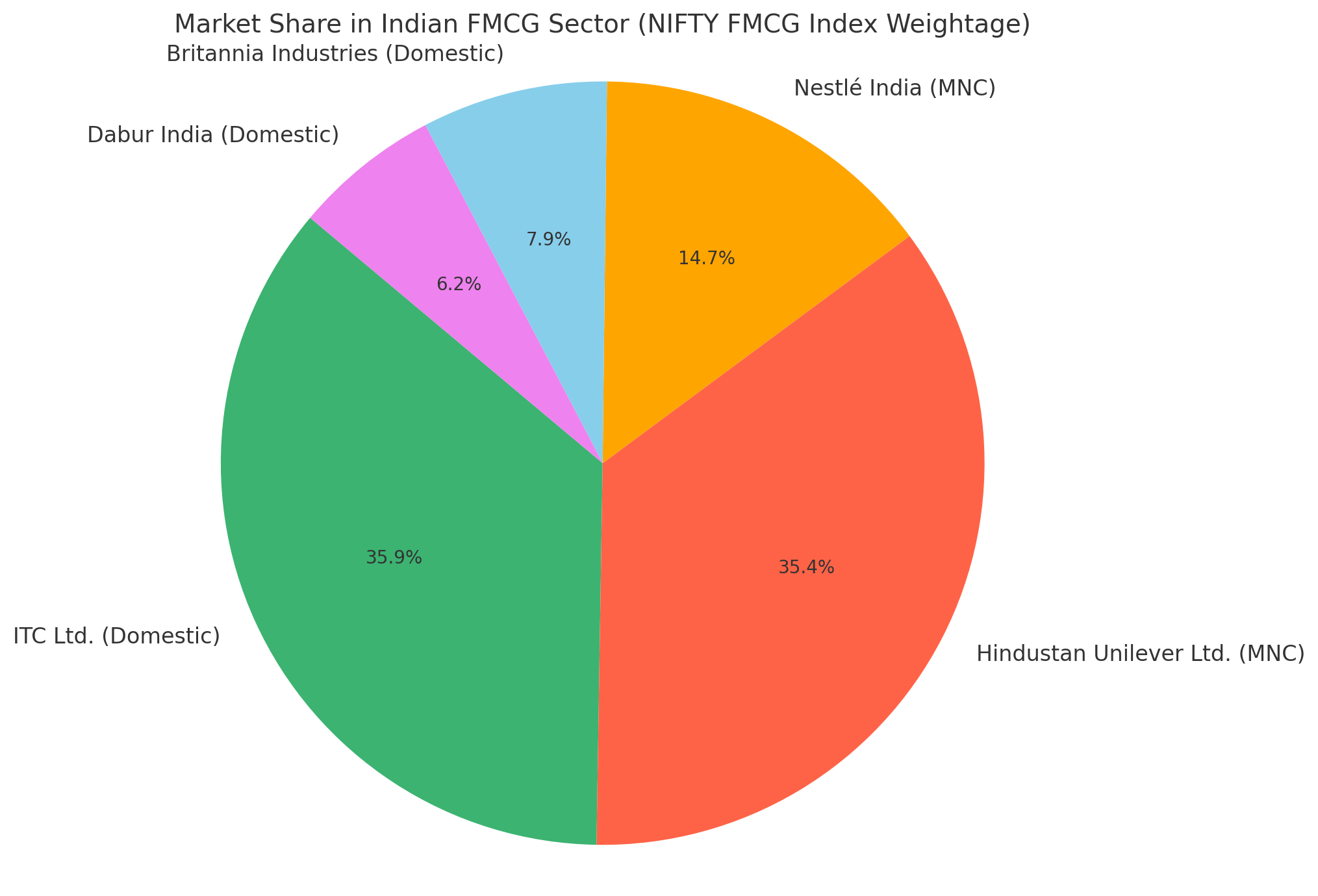
- Direct Competition: MNCs, with their advantages in capital, technology, branding, and economies of scale, can capture market share from domestic firms, potentially driving less efficient ones out of business. In India, MNCs are the number one or two players in over 20 consumer product categories.
- Resource Competition: MNCs can bid up the prices of scarce domestic resources, such as skilled labour, prime industrial land, and capital, making them more expensive for local companies.
- Financial Crowding-Out: If MNCs borrow heavily from the domestic banking system, it could reduce the credit available for local entrepreneurs, although MNCs primarily bring their own capital.
- Crowding-In Effect: This occurs when the presence of MNCs stimulates and benefits domestic firms.
- Creation of New Markets: MNCs often create new demand and market segments that domestic firms can also cater to.
- Linkage Effects: As discussed earlier, MNCs create demand for local suppliers (backward linkages), which stimulates domestic investment and production in ancillary industries.
- Spillover Effects: Technology and knowledge spillovers can enhance the productivity and competitiveness of domestic firms, allowing them to grow and thrive.
- Crowding-Out Effect: This occurs when the presence of MNCs harms or displaces domestic firms.
- The overall impact on domestic investment is a subject of empirical debate. The net effect ([latex]\text{crowding-in} – \text{crowding-out}[/latex]) depends on various factors, including the sector of investment, the policies of the host government, and the capabilities of domestic firms.
- A study on India found that while public investment can crowd out private investment, the relationship is complex. The impact of FDI from MNCs is similarly nuanced. Greenfield FDI (setting up new facilities) may have a stronger crowding-in effect by creating new capacity and linkages, while M&A FDI (acquiring existing firms) could lead to market consolidation and potentially crowd out competitors.
- MNCs significantly influence the market structure of industries in the host country, often leading to increased market concentration.
- Oligopolistic Markets: In many sectors, the entry of a few large MNCs leads to the formation of an oligopolistic market structure, dominated by a small number of large firms (both foreign and domestic).
- The Indian automobile sector is a classic example, with players like Maruti Suzuki (MNC), Hyundai (MNC), Tata Motors (domestic), and Mahindra & Mahindra (domestic) dominating the market.
- The Indian telecom sector has also consolidated into an oligopoly with players like Jio (domestic), Airtel (domestic), and Vodafone Idea (a JV with an MNC).
- Impact on Small-Scale Industries (SSIs): SSIs often face the most intense competition from MNCs. They struggle to compete on price, quality, and marketing.
- However, some SSIs can thrive by becoming ancillary units to large MNCs or by catering to niche markets that are not of interest to large corporations.
- Oligopolistic Markets: In many sectors, the entry of a few large MNCs leads to the formation of an oligopolistic market structure, dominated by a small number of large firms (both foreign and domestic).
- The presence of MNCs has a profound impact on consumer welfare, which is generally positive but has some caveats.
- Increased Consumer Choice: MNCs introduce a vast array of new products and brands, widening the choices available to consumers.
- Improved Quality and Lower Prices: Competition from MNCs often forces all firms in the market to improve quality and become more price-competitive, benefiting consumers. The introduction of global quality standards can become the industry norm.
- Aggressive Advertising and Brand Proliferation: A potential downside is the high expenditure on advertising and brand promotion, which is a characteristic of oligopolistic competition. This can create artificial product differentiation and brand loyalty, acting as a barrier to entry for new firms. The cost of this advertising is ultimately passed on to consumers in the product price.
- In India, the FMCG sector is the biggest contributor to digital advertising, accounting for 42% of the total spend. This intense marketing shapes consumer preferences and lifestyles.
Integration into Global Value Chains (GVCs)
- Global Value Chains (GVCs) refer to the international fragmentation of production, where different stages of the production process (design, manufacturing of components, assembly, marketing) are located in different countries. MNCs are the primary architects and coordinators of GVCs.
- A country’s participation in GVCs can be measured through its backward and forward linkages.
- Backward Linkages: This measures the use of foreign inputs in a country’s exports. A country has high backward linkages if it imports a lot of components to assemble into a final product for export (e.g., Vietnam in the electronics sector). This is often termed ‘upstream’ participation.
- Forward Linkages: This measures the extent to which a country’s domestic inputs are used in other countries’ exports. A country has high forward linkages if it exports raw materials or intermediate goods that other countries then process and export (e.g., exporting iron ore or specialized chemicals). This is often termed ‘downstream’ participation.
- A country’s participation in GVCs can be measured through its backward and forward linkages.
- India’s participation in GVCs has been growing, but its nature is distinct from that of many East Asian economies.
- India’s GVC participation is characterized by stronger forward linkages than backward linkages. In 2018, India’s forward linkage participation was around 16.5%, while backward linkage participation was higher at 19.8%, but historically, forward linkages have been more dominant. This suggests that India is more integrated as a supplier of intermediate goods and services to the world than as a final assembler of imported components.
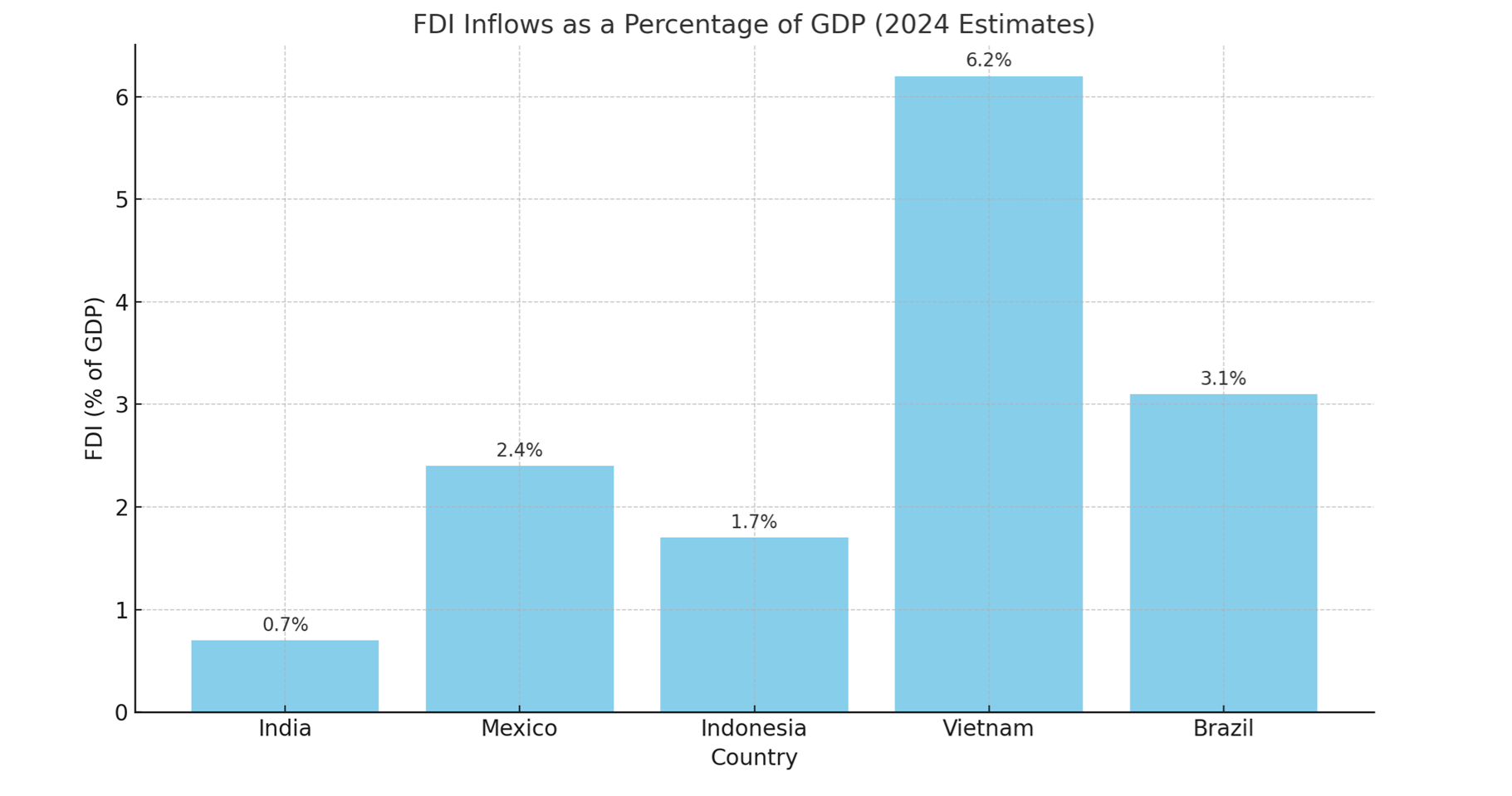
- This contrasts with countries like Vietnam or Mexico, which are deeply integrated into GVCs through backward linkages, acting as major assembly hubs for global MNCs.
- The sectoral composition of India’s GVC exports has also evolved. In the 2000s, low-tech manufacturing and business services had similar shares. By 2019, high-tech manufacturing had grown to account for more than half of GVC exports, indicating a move up the value chain.
- Integrating into GVCs offers significant opportunities for economic development.
- Industrial Upgrading: Participation in GVCs allows a country to specialize in specific tasks and gradually move up the value chain from simple assembly to more complex manufacturing, design, and branding. This is known as ‘climbing the value ladder’.
- Productivity Gains: Access to superior foreign inputs (through backward linkages) and the need to meet global standards for exports (for forward linkages) can lead to significant productivity improvements in domestic firms.
- Job Creation: While the net employment impact is debated, GVCs can create large-scale employment, especially in labour-intensive segments of the chain.
- However, there are also risks and challenges associated with GVC integration.
- Dependence and Vulnerability: Deep integration into GVCs can make a country’s economy vulnerable to external shocks, such as a recession in a key export market or disruptions in the supply of critical imported components, as witnessed during the COVID-19 pandemic.
- The ‘Smile Curve’ Problem: The ‘smile curve’ concept illustrates that the highest value-added activities in a GVC are at the two ends: R&D and branding/marketing (pre-production) and sales and after-sales service (post-production). The lowest value-added activity is in the middle: manufacturing and assembly. Developing countries often get stuck in the low-value-added middle portion of the curve, with MNCs retaining control over the high-value-added segments.
- Limited Spillovers and Enclaves: If GVC activities are confined to specific Export Processing Zones (EPZs) with limited linkages to the rest of the domestic economy, the potential for technology spillovers and broader development can be constrained.
- Employment Quality: While GVCs create jobs, these can sometimes be low-wage, insecure jobs with poor working conditions, especially in the lower tiers of the supply chain.
Influence on Balance of Payments (BoP)
- MNCs have a significant and dualistic impact on the host country’s Balance of Payments (BoP), affecting both the current account and the capital account. The BoP identity is given by: [latex]\text{Current Account Balance} + \text{Capital Account Balance} + \text{Financial Account Balance} + \text{Errors & Omissions} = 0[/latex]. MNC activities primarily influence the financial and current accounts.
- Impact on the Financial (or Capital) Account:
- Positive Impact (Inflows): The most direct impact is the inflow of FDI when an MNC establishes or expands its operations. This is recorded as a credit (inflow) in the financial account and is a major source of financing for the host country. As noted, India received US$81.04 billion in FDI in FY 2024-25, which strengthens the capital/financial account and helps build foreign exchange reserves.
- Impact on the Current Account:
- The impact on the current account, which records trade in goods and services, and income flows, is more complex and has both positive and negative components.
- Impact on the Financial (or Capital) Account:
- Trade Effects (Exports and Imports):
- Positive Impact (Export Promotion): MNCs can significantly boost a host country’s exports.
- MNCs often use their host country operations as an export platform to serve regional or global markets, leveraging their established distribution networks.
- They can help domestic firms integrate into GVCs, thereby increasing exports of intermediate goods.
- In India, sectors with high MNC presence, such as engineering goods, pharmaceuticals, and electronics, are major contributors to the export basket. Electronic goods exports, for instance, saw the highest growth in FY 2024-25.
- Negative Impact (Increased Imports): The operations of MNCs can also lead to a rise in imports.
- MNCs may import capital goods (machinery and equipment) for setting up their plants.
- They may also import raw materials and intermediate components from their global supply chains, especially if local suppliers cannot meet their quality or cost requirements. This increases the import bill and can worsen the trade deficit.
- India’s trade deficit in electronics, for example, has more than doubled in the last decade, reaching over $50 billion in 2022-23, partly reflecting the import-intensive nature of electronics assembly.
- Positive Impact (Export Promotion): MNCs can significantly boost a host country’s exports.
- Income Effects (Profit, Dividend, and Royalty Repatriation):
- Negative Impact (Outflows): This is a major debit item on the current account. MNCs earn profits, dividends, and royalties in the host country, which they repatriate to their parent company in the home country.
- This represents an outflow of foreign exchange. While this is a legitimate return on their investment, excessive repatriation can put significant pressure on the current account.
- There has been a noticeable surge in forex outflows from India due to profit repatriation and private equity exits. In one recent fiscal year, these outflows were significant enough to sharply reduce the net FDI figure. Net FDI fell by over 96% to just $353 million in 2024-25, largely due to a surge in repatriation and outward investment by Indian firms.
- MNCs can also use mechanisms like transfer pricing (over-invoicing imports from and under-invoicing exports to a parent company) to shift profits out of a high-tax host country, further increasing the outflow.
- Negative Impact (Outflows): This is a major debit item on the current account. MNCs earn profits, dividends, and royalties in the host country, which they repatriate to their parent company in the home country.
- The Net BoP Impact:
- The net impact of an MNC’s operation on the BoP is the sum of all these effects: [latex]\Delta BoP = (\text{FDI Inflow}) + (\text{Export Earnings} – \text{Import Payments}) – (\text{Profit Repatriation})[/latex].
- In the initial phase of investment, the BoP impact is often positive due to large capital inflows.
- In the long run, as the investment matures, the outflows from profit repatriation and import payments can potentially exceed the inflows from new FDI and export earnings, leading to a negative net impact.
- Therefore, from a policy perspective, it is crucial to encourage MNCs to reinvest a significant portion of their earnings back into the host economy and to maximize their export orientation while deepening their local sourcing (backward linkages) to minimize imports.
Socio-Cultural Dimensions and Consumerism
- The entry and proliferation of MNCs act as a powerful catalyst for socio-cultural change in the host country, influencing everything from consumption patterns and lifestyle choices to social structures and values.
- Introduction of New Lifestyles and Consumer Culture:
- MNCs introduce new products, brands, and marketing techniques that can fundamentally alter consumer behaviour. The spread of fast-food chains (e.g., McDonald’s, KFC), carbonated beverages (Coca-Cola, Pepsi), and Western apparel brands (Levi’s, Nike) are classic examples.
- This often leads to a degree of cultural homogenization, where consumption patterns in developing countries begin to mirror those in developed Western nations.
- MNCs are adept at creating aspirations through sophisticated advertising and marketing, promoting a culture of consumerism and materialism. This is often referred to as the ‘demonstration effect’ on a societal level.
- Adaptation to Local Culture (‘Glocalization’):
- Successful MNCs do not simply impose a uniform global template; they adapt their products and marketing strategies to local tastes, preferences, and cultural sensitivities. This strategy is often called ‘glocalization’.
- In India, McDonald’s does not serve beef or pork products and has developed a menu with items like the ‘McAloo Tikki’ burger to cater to the Indian palate.
- Hindustan Unilever Limited (HUL) has a deep portfolio of brands, many of which are tailored specifically for different segments of the Indian market, from urban elites to rural consumers.
- This process of adaptation can also be seen as a two-way street, where local cultures also influence global corporate strategies.
- Introduction of New Lifestyles and Consumer Culture:
- Corporate Social Responsibility (CSR) and Ethical Considerations:
- MNCs are increasingly under pressure from consumers, activists, and governments to behave as responsible corporate citizens. This has led to the rise of Corporate Social Responsibility (CSR) initiatives.
- In India, the Companies Act of 2013 made CSR spending mandatory for large, profitable companies, requiring them to spend at least 2% of their average net profits on specified CSR activities.
- MNCs in India are active in various CSR domains, including education, healthcare, sanitation (aligning with SDG 6), environmental sustainability (aligning with SDG 13), and rural development. For example, Coca-Cola has been involved in water replenishment projects.
- However, CSR activities are sometimes criticized as being a form of ‘greenwashing’ or a public relations exercise to deflect attention from the negative impacts of the company’s core business operations.
- Ethical issues often arise in the operations of MNCs. These can include:
- Aggressive marketing of unhealthy products (e.g., sugary drinks, processed foods).
- Labour exploitation in supply chains.
- Tax avoidance through complex international accounting practices.
- Disrespect for local traditions and communities.
- MNCs are increasingly under pressure from consumers, activists, and governments to behave as responsible corporate citizens. This has led to the rise of Corporate Social Responsibility (CSR) initiatives.
- Impact on Social Structures:
- The growth of MNCs and the associated urbanization can lead to changes in traditional social structures, such as the joint family system.
- The creation of a new, upwardly mobile middle class with higher disposable incomes and global exposure is one of the most significant social transformations driven by the economic changes associated with MNCs.
- However, this can also lead to rising inequality, as the benefits of MNC-driven growth may not be evenly distributed. A new class of high-earning professionals coexists with a large population still engaged in low-productivity agriculture and informal work, widening the social and economic divide.
Environmental Externalities and Corporate Responsibility
- The environmental impact of MNCs is a critical and often negative aspect of their operations in host countries. The pursuit of profit can lead to significant environmental degradation if not properly regulated.
- Pollution Havens Hypothesis: This hypothesis suggests that MNCs may relocate their polluting industries from developed countries with stringent environmental regulations to developing countries with laxer standards to reduce compliance costs.
- While the evidence is mixed, there is a concern that countries competing for FDI might engage in a ‘race to the bottom’ by lowering their environmental standards to attract investment.
- Studies have indicated that India could potentially become a pollution haven for firms from high-emitting countries, especially in sectors like chemicals, mining, and heavy manufacturing.
- Major Sources of Environmental Damage:
- Industrial Pollution: MNC operations can lead to significant air and water pollution. India’s air pollution control systems market was valued at $4 billion in 2021 and is expected to grow, indicating the scale of the problem. Many of the world’s most polluted cities are in India.
- Resource Depletion: MNCs involved in extractive industries (mining, oil, gas) or water-intensive manufacturing (beverages, textiles) can lead to the rapid depletion of natural resources like water, forests, and minerals.
- Waste Generation: MNCs in the consumer goods sector are major contributors to plastic waste. Brand audits in India have identified MNCs like PepsiCo, Coca-Cola, and Unilever as significant contributors to plastic pollution.
- Pollution Havens Hypothesis: This hypothesis suggests that MNCs may relocate their polluting industries from developed countries with stringent environmental regulations to developing countries with laxer standards to reduce compliance costs.
- On the other hand, MNCs can also be agents of positive environmental change.
- Transfer of Green Technologies: MNCs are often at the forefront of developing and deploying cleaner and more resource-efficient technologies. When they bring these technologies to a host country, it can lead to a positive environmental spillover.
- This includes investments in renewable energy, energy-efficient manufacturing processes, and sustainable water management systems.
- Adherence to Global Standards: Many MNCs have global environmental standards that may be stricter than the local regulations in the host country. To maintain their global brand reputation and meet the expectations of international consumers and investors, they may apply these higher standards to their Indian operations.
- Driving Sustainability in Supply Chains: MNCs can pressure their local suppliers to adopt more environmentally friendly practices, thus greening the entire supply chain.
- Transfer of Green Technologies: MNCs are often at the forefront of developing and deploying cleaner and more resource-efficient technologies. When they bring these technologies to a host country, it can lead to a positive environmental spillover.
- The role of regulation and corporate governance is crucial in mitigating the negative environmental impact.
- India has a comprehensive framework of environmental laws, but enforcement can be a challenge. Regulatory bodies have the power to conduct inspections and impose penalties, but implementation gaps persist.
- The increasing focus on Environmental, Social, and Governance (ESG) reporting is putting more pressure on companies, including MNCs, to be transparent about their environmental performance.
- SEBI has introduced requirements for ESG reporting for top listed companies, which includes metrics on emissions, water usage, and waste management. This is pushing companies towards greater accountability.
- Case examples illustrate this duality:
- Negative Example: The Bhopal gas tragedy in 1984 at a plant of Union Carbide (an American MNC) is a stark reminder of the catastrophic environmental and human costs of corporate negligence.
- Positive Example: Many MNCs in India are now making significant investments in sustainability. Tata Group (a domestic MNC) has extensive green initiatives. L&T is a champion of green development, and Mahindra Group focuses on sustainable agriculture. Foreign MNCs are also investing heavily in India’s renewable energy sector.
Political Economy: Lobbying and Regulatory Landscape
- MNCs, as powerful economic actors, inevitably engage with the political and regulatory systems of their host countries, leading to complex interactions that can influence policy and governance.
- Political Influence and Lobbying:
- Lobbying is the act of attempting to influence decisions made by government officials. In many Western countries, lobbying is a regulated and transparent activity.
- In India, the legal framework for lobbying is ambiguous and largely unregulated. This creates a grey area where corporate influence can be exerted through informal channels, public relations firms, and industry associations.
- The controversy surrounding Walmart’s disclosure of lobbying expenses in the US for “enhanced market access” in India sparked a major political debate about the nature of corporate influence on Indian policymaking.
- MNCs can influence policy in areas such as tax laws, trade tariffs, labour regulations, and environmental standards to create a more favourable business environment for themselves.
- Strategic Alliances: MNCs often form strategic alliances with powerful domestic business groups, which can enhance their political leverage and help them navigate the complex local bureaucracy.
- Political Influence and Lobbying:
- Navigating the Regulatory Landscape:
- MNCs operating in India face a highly complex and often challenging regulatory environment. This complexity is a significant operational challenge and a source of business risk.
- A survey by PwC found that 65% of MNCs in India cite regulatory compliance as a significant challenge in financial reporting.
- Key areas of regulatory complexity include:
- Taxation: India’s tax laws, including issues related to transfer pricing and retrospective taxation, have been a source of major disputes with MNCs like Vodafone and Nokia.
- Labour Laws: India has a multitude of central and state labour laws, which can be complex and rigid, although recent reforms have aimed to simplify them.
- Environmental Clearances: Obtaining the necessary environmental permits can be a lengthy and bureaucratic process.
- Data Privacy: The new Digital Personal Data Protection Act of 2023 imposes significant compliance obligations on companies handling user data.
- Arbitrary Enforcement and Corruption: A major challenge for MNCs is not just the complexity of the rules but also their arbitrary enforcement. This can create an uncertain business climate and expose firms to risks of corruption.
- Between 2014 and 2021, nearly 2,800 foreign firms reportedly closed their operations in India, highlighting the challenges of the business environment.
- MNCs operating in India face a highly complex and often challenging regulatory environment. This complexity is a significant operational challenge and a source of business risk.
- MNCs and Host Country Sovereignty:
- A major concern in political economy is the potential for large MNCs to undermine the economic sovereignty of the host country.
- The sheer economic size of some MNCs rivals that of many countries. For example, the revenue of a company like Walmart is larger than the GDP of countries like Norway or South Africa.
- This economic power can translate into political power, allowing MNCs to negotiate favourable terms with host governments, sometimes to the detriment of the public interest.
- The threat of ‘capital strike’ or relocating investment to another country gives MNCs significant bargaining power over governments, especially those that are heavily reliant on FDI for growth and employment. This can constrain the policy space of the host government in areas like taxation and social welfare.
Comparison Charts
- This section provides a comparative perspective on the role and impact of MNCs, using data to contrast India with other economies and to compare the performance of MNCs with domestic firms within India.

Challenges and Policy Imperatives for Host Countries
- While MNCs can be powerful engines of growth, their presence brings a host of challenges that require proactive and strategic policy responses from the host country, like India, to maximize benefits and mitigate costs.
- Challenge 1: Managing Competition and Supporting Domestic Firms
- The ‘crowding-out’ of domestic firms, especially SMEs, is a major concern. Unregulated competition can lead to the demise of local industry and increased market concentration.
- Policy Imperative:
- Strengthen Competition Law: An active and empowered competition commission (like the Competition Commission of India) is needed to prevent anti-competitive practices by dominant MNCs, such as predatory pricing and abuse of dominance.
- Promote Domestic Linkages: Policies should incentivize MNCs to source more from local firms. This can be done through supplier development programs, providing information on local capabilities, and creating platforms for B2B matchmaking.
- Foster Domestic Champions: Support domestic firms in strategic sectors to achieve scale and competitiveness, enabling them to compete with and collaborate with MNCs on a more equal footing.
- Challenge 2: Ensuring Quality Employment and Protecting Labour Rights
- The potential for labour exploitation, especially in outsourced supply chains, and the weakening of labour’s bargaining power are significant risks.
- Policy Imperative:
- Modernize and Enforce Labour Laws: Simplify complex labour laws to improve compliance while ensuring that core labour rights (related to wages, safety, and social security) are protected and strictly enforced for all workers, including contract labour.
- Promote Skill Development: Invest in public education and vocational training programs to upgrade the skills of the workforce, enabling them to access the higher-quality jobs created by MNCs and increasing their bargaining power.
- Challenge 3: Mitigating Negative Environmental Externalities
- The risk of India becoming a ‘pollution haven’ and the environmental degradation caused by industrial activity are pressing challenges.
- Policy Imperative:
- Strict Environmental Regulation and Enforcement: Implement and rigorously enforce ‘polluter pays’ principles. Strengthen the capacity of environmental regulatory agencies to monitor compliance and impose deterrent penalties for violations.
- Incentivize Green Investment: Provide fiscal incentives, such as tax breaks or accelerated depreciation, for MNCs that invest in green technologies and sustainable practices.
- Challenge 4: Managing the Balance of Payments Impact
- Excessive profit repatriation and import-intensive production can strain the current account.
- Policy Imperative:
- Promote Reinvestment of Profits: Offer incentives for MNCs to reinvest their earnings within the host country. This could be linked to new investments in R&D or expansion into less developed regions.
- Encourage Export Orientation and Import Substitution: Attract FDI into sectors that are export-oriented. Simultaneously, use policies like the PLI scheme to encourage the domestic manufacturing of components that are currently imported, thereby reducing the import bill.
- Challenge 5: Maintaining Policy and Economic Sovereignty
- The large economic and political influence of MNCs can limit the policy space of the host government.
- Policy Imperative:
- Enhance Transparency: Increase transparency in the interactions between government and corporations, including potentially regulating lobbying activities.
- Build Strong Institutions: Develop robust, independent, and transparent regulatory institutions (in finance, environment, competition) that can implement policies consistently and without being captured by corporate interests.
- Diversify FDI Sources: Avoid over-reliance on FDI from a single country or region to maintain a balanced and diversified set of economic partners.
- Challenge 1: Managing Competition and Supporting Domestic Firms
Conclusion
In conclusion, the role of Multinational Corporations in India’s growth and development is a complex tapestry woven with threads of opportunity and risk. They are undeniably crucial catalysts, injecting vital capital, advanced technology, and modern managerial practices that accelerate industrialization and integrate the Indian economy more deeply into the global framework. The creation of high-skilled jobs, expansion of consumer choice, and development of export capabilities are tangible benefits. However, this engagement is not without its perils. The challenges of market concentration, pressure on domestic enterprises, potential for labour exploitation, environmental degradation, and significant outflows through profit repatriation are real and demand vigilant, strategic policymaking. For India, the path forward lies not in uncritical acceptance or outright rejection of MNCs, but in crafting a nuanced policy environment that skillfully harnesses their immense potential while building robust regulatory guardrails to mitigate the associated risks, ensuring that their operations align with the nation’s long-term goals of sustainable, inclusive, and self-reliant economic development.
- Critically examine the role of MNCs in shaping the market structure and competition within the Indian economy. (250 words)
- Discuss the impact of MNCs on India’s Balance of Payments, considering both the current and capital accounts. (250 words)
- Analyze the effectiveness of technology spillovers from MNCs in enhancing the productivity of domestic firms in India. (250 words)

Responses