
Introduction
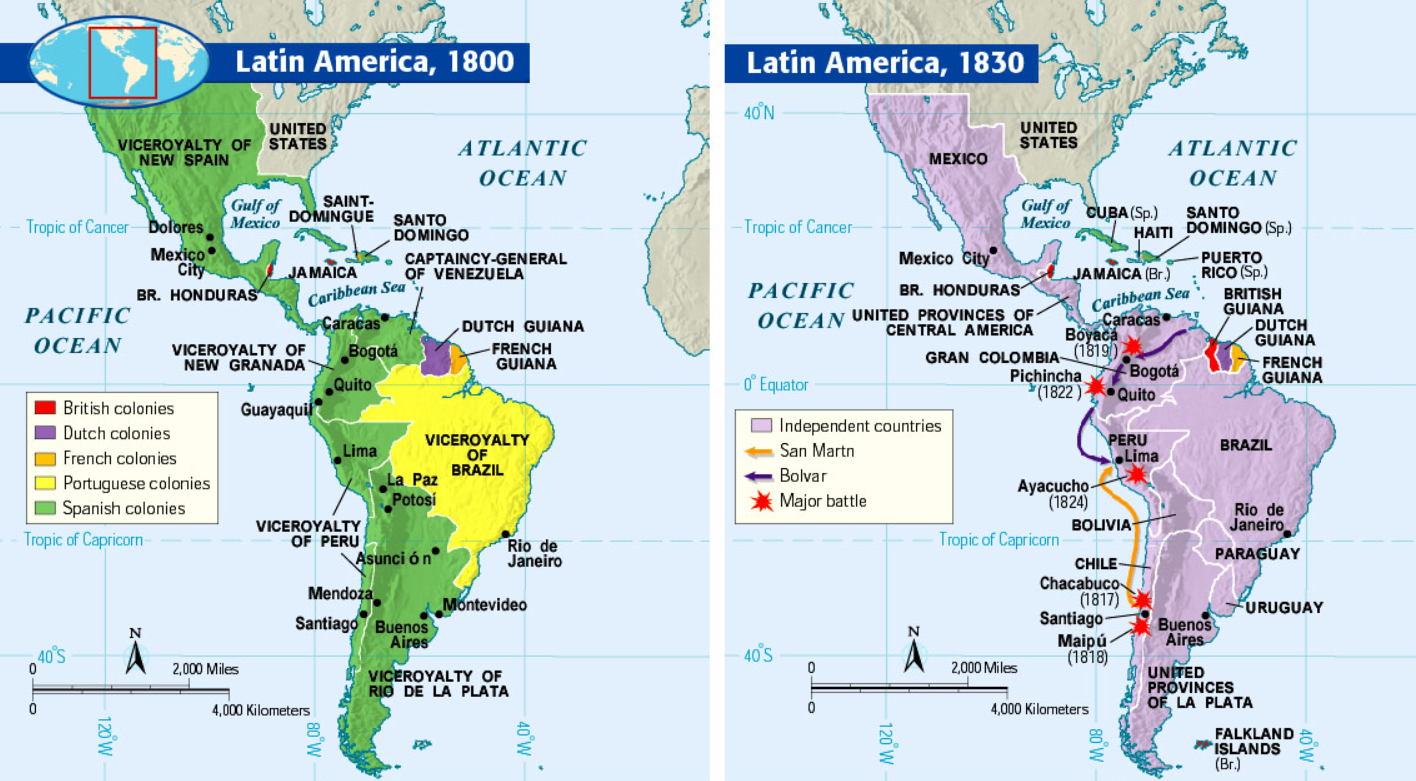
The 19th century witnessed a profound transformation across Latin America, as various regions grappled with the legacy of European colonialism and embarked on arduous journeys towards independence. This era was characterized by a complex interplay of political ideologies, economic grievances, and social unrest, culminating in a series of wars that reshaped the geopolitical landscape of the continent. Central to this monumental struggle was the charismatic and visionary figure of Simón Bolívar, whose strategic brilliance and unwavering commitment to liberation left an indelible mark on the nascent nations of South America. His efforts were not merely about expelling colonial powers but also about forging a new identity and establishing viable republican governments.
The Seeds of Discontent
Colonial Administration and Its Limitations
- Spanish colonial rule was characterized by a hierarchical system designed primarily to extract wealth and resources for the benefit of the Iberian Peninsula, neglecting the developmental needs of the colonies.
- Economic policies often imposed strict mercantilist regulations, restricting trade to Spain and its designated ports.
- For example, in the early 19th century, silver exports from Potosí alone accounted for approximately 80% of total Spanish colonial revenue, demonstrating the extractive nature of the economy.
- These policies stifled local industries and created deep resentments among colonial elites who sought greater economic autonomy.
- Political appointments were predominantly reserved for peninsulares (those born in Spain), sidelining criollos (those of Spanish descent born in the Americas).
- The criollo population, which constituted around 3.5 million individuals by 1800, felt increasingly marginalized despite their growing economic power and intellectual prowess.
- This political exclusion fueled a sense of injustice and a desire for self-governance.
- Administrative inefficiency and corruption were widespread, exacerbating the economic burdens on the populace.
- The sheer distance and slow communication between Madrid and its American territories, often taking 3 to 4 months for a round trip, rendered centralized control ineffective and fostered local power centers.
- Economic policies often imposed strict mercantilist regulations, restricting trade to Spain and its designated ports.
- The Bourbon Reforms of the 18th century, intended to rationalize and strengthen Spanish imperial control, paradoxically intensified colonial grievances.
- These reforms increased taxation, established new viceroyalties like the Viceroyalty of New Granada in 1717 and Río de la Plata in 1776, and tightened administrative control.
- New taxes, such as increased alcabalas (sales taxes), were often met with resistance, including the Comunero Revolt in New Granada in 1781, involving thousands of participants.
- They also sought to reassert royal authority over the Catholic Church, alienating segments of the clergy who had significant influence in colonial society.
- While aimed at efficiency, the reforms were perceived by criollos as a further attempt to subjugate them and undermine their local power bases.
- These reforms increased taxation, established new viceroyalties like the Viceroyalty of New Granada in 1717 and Río de la Plata in 1776, and tightened administrative control.
Enlightenment Ideals and Revolutionary Examples
- The Enlightenment profoundly influenced criollo intellectuals, introducing concepts of natural rights, popular sovereignty, and the social contract.
- Writings by thinkers like John Locke, Jean-Jacques Rousseau, and Montesquieu circulated widely, often through clandestine networks, despite Spanish attempts at censorship.
- For instance, Rousseau’s The Social Contract was translated and read by many educated criollos, inspiring ideas of self-determination.
- These ideas provided an intellectual framework for critiquing colonial rule and envisioning independent republics.
- Writings by thinkers like John Locke, Jean-Jacques Rousseau, and Montesquieu circulated widely, often through clandestine networks, despite Spanish attempts at censorship.
- The American Revolution (1775-1783) served as a tangible example of successful colonial rebellion against a European power.
- The establishment of the United States as a republic demonstrated the feasibility of self-governance and inspired similar aspirations in Latin America.
- The American Declaration of Independence’s assertion of fundamental human rights resonated deeply with criollo grievances.
- The French Revolution (1789-1799), with its radical emphasis on liberty, equality, and fraternity, further fueled revolutionary fervor, albeit with some trepidation among the criollo elite due to its radical and violent phases.
- The revolutionary ideals, particularly the abolition of aristocratic privilege, challenged the rigid social hierarchies prevalent in Latin America.
- The Haitian Revolution (1791-1804), where enslaved Africans successfully overthrew French colonial rule and established the first independent black republic, sent shockwaves across the Americas.
- While inspiring some, it also instilled fear among criollo elites regarding potential social upheaval and slave revolts, influencing their approach to independence.
Napoleonic Interventions and the Crisis of Legitimacy
The Invasion of Spain and Portugal
- Napoleon Bonaparte’s invasion of the Iberian Peninsula in 1807-1808 created a power vacuum and a profound crisis of legitimacy in the Spanish American colonies.
- In 1807, French forces occupied Portugal, leading the Portuguese royal family to flee to Brazil, establishing their court in Rio de Janeiro. This event initiated a period where Brazil effectively functioned as the center of the Portuguese Empire.
- In 1808, Napoleon forced the abdication of King Charles IV and his son Ferdinand VII of Spain, placing his brother Joseph Bonaparte on the Spanish throne.
- This act was widely seen as an illegitimate usurpation by the vast majority of Spaniards and criollos alike.
- The collapse of legitimate Spanish authority prompted varied responses in the colonies.
- Many criollos initially declared loyalty to the deposed Ferdinand VII, forming juntas (local governing committees) in his name.
- The first such junta was established in Chuquisaca (modern-day Sucre, Bolivia) on May 25, 1809, followed by others across the continent.
- These juntas, while ostensibly loyal to the king, increasingly assumed sovereign powers, managing local affairs and often rejecting the authority of the Supreme Central Junta in Spain or the subsequent Council of Regency.
- Many criollos initially declared loyalty to the deposed Ferdinand VII, forming juntas (local governing committees) in his name.
The Rise of Local Juntas and Self-Governance
- The formation of juntas marked a crucial step towards de facto independence, as colonial subjects began to exercise self-governance for the first time in centuries.
- Cities across Spanish America, from Caracas (April 19, 1810) to Buenos Aires (May 25, 1810), established their own governing bodies.
- These juntas, often dominated by criollo elites, were initially conservative, aiming to preserve order and loyalty to the legitimate Spanish crown.
- However, the prolonged absence of a recognized Spanish monarch and the internal divisions within Spain itself (e.g., between royalists and liberals) led to a gradual shift towards explicit demands for independence.
- Cities across Spanish America, from Caracas (April 19, 1810) to Buenos Aires (May 25, 1810), established their own governing bodies.
- The Cadiz Cortes (1810-1814), a liberal parliament convened in Spain during the Napoleonic occupation, attempted to address colonial grievances by offering representation to American delegates.
- However, the representation offered was disproportionately low, with only 30 American delegates compared to over 200 from Spain, further alienating colonial leaders.
- The Cortes also debated reforms that would have granted greater autonomy, but these came too late and were ultimately rejected by the restored Ferdinand VII in 1814, pushing many criollos towards outright secession.
Early Uprisings and the First Republics
Failed Attempts at Independence (1810-1815)
- The initial wave of independence movements, often characterized by popular uprisings and the establishment of fragile republics, largely failed due to a combination of internal divisions, lack of military organization, and strong Spanish loyalist resistance.
- In New Granada (modern Colombia, Venezuela, Ecuador, Panama), Simón Bolívar led early military campaigns but faced significant setbacks.
- The First Venezuelan Republic, declared in 1811, collapsed by 1812 due to internal strife, regionalism, and a devastating earthquake, which many loyalists interpreted as divine retribution.
- Bolívar’s subsequent “Admirable Campaign” in 1813 briefly re-established a republic, but it too succumbed to royalist forces and the uprising of the llaneros (plainsmen) led by José Tomás Boves, a formidable counter-revolutionary force.
- In Mexico, the Grito de Dolores by Father Miguel Hidalgo in 1810 initiated a massive popular revolt, primarily involving indigenous peoples and mestizos.
- This uprising, while mobilizing tens of thousands, lacked clear political objectives beyond immediate grievances and was brutally suppressed by criollo and peninsular forces, who feared a social revolution. Hidalgo was executed in 1811.
- In Chile, a period known as the Patria Vieja (Old Fatherland) saw attempts at self-governance from 1810-1814, but royalist forces from Peru eventually reasserted control after the Battle of Rancagua in 1814.
- In New Granada (modern Colombia, Venezuela, Ecuador, Panama), Simón Bolívar led early military campaigns but faced significant setbacks.
- The return of Ferdinand VII to the Spanish throne in 1814 and his commitment to restoring absolute monarchy and suppressing all colonial dissent further intensified the conflict.
- Ferdinand’s dispatch of large expeditionary forces, notably the 10,000-strong army led by General Pablo Morillo to New Granada and Venezuela in 1815, marked a period of severe royalist repression.
- This renewed royalist offensive forced many independence leaders, including Bolívar, into exile, leading to a period of regrouping and strategic re-evaluation.
Regionalism and Internal Conflicts
- A significant challenge to early independence efforts was pervasive regionalism and the lack of a unified vision among the diverse colonial territories.
- Each region often prioritized its own interests over a broader continental liberation movement.
- For example, in New Granada, fierce rivalries existed between cities like Bogotá and Cartagena, leading to fragmented efforts against the Spanish.
- This internal disunity was exacerbated by the vast geographical distances and poor infrastructure, hindering effective coordination.
- Crossing the Andes could take weeks, making communication and troop movements extremely difficult.
- Each region often prioritized its own interests over a broader continental liberation movement.
- The social fabric of colonial society also contributed to internal conflicts, with divisions along lines of race, class, and caste.
- The criollo elites, while desiring independence from Spain, were often wary of mobilizing the lower classes, indigenous populations, and enslaved Africans, fearing that such movements could lead to radical social change, as seen in Haiti.
- This fear sometimes led criollos to align with royalist forces to suppress popular uprisings, as initially occurred in Mexico and during the llanero campaigns in Venezuela.
Simón Bolívar: The Liberator’s Rise
Early Life and Influences
- Simón Bolívar was born on July 24, 1783, into a wealthy criollo family in Caracas, Venezuela, a significant center of colonial power.
- His family owned vast haciendas and numerous enslaved people, providing him with a privileged upbringing and access to education.
- Bolívar’s early life was marked by the loss of his parents at a young age, leading to his upbringing by various relatives and tutors.
- His education was heavily influenced by Enlightenment thinkers, particularly through his tutor Simón Rodríguez.
- Rodríguez instilled in Bolívar a deep appreciation for the ideals of liberty, republicanism, and social justice.
- During his travels in Europe, Bolívar witnessed the aftermath of the French Revolution and the rise of Napoleon, further shaping his political views.
- His famous “Monte Sacro Oath” in Rome in 1805, where he vowed to liberate his homeland, is a testament to his early commitment to the cause.
- Bolívar’s military training and experience, though initially limited, began during his European travels and expanded upon his return to Venezuela.
- He studied military tactics and history, preparing himself for the inevitable conflict.
- His exposure to the political and military landscape of Europe provided him with a broader perspective on warfare and state-building than many of his contemporaries.
The Venezuelan Independence Movement
- Bolívar joined the independence movement in Venezuela shortly after the establishment of the Caracas Junta in 1810, quickly rising through the ranks due to his intellect, charisma, and military aptitude.
- He played a key role in drafting Venezuela’s Declaration of Independence in 1811, one of the first in Spanish America.
- Despite early setbacks, including the fall of the First and Second Venezuelan Republics, Bolívar’s resolve remained unbroken.
- His period of exile in Jamaica and Haiti (1815-1816) proved crucial for his strategic rethinking and the formulation of his future plans.
- In Jamaica, he penned his influential “Letter from Jamaica” (1815), outlining his vision for a united Spanish America and analyzing the reasons for past failures.
- This document is a foundational text of Latin American political thought, proposing a confederation of independent states and advocating for a strong executive.
- In Haiti, he received vital support from President Alexandre Pétion, who provided him with troops, arms, and supplies on the condition that Bolívar would abolish slavery in the territories he liberated.
- This agreement had a profound impact on Bolívar’s social policies and earned him crucial aid for his return campaigns.
- In Jamaica, he penned his influential “Letter from Jamaica” (1815), outlining his vision for a united Spanish America and analyzing the reasons for past failures.
- Bolívar’s return to the mainland marked a turning point, as he adopted new strategies, including a greater emphasis on mobilizing various social groups and securing foreign assistance.
- He learned from past mistakes, recognizing the need for a unified command and a more inclusive approach to garner broader support across different social strata.
- His military campaigns from 1816 onwards were characterized by greater discipline and a more coherent strategic vision.
The Northern Campaigns and Gran Colombia
Crossing the Andes and Battle of Boyacá
- One of Bolívar’s most audacious military feats was the crossing of the Andes mountains in 1819, an extraordinary maneuver that caught Spanish forces completely by surprise.
- Leading an army of approximately 2,500 soldiers, including Venezuelan llaneros and British Legionnaires, Bolívar traversed treacherous terrain, high altitudes (over 3,900 meters), and harsh weather conditions.
- The journey took over a month and resulted in significant losses of men and horses due to cold, disease, and starvation, yet it positioned his forces strategically.
- The objective was to liberate New Granada, which was then under firm royalist control and served as a vital base for Spanish operations.
- Leading an army of approximately 2,500 soldiers, including Venezuelan llaneros and British Legionnaires, Bolívar traversed treacherous terrain, high altitudes (over 3,900 meters), and harsh weather conditions.
- The Battle of Boyacá, fought on August 7, 1819, was a decisive victory for Bolívar’s forces and a turning point in the liberation of New Granada.
- Bolívar’s army, though weary from the mountain crossing, surprised the Spanish forces led by José María Barreiro.
- The Patriot victory resulted in the capture of a large number of Spanish soldiers (over 1,600 prisoners) and effectively secured the independence of New Granada.
- This battle opened the way for Bolívar to enter Bogotá triumphantly three days later, on August 10, 1819.
- This victory significantly boosted Patriot morale and provided a secure base for future campaigns.
- It demonstrated Bolívar’s strategic genius and the resilience of his multi-ethnic army, which included indigenous soldiers, mestizos, and afro-descendants, reflecting a more inclusive approach to recruitment than earlier campaigns.
The Creation of Gran Colombia
- Following the liberation of New Granada, Bolívar moved quickly to realize his vision of a united republic, proposing the creation of Gran Colombia.
- The Congress of Angostura (1819) formally established the Republic of Colombia (later known as Gran Colombia), comprising the territories of modern-day Venezuela, Colombia, Ecuador, and Panama.
- Bolívar was elected as its first President, a position he held until 1830.
- This new nation was intended to be a powerful and stable entity capable of resisting future foreign intervention and fostering regional prosperity.
- The Congress of Angostura (1819) formally established the Republic of Colombia (later known as Gran Colombia), comprising the territories of modern-day Venezuela, Colombia, Ecuador, and Panama.
- Further military victories consolidated the independence of the constituent parts of Gran Colombia.
- The Battle of Carabobo (June 24, 1821) in Venezuela was another decisive victory for Bolívar, effectively securing Venezuelan independence.
- His army of approximately 6,500 men decisively defeated the royalist forces, leading to the collapse of Spanish rule in Venezuela.
- The Battle of Pichincha (May 24, 1822), fought by Antonio José de Sucre, Bolívar’s most trusted general, liberated Quito (Ecuador) and brought it into Gran Colombia.
- Sucre’s forces, comprising around 3,000 soldiers, secured a crucial victory on the slopes of the Pichincha volcano.
- The Battle of Carabobo (June 24, 1821) in Venezuela was another decisive victory for Bolívar, effectively securing Venezuelan independence.
- Despite its initial success, Gran Colombia faced immense challenges from the outset, including vast geographical distances, regional rivalries, and profound ideological differences among its leaders.
- The sheer scale of the territory, spanning over 2.5 million square kilometers, made centralized governance extremely difficult.
- Economic disparities and strong local loyalties often undermined the federal structure that Bolívar envisioned, leading to eventual disintegration.
The Southern Campaigns and the Liberation of Peru
San Martín’s Southern Liberation Movement
- While Bolívar was campaigning in the north, José de San Martín led a parallel, independent liberation movement in the south, focusing on the liberation of Argentina, Chile, and Peru.
- San Martín, an Argentine general who had fought in Europe, was a meticulous planner and a highly disciplined military leader.
- He is considered a national hero in Argentina and Chile for his instrumental role in their independence.
- San Martín’s most famous feat was the crossing of the Andes to liberate Chile in 1817.
- His Army of the Andes, comprising around 5,400 men, executed a complex crossing of the mountains, similar in scale to Bolívar’s, but with meticulous logistical planning over several months.
- The Battle of Chacabuco (February 12, 1817) and the Battle of Maipú (April 5, 1818) secured Chilean independence, largely due to the tactical brilliance of San Martín and his Chilean ally, Bernardo O’Higgins.
- After liberating Chile, San Martín set his sights on Peru, the heartland of Spanish power in South America and the seat of the wealthy Viceroyalty of Peru.
- He organized a naval expedition, sailing from Valparaíso, Chile, in 1820, with approximately 4,000 troops, aiming to attack Lima from the sea.
- His strategy involved blockading Lima and encouraging local support, rather than immediately engaging in a direct frontal assault.
The Meeting at Guayaquil and the Liberation of Peru
- The liberation of Peru presented a complex challenge, as it was the most heavily fortified and loyalist stronghold in South America.
- San Martín managed to occupy Lima in 1821 and declared Peruvian independence on July 28, 1821, becoming the “Protector of Peru.”
- However, significant Spanish forces remained entrenched in the highlands, making complete liberation difficult.
- The pivotal meeting at Guayaquil in July 1822 between Bolívar and San Martín was a highly secretive and ultimately controversial encounter.
- The exact details of their private discussions remain a subject of historical debate, as no definitive record was kept.
- San Martín, facing ongoing challenges in Peru and apparently unable to secure sufficient military aid from Bolívar to complete the liberation, made the decision to withdraw from Peru and retire from public life.
- This decision effectively left the final liberation of Peru to Bolívar’s forces.
- Bolívar’s arrival in Peru marked the final phase of the continent’s struggle for independence.
- His generals, particularly Antonio José de Sucre, led decisive campaigns against the remaining Spanish forces.
- The Battle of Junín (August 6, 1824) was a remarkable cavalry engagement fought entirely with lances and sabers, without a single shot fired, demoralizing the Spanish.
- The ultimate victory came at the Battle of Ayacucho (December 9, 1824), led by Sucre, which shattered the last significant Spanish army in South America and effectively ended Spanish colonial rule on the continent.
- Sucre’s forces, numbering around 5,800 men, achieved a decisive victory over a larger Spanish army of approximately 9,300 soldiers.
- The capitulation signed after Ayacucho effectively guaranteed the independence of Peru and Bolivia (named after Bolívar).
Bolívar’s Vision for a United Latin America
The Dream of Gran Colombia
- Bolívar’s overarching political vision extended beyond individual national independence; he passionately advocated for the creation of a united Latin American confederation, believing that only through unity could the newly independent states secure their sovereignty and prosperity.
- His concept of Gran Colombia was the first major attempt to realize this pan-American ideal.
- He envisioned a powerful republic, encompassing a vast territory and diverse populations, capable of standing as a major player on the world stage.
- The proposed constitution for Gran Colombia, influenced by the British parliamentary system and the American federal model, aimed to strike a balance between central authority and regional autonomy.
- Bolívar, however, increasingly favored a strong executive and a centralized government, believing it was necessary to prevent fragmentation and anarchy in a nascent republic.
- He argued for a president-for-life and a hereditary senate, reflecting his concerns about political instability and the potential for demagoguery.
- This centralizing tendency often clashed with the regionalist sentiments and federalist aspirations of other leaders and provinces.
- Bolívar, however, increasingly favored a strong executive and a centralized government, believing it was necessary to prevent fragmentation and anarchy in a nascent republic.
Challenges to Unity and Disintegration
- Despite Bolívar’s fervent advocacy, the dream of Gran Colombia and a broader Latin American unity faced insurmountable obstacles, leading to its eventual disintegration by 1830.
- Geographical barriers and vast distances made effective governance and communication extremely challenging, fostering isolated regional identities.
- Travel between Caracas and Bogotá could take several weeks, hindering administrative cohesion.
- Regional rivalries and caudillismo (the rise of local strongmen or caudillos) undermined central authority.
- Leaders like José Antonio Páez in Venezuela and Juan José Flores in Ecuador developed strong regional power bases and often resisted mandates from Bogotá.
- Economic disparities and competing interests among the constituent parts also contributed to disunity.
- Venezuela, with its agricultural wealth, often resented fiscal policies that it perceived as disproportionately benefiting New Granada.
- Geographical barriers and vast distances made effective governance and communication extremely challenging, fostering isolated regional identities.
- Bolívar’s own authoritarian tendencies, born out of a desire for stability, also alienated some of his allies and fueled opposition.
- His efforts to impose a centralized constitution and suppress dissent were often seen as a betrayal of republican ideals by figures like Francisco de Paula Santander.
- The Conspiracy of September in 1828, an assassination attempt on Bolívar in Bogotá, highlighted the depth of political animosity against him.
- The failure of the Congress of Panama (1826), convened by Bolívar to create a confederation of all Spanish American states, symbolized the broader challenges to unity.
- Only four nations (Gran Colombia, Peru, Mexico, and the United Provinces of Central America) sent representatives, and the resulting treaty was never ratified.
- This failure underscored the powerful forces of nationalism and regionalism that ultimately triumphed over Bolívar’s pan-American vision.
Socio-Economic Transformations Post-Independence
Abolition of Slavery and Indigenous Rights
- The independence movements, driven by Enlightenment ideals, brought about significant, though often incomplete, social reforms, including the abolition of slavery and changes in the status of indigenous populations.
- Simón Bolívar, influenced by his agreement with Haitian President Pétion, mandated the gradual abolition of slavery in the territories he liberated.
- In Gran Colombia, a “free womb” law was passed in 1821, declaring that children born to enslaved mothers would be free, although their freedom was often deferred until adulthood.
- Complete abolition, however, was a protracted process, with countries like Venezuela and Colombia fully abolishing slavery only in the 1850s (1854 and 1851, respectively).
- The process of abolition was often slow and complex, facing resistance from powerful landowners who relied on enslaved labor.
- Simón Bolívar, influenced by his agreement with Haitian President Pétion, mandated the gradual abolition of slavery in the territories he liberated.
- The status of indigenous peoples also saw some reforms, at least on paper.
- Colonial laws that treated indigenous people as legal minors were often repealed, and they were theoretically granted citizenship.
- However, policies aimed at assimilating indigenous communities into national society often led to the dismantling of communal landholdings.
- For example, liberal reforms in countries like Mexico and Bolivia aimed to privatize indigenous communal lands, ostensibly to promote individual ownership, but often resulted in land loss for indigenous communities.
- Despite legal changes, indigenous populations continued to face discrimination, economic exploitation, and political marginalization in many newly independent nations.
Economic Shifts and Challenges
- Independence brought an end to mercantilist restrictions and opened Latin American economies to free trade with various European powers, particularly Great Britain.
- This shift initially led to a surge in imports of manufactured goods and a greater focus on exporting raw materials and agricultural products.
- By the 1830s, British trade with Latin America had increased significantly, with British textiles dominating markets from Mexico to Argentina.
- However, this new economic model also posed challenges, as local industries struggled to compete with cheaper foreign goods, hindering industrial development.
- This shift initially led to a surge in imports of manufactured goods and a greater focus on exporting raw materials and agricultural products.
- The wars of independence themselves caused immense economic disruption.
- Agricultural production declined, mines were abandoned or destroyed, and trade routes were interrupted.
- For instance, silver production in Peru and Mexico, which had been a cornerstone of the colonial economy, plummeted by as much as 50-70% in some regions during the wars.
- The newly independent governments inherited massive debts, largely incurred during the wars and from foreign loans.
- The debt burden became a persistent problem, leading to cycles of borrowing and financial instability.
- Agricultural production declined, mines were abandoned or destroyed, and trade routes were interrupted.
- The post-independence period saw the continuation and often intensification of land concentration in the hands of a few hacendados (large estate owners).
- Liberal land reforms, intended to promote individual property rights, often facilitated the expansion of large estates at the expense of small farmers and indigenous communities.
- This consolidation of land ownership contributed to persistent social inequalities and the entrenchment of a powerful landed elite.
Political Instability and the Rise of Caudillos
Fragmentation and New Nations
- The immediate aftermath of independence was characterized by widespread political instability and the fragmentation of larger entities into numerous smaller nation-states.
- The disintegration of Gran Colombia into Venezuela, Colombia (including Panama), and Ecuador in 1830 is a prime example of this trend.
- Similarly, the United Provinces of Central America (formed in 1823) dissolved into separate states – Guatemala, El Salvador, Honduras, Nicaragua, and Costa Rica – by 1839.
- The process of nation-building was fraught with challenges, as newly formed governments struggled to establish legitimate authority and create stable political institutions.
- The lack of a strong tradition of self-governance and the legacy of colonial authoritarianism contributed to frequent coups and civil wars.
- Constitutions were often written but rarely effectively implemented, leading to a cycle of political experimentation and instability.
The Phenomenon of Caudillismo
- The power vacuum left by the collapse of Spanish imperial authority led to the widespread emergence of caudillos: charismatic military strongmen who commanded personal armies and wielded significant political and economic power.
- These figures, often war heroes or wealthy landowners, capitalized on the absence of strong national institutions and the loyalty of their regional followers.
- Examples include Juan Manuel de Rosas in Argentina, who dominated the political scene for decades, and Antonio López de Santa Anna in Mexico, who served multiple non-consecutive terms as president.
- Caudillos often provided a degree of order and stability, but their rule was typically authoritarian and based on personal loyalty rather than institutional legitimacy.
- These figures, often war heroes or wealthy landowners, capitalized on the absence of strong national institutions and the loyalty of their regional followers.
- Civil wars and factional struggles between rival caudillos or between federalists and centralists were endemic throughout the 19th century.
- These conflicts drained national resources, hampered economic development, and perpetuated political instability.
- The struggle between Liberals (who generally favored free trade, secularism, and federalism) and Conservatives (who supported the Catholic Church, centralized government, and traditional social hierarchies) was a defining feature of post-independence Latin American politics.
- These ideological battles often manifested in violent conflicts, such as the numerous civil wars in Colombia and Mexico.
Foreign Intervention and Hemispheric Relations
British Economic Hegemony
- With the decline of Spanish colonial power, Great Britain quickly emerged as the dominant economic force in newly independent Latin America.
- British merchants, bankers, and investors filled the void left by Spain, providing loans, manufactured goods, and investment capital.
- By the mid-19th century, British capital investment in Latin America was substantial, particularly in mining, railways, and infrastructure projects.
- The abolition of Spanish mercantilist restrictions opened up vast new markets for British industrial products.
- For example, British textiles rapidly replaced Spanish goods, sometimes outcompeting local producers and hindering nascent industrialization efforts.
- British merchants, bankers, and investors filled the void left by Spain, providing loans, manufactured goods, and investment capital.
- British influence was primarily economic, though often backed by diplomatic and sometimes naval power.
- Britain became the principal trading partner for many Latin American nations, establishing a relationship of informal empire.
- This economic dominance often came at a cost, as Latin American economies became reliant on exporting raw materials and importing manufactured goods, reinforcing a pattern of economic dependency.
- British diplomatic recognition was also crucial for the legitimacy of the newly independent states on the international stage.
- Britain became the principal trading partner for many Latin American nations, establishing a relationship of informal empire.
The Monroe Doctrine and U.S. Influence
- The Monroe Doctrine, declared by U.S. President James Monroe in 1823, asserted that European powers should not interfere with the newly independent nations of the Americas and that the Western Hemisphere was no longer open to European colonization.
- This doctrine, while initially lacking the military backing to be enforced by the U.S. alone, was implicitly supported by British naval power, which also sought to prevent other European powers from re-establishing colonial influence.
- The doctrine was framed as a protective measure for Latin American sovereignty but eventually became a justification for U.S. intervention in the region.
- Over the course of the 19th and 20th centuries, U.S. influence in Latin America gradually increased, evolving from diplomatic statements to direct military and economic intervention.
- The Mexican-American War (1846-1848) resulted in Mexico losing vast territories, including California, Nevada, Utah, Arizona, New Mexico, Colorado, and Wyoming, to the United States.
- This conflict, stemming from territorial disputes and U.S. expansionism, demonstrated the growing military disparity between the U.S. and its southern neighbors.
- Later, interventions in Central America and the Caribbean, often under the guise of protecting U.S. interests or promoting stability, became more frequent.
- The Mexican-American War (1846-1848) resulted in Mexico losing vast territories, including California, Nevada, Utah, Arizona, New Mexico, Colorado, and Wyoming, to the United States.
- The relationship between the newly independent Latin American states and the United States was complex, marked by both a shared republican ideal and growing concerns over U.S. expansionism and perceived hegemony.
- Bolívar himself expressed concerns about the potential for the United States to become a dominant force in the hemisphere, referring to it as “destined by Providence to plague America with torments in the name of liberty.”
Cultural and Intellectual Developments
Literary and Artistic Expressions of National Identity
- The period of independence and nation-building fostered a vibrant intellectual and artistic environment aimed at forging new national identities distinct from their colonial past.
- Romanticism, a dominant literary and artistic movement in Europe, found fertile ground in Latin America, emphasizing emotion, individualism, and a celebration of local landscapes and cultures.
- Writers like José Joaquín Fernández de Lizardi in Mexico, with his picaresque novel El Periquillo Sarniento (1816), critiqued colonial society and explored themes of national character.
- Poetry and prose often focused on patriotic themes, exalting the heroes of independence and the beauty of the national territory.
- Epic poems celebrating battles and leaders were common, serving to build a collective memory of the independence struggle.
- Romanticism, a dominant literary and artistic movement in Europe, found fertile ground in Latin America, emphasizing emotion, individualism, and a celebration of local landscapes and cultures.
- Art and architecture also reflected these shifts, moving away from purely Spanish colonial styles towards expressions that incorporated local motifs and national symbols.
- While neoclassical styles, often associated with republican ideals, were popular for public buildings, painters began to depict historical scenes of the independence wars and portraits of national heroes.
- The establishment of national academies of art and literature aimed to cultivate a distinct national artistic tradition.
- The search for identity often led to an engagement with indigenous themes and landscapes, though sometimes through a romanticized lens.
- Writers and artists explored the pre-Columbian past as a source of national pride, distinct from European heritage.
- However, the actual lived experiences of indigenous peoples often remained marginalized in the post-independence national narratives.
Educational Reforms and the Spread of Ideas
- Newly independent governments recognized the importance of education in forming enlightened citizens and strengthening the new republics.
- Efforts were made to expand access to primary education, often with a focus on civic instruction and patriotic values.
- Bolívar himself was a strong advocate for public education, believing it was essential for the functioning of a republic.
- Universities, many of which had been founded during the colonial period, underwent reforms to align their curricula with the needs of the new nations.
- Efforts were made to expand access to primary education, often with a focus on civic instruction and patriotic values.
- The press played a crucial role in disseminating ideas, fostering political debate, and shaping public opinion.
- Newspapers and pamphlets became vital tools for political factions to express their views and mobilize support.
- The number of printing presses and publications increased significantly after independence, leading to a more dynamic public sphere.
- However, freedom of the press was often curtailed by authoritarian governments or during periods of political instability, highlighting the tension between republican ideals and the realities of governance.
- Newspapers and pamphlets became vital tools for political factions to express their views and mobilize support.
- Scientific and philosophical societies emerged, promoting intellectual inquiry and the adoption of modern scientific thought.
- These societies facilitated the exchange of ideas with Europe and North America, bringing new scientific theories and technological innovations to the region.
- The intellectual ferment of the post-independence era laid the groundwork for future social and political movements.
Bolívar’s Legacy and Historical Interpretations
Hero or Tyrant?
- Simón Bolívar’s legacy is complex and has been subject to diverse and often conflicting interpretations, portraying him as both a heroic liberator and a flawed authoritarian figure.
- As the principal architect of independence for five nations (Venezuela, Colombia, Ecuador, Peru, and Bolivia), his status as “The Liberator” is undeniable and celebrated across South America.
- His military genius, unwavering dedication to independence, and eloquent articulation of republican ideals are central to his heroic image.
- Monuments, cities, and even a country bear his name, reflecting the profound impact of his achievements.
- As the principal architect of independence for five nations (Venezuela, Colombia, Ecuador, Peru, and Bolivia), his status as “The Liberator” is undeniable and celebrated across South America.
- However, criticisms of Bolívar often focus on his increasing authoritarian tendencies in his later years and his inability to consolidate democratic institutions.
- His advocacy for a strong, centralized executive, and even a president-for-life, is viewed by some as undermining the very republican principles he espoused.
- His suppression of dissent and conflicts with other Patriot leaders, such as Francisco de Paula Santander, are cited as evidence of his autocratic inclinations.
- The period of his dictatorship (1828-1830) in Gran Colombia is often highlighted by critics.
- Historians continue to debate the extent to which Bolívar’s actions were driven by personal ambition versus a pragmatic response to the chaotic realities of post-independence Latin America.
- Some argue that his strong hand was necessary to prevent utter anarchy and ensure the survival of the nascent republics.
- Others contend that his centralizing vision ultimately stifled emerging democratic forces and contributed to the region’s long-term political instability.
Impact on Modern Latin America
- Bolívar’s ideas and actions continue to resonate profoundly in modern Latin America, influencing political discourse, national symbols, and regional integration efforts.
- His vision of Latin American unity has inspired numerous attempts at regional cooperation and integration, such as the Andean Community of Nations and the Union of South American Nations (UNASUR).
- For example, the Bolivarian Alliance for the Peoples of Our America (ALBA) explicitly invoked Bolívar’s ideals in its formation.
- His figure remains a powerful symbol for leaders across the political spectrum, from revolutionary figures to conservative nationalists, who selectively interpret his legacy to support their own agendas.
- His vision of Latin American unity has inspired numerous attempts at regional cooperation and integration, such as the Andean Community of Nations and the Union of South American Nations (UNASUR).
- The challenges Bolívar faced – regionalism, political instability, economic dependency, and social inequality – continue to be pertinent issues in contemporary Latin America.
- His struggles with federalism versus centralism, and the role of the military in politics, reflect enduring debates in many Latin American countries.
- The concept of Bolivarianism has been invoked to justify various political projects, emphasizing social justice, anti-imperialism, and regional sovereignty.
- Bolívar’s contributions to the philosophical underpinnings of Latin American republicanism and his role in shaping the political map of South America secure his place as one of the most significant figures in the continent’s history.
- His writings, such as the “Cartagena Manifesto” and the “Angostura Address,” remain foundational texts for understanding the political thought of the independence era.
The Role of External Powers in the Independence Movements
British Support and Interests
- Great Britain’s involvement in the Latin American independence movements was complex, driven primarily by economic interests and a strategic desire to weaken Spain.
- While not officially intervening militarily, Britain provided significant indirect support to the Patriot cause.
- Thousands of British and Irish mercenaries, known collectively as the British Legion, fought alongside Bolívar’s forces, playing crucial roles in battles like Boyacá and Carabobo. Their numbers are estimated to have been over 6,000 men throughout the campaigns.
- British merchants supplied arms, munitions, and financial loans to the revolutionaries, often seeing the collapse of Spanish mercantilism as an opportunity for expanded trade.
- After 1810, trade between Britain and certain parts of Latin America surged, indicating clear economic incentives.
- While not officially intervening militarily, Britain provided significant indirect support to the Patriot cause.
- Britain’s diplomatic stance was also instrumental, as it recognized the independence of the new Latin American states relatively early.
- This recognition provided crucial international legitimacy and helped to deter other European powers, particularly France, from intervening on behalf of Spain.
- The British Foreign Secretary George Canning famously stated in 1823, “I resolved that if France had Spain, it should not be Spain with the Indies.” This highlights Britain’s commitment to preventing a restoration of Spanish colonial power.
Other European and U.S. Involvement
- Beyond Britain, other European powers had varying degrees of indirect involvement or interest.
- France, under the restored Bourbon monarchy, initially supported Spain’s efforts to regain control of its colonies, aligning with the Holy Alliance’s conservative principles.
- However, France’s ability to intervene militarily was limited, and its direct influence waned as Britain’s economic and naval power grew.
- Spain itself received little concrete support from other European powers to suppress the widespread revolts.
- Despite appeals, the Holy Alliance (Russia, Austria, Prussia, and later France) did not provide the military assistance needed to restore Spanish dominion, largely due to British opposition.
- France, under the restored Bourbon monarchy, initially supported Spain’s efforts to regain control of its colonies, aligning with the Holy Alliance’s conservative principles.
- The United States officially maintained a policy of neutrality during the early independence wars, though American privateers sometimes aided the Patriot cause.
- As mentioned earlier, the Monroe Doctrine (1823) marked a significant shift in U.S. foreign policy, asserting a sphere of influence in the Americas and effectively warning European powers against further colonization or intervention.
- While not an act of direct military intervention in the independence wars, it signaled growing U.S. interest and future involvement in hemispheric affairs.
- The broader geopolitical context of the post-Napoleonic era, characterized by shifting alliances and the balance of power in Europe, provided a crucial window of opportunity for Latin American revolutionaries.
- European powers were often too preoccupied with internal affairs or rivalries to commit substantial resources to suppressing distant colonial rebellions.
Comparison Chart: Independence Movements in Latin America and India
| Feature | Latin American Independence (early 19th century) | Indian Independence (mid-20th century) |
|---|---|---|
| Colonial Power | Spain (predominantly), Portugal (Brazil) | Great Britain |
| Primary Drivers | Enlightenment ideals, criollo grievances, Napoleonic invasion of Spain, economic restrictions, American/French/Haitian Revolutions. | Nationalist movements, Gandhian philosophy (non-violence), economic exploitation, impact of World Wars, growing political consciousness. |
| Key Leaders | Simón Bolívar, José de San Martín, Miguel Hidalgo, José María Morelos, Bernardo O’Higgins, Antonio José de Sucre. | Mahatma Gandhi, Jawaharlal Nehru, Sardar Vallabhbhai Patel, Subhas Chandra Bose, Bhagat Singh. |
| Nature of Struggle | Largely military wars of independence fought by professional armies and guerrilla forces over extended periods (approx. 1810-1825). | Predominantly a non-violent civil disobedience movement (Satyagraha) with some revolutionary armed struggles and widespread mass protests. |
| External Influence | Indirect British support (mercenaries, finance, trade), Monroe Doctrine, Haitian assistance. | Impact of World War II (weakening of Britain), Cold War geopolitics, international pressure for decolonization. |
| Post-Independence Outcome | Fragmentation into multiple sovereign nation-states (e.g., Gran Colombia dissolved), political instability, rise of caudillos, economic dependency. | Partition into India and Pakistan, establishment of a democratic republic (India), persistent communal tensions, non-alignment policy in foreign affairs. |
| Social Reforms | Gradual abolition of slavery (often delayed), theoretical granting of indigenous rights but continued marginalization, land concentration. | Abolition of untouchability, land reforms (zamindari abolition), secular constitution, integration of princely states. |
| Ideologies | Republicanism, liberalism, centralism vs. federalism, pan-Americanism (Bolívar’s vision). | Nationalism, secularism, socialism, democracy, anti-colonialism. |
| Timeframe | Roughly 15-20 years of active warfare (1810s-1820s) for most regions. | Decades of political agitation (late 19th century onwards), intensified mass movement from 1920s to 1947. |
Conclusion
The independence of Latin America from colonial rule was a monumental and multifaceted process, driven by a convergence of internal grievances and external catalysts. The Enlightenment ideals, the restrictive nature of Spanish imperial policies, and the political vacuum created by Napoleon’s invasion of Spain provided the fertile ground for revolutionary movements to flourish. Simón Bolívar, with his military prowess, intellectual vision, and unyielding dedication, emerged as the pivotal figure in the northern regions of South America, orchestrating campaigns that liberated vast territories and laid the foundations for new nations. While his dream of a united Gran Colombia ultimately succumbed to the powerful forces of regionalism and political instability, his legacy as “The Liberator” remains central to the identity of these nations. The post-independence era, however, ushered in its own set of challenges, including economic disruption, the rise of caudillos, and ongoing social inequalities, shaping the trajectory of Latin America for generations to come. The struggle was not merely about achieving political autonomy but about defining a new identity and establishing viable, self-governing societies in a complex global landscape.
- Analyze the role of Enlightenment philosophy and major revolutionary movements in inspiring the intellectual foundations and practical strategies of Latin American independence leaders. (250 words)
- Critically evaluate the economic and social consequences of the shift from Spanish mercantilism to free trade with Great Britain on the newly independent Latin American nations. (250 words)
- Discuss the primary reasons for the fragmentation of large post-independence political entities like Gran Colombia and the United Provinces of Central America into smaller nation-states. (250 words)
Responses