
Sahyog Portal: Features, Challenges, Elon Musk Issue

From Current Affairs Notes for UPSC » Editorials & In-depths » This topic
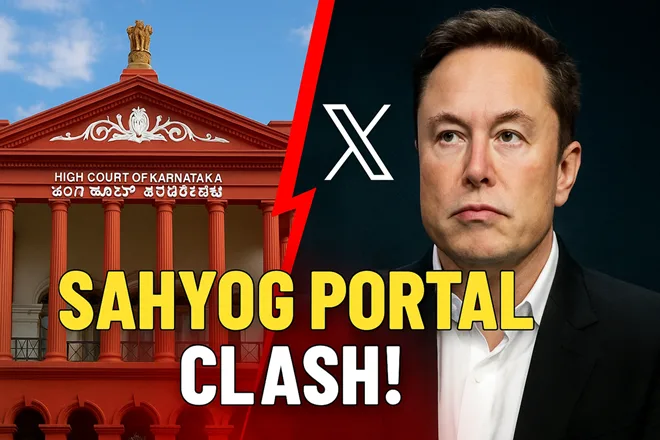
The recent Karnataka High Court ruling, which upheld the Sahyog portal as an instrument of public good, has brought this digital platform into sharp focus. This decision, described by the court as a “beacon of cooperation” against cybercrime, was met with strong opposition from Elon Musk-owned social media company X, which declared itself “deeply concerned” and vowed to appeal. X’s stance underscores ongoing tensions between tech giants and the Indian government over online content regulation and freedom of expression. For UPSC aspirants, understanding the nuances of the Sahyog portal is crucial, as it represents a significant development in India’s digital governance landscape, impacting cybersecurity, online freedom, and the responsibilities of internet intermediaries.
What is the Sahyog Portal and What Does it Do?
- What is the meaning of the Sahyog portal?
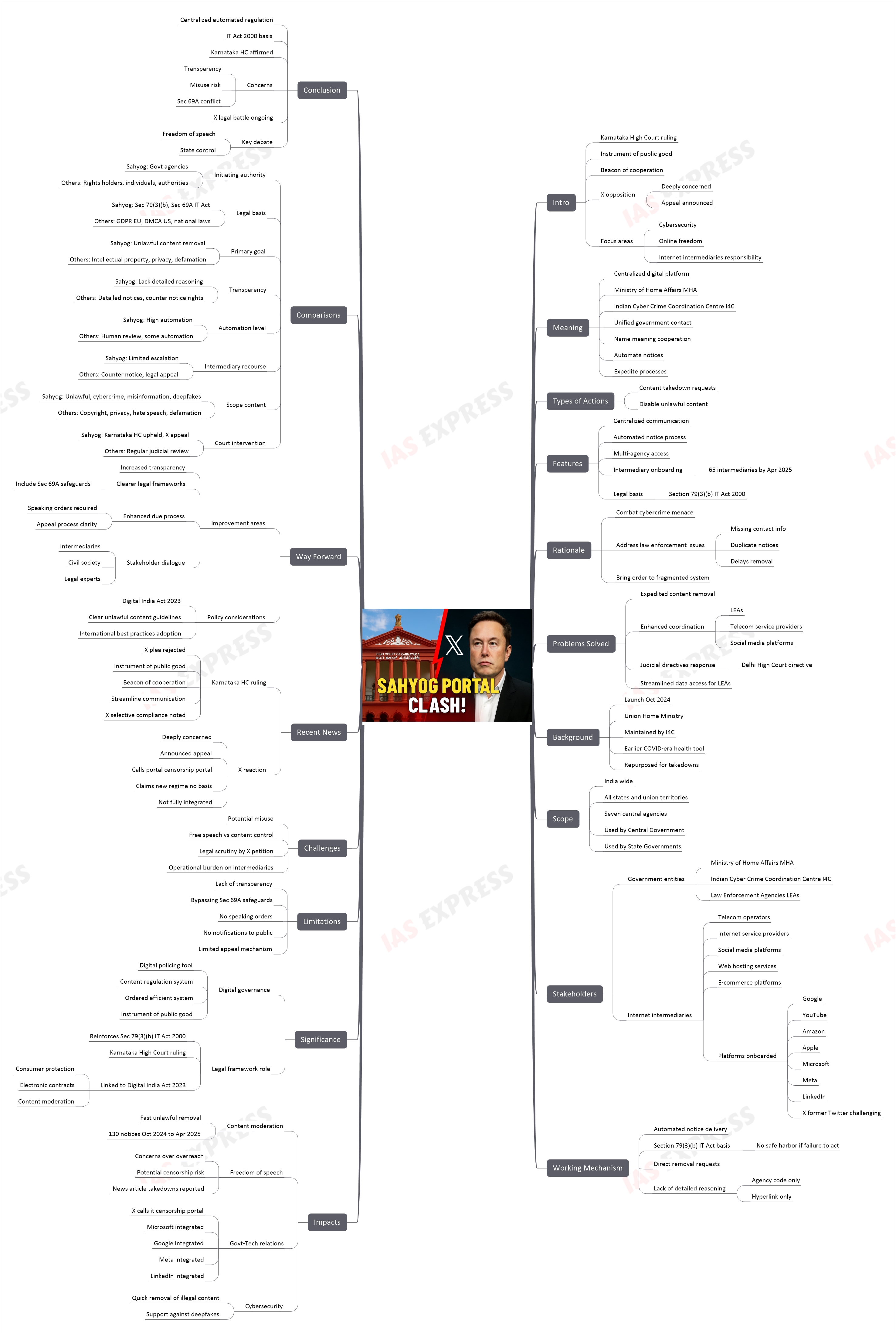
- The Sahyog portal is a centralized digital platform developed by the Ministry of Home Affairs (MHA) under the Indian Cyber Crime Coordination Centre (I4C).
- It serves as a unified point of contact for various government agencies to interact with internet intermediaries.
- The name “Sahyog” itself means cooperation, reflecting its intended role in fostering collaboration between the state and online platforms.
- Its fundamental purpose is to automate and expedite the process of sending notices to intermediaries.
- What are the types of actions facilitated by the portal?
- The portal primarily handles content takedown requests or notices for disabling access to specific online information.
- These actions are initiated when content is deemed to be involved in an unlawful act or is otherwise objectionable.
- What are the key features of the Sahyog portal?
- Centralized Communication: It provides a single, streamlined channel for notices, reducing fragmentation in communication.
- Automated Process: The portal automates the generation and sending of notices to IT intermediaries.
- Multi-Agency Access: Designated officers from various government departments and agencies can utilize the platform.
- Intermediary Onboarding: It connects online intermediaries with state and central government agencies. By April 2025, 65 online intermediaries were onboarded.
- Legal Basis (Section 79(3)(b)): The portal operates under Clause (b) of Sub-section (3) of Section 79 of the Information Technology (IT) Act, 2000.
Why Was the Sahyog Portal Created?
- What was the rationale behind its establishment?
- The portal was created to combat the growing menace of cybercrime by enabling faster action against unlawful online content.
- It addresses difficulties faced by law enforcement agencies (LEAs) and intermediaries, such as a lack of reliable contact information, duplication of notices, and delays in content removal.
- The portal aims to bring order to a fragmented system of content removal requests that previously existed.
- What problems does it seek to solve?
- Expedited Content Removal: Its primary goal is to accelerate the process of removing objectionable or illegal online content.
- Enhanced Coordination: It aims to improve coordination between law enforcement agencies, telecom service providers, and social media platforms.
- Response to Judicial Directives: The portal’s development was influenced by directions from courts, such as the Delhi High Court, which highlighted the need for a mechanism for real-time interaction on critical internet content issues.
- Streamlining Data Access: It is designed to simplify how LEAs access data relevant to cybercrime investigations.
When and Where Did the Sahyog Portal Emerge?
- What is the historical background of the Sahyog portal?
- The Sahyog portal was officially launched in October 2024 by the Union Ministry of Home Affairs.
- It is maintained by the Indian Cyber Crime Coordination Centre (I4C).
- Interestingly, it was initially developed as a COVID-era public health coordination tool before being repurposed as a central content takedown mechanism.
- What is its geographical scope?
- The portal’s reach extends across India, involving nodal officers from all states and union territories, as well as seven Central agencies.
- It is actively used by both Central and State Governments to issue orders for blocking online content.
Who are the Stakeholders Involved with the Sahyog Portal?
- Who are the primary government entities?
- Ministry of Home Affairs (MHA): The overarching ministry responsible for the portal’s establishment and operation.
- Indian Cyber Crime Coordination Centre (I4C): The operational body that manages and maintains the Sahyog portal.
- Law Enforcement Agencies (LEAs): Various state and central government agencies utilize the portal to issue takedown requests.
- Who are the internet intermediaries involved?
- The term “internet intermediaries” is broad and includes telecom operators, internet service providers, social media platforms, web-hosting services, and even e-commerce platforms.
- Major platforms like Google, YouTube, Amazon, Apple, Microsoft, Meta, and LinkedIn are either integrated or have received notices through the portal.
- X (formerly Twitter) has been a prominent intermediary challenging the portal.
How Does the Sahyog Portal Function and What are its Impacts?
- How does the working mechanism operate?
- Automated Notice Delivery: The portal automates the process of sending notices to intermediaries.
- Section 79(3)(b) Basis: Notices are issued under Clause (b) of Sub-section (3) of Section 79 of the IT Act, 2000. This section specifies that intermediaries lose safe harbor protection if they fail to remove content after receiving notification from a government agency about its unlawful nature.
- Direct Requests: Authorized officials can directly request the removal of content deemed unlawful.
- Lack of Detailed Reasoning: Platforms have reported receiving takedown requests that are digital and automated, often containing only an “agency code” and a hyperlink, without detailed contextual information or legal reasoning.
- What are the impacts of the Sahyog portal?
- On Content Moderation:
- Facilitates faster removal of unlawful content, particularly concerning cybercrime and objectionable material.
- Has led to a significant number of takedown notices; for instance, 130 content notices were issued between October 2024 and April 2025.
- On Freedom of Speech:
- Raises concerns among platforms like X about potential overreach and the undermining of free speech and expression.
- Critics argue it could be used for unchecked censorship, especially if notices lack transparency or detailed justification.
- There are claims that it has been used to request the takedown of news articles critical of government policies.
- On Government-Tech Company Relations:
- Creates tension, particularly with companies like X, which perceive it as a “censorship portal.”
- Other major tech companies like Microsoft, Google, Meta, and LinkedIn have integrated with the portal.
- On Cybersecurity:
- Aids in combating cybercrime by enabling quicker removal of content used for illegal acts.
- Supports efforts against emerging threats like deepfakes.
- On Content Moderation:
What is the Significance of the Sahyog Portal for India?
- How does it contribute to digital governance?
- The portal is a key component of India’s strategy for digital policing and online content regulation.
- It aims to create a more ordered and efficient system for managing online content.
- It is seen by the government as an “instrument of public good” and a mechanism to streamline communication.
- What is its role in legal frameworks?
- It reinforces the government’s powers under Section 79(3)(b) of the IT Act, 2000, for content takedowns.
- The Karnataka High Court’s ruling strengthens the government’s position in determining how these interactions with intermediaries occur.
- It is relevant to discussions around the proposed Digital India Act 2023, which will address consumer protection, electronic contracts, and content moderation.
What are the Limitations and Challenges Faced by the Sahyog Portal?
- What are the primary limitations?
- Lack of Transparency: Detailed information about the portal’s working mechanisms is not fully public, leading to concerns about its opaque nature.
- Bypassing Section 69A Safeguards: Critics argue that using Section 79(3)(b) via Sahyog might circumvent the stricter procedural safeguards for content blocking outlined in Section 69A of the IT Act.
- No Speaking Orders/Notifications: The portal currently does not require issuing speaking orders or notifying publishers or the public about takedowns, potentially leading to “silent disappearance” of content.
- Limited Appeal Mechanism: Intermediaries have limited recourse, often only being able to escalate requests back through the portal, with no built-in appeal button.
- What are the significant challenges?
- Potential for Misuse: Concerns exist that the platform could be used for unchecked censorship by multiple agencies without adequate accountability.
- Balancing Free Speech and Content Control: Navigating the complex balance between maintaining online freedom of expression and effectively combating unlawful content is a continuous challenge.
- Legal Scrutiny: The portal faces legal challenges, as seen with X’s petition, raising questions about its legal basis and constitutional validity.
- Operational Burden on Intermediaries: For intermediaries, especially smaller ones, handling a high volume of automated takedown requests without sufficient context can be an operational challenge, requiring significant investment of time and resources.
What is the Recent News Surrounding the Sahyog Portal?
- What was the Karnataka High Court’s ruling?
- The Karnataka High Court rejected X’s plea against the Sahyog portal, upholding its validity.
- The court ruled that Sahyog is an “instrument of public good” and a “beacon of cooperation” against cybercrime.
- It found that the portal streamlines communication and addresses operational difficulties faced by both law enforcement and intermediaries.
- The court also noted X’s “selective compliance” with content regulations across different jurisdictions.
- How did X (formerly Twitter) react?
- X expressed being “deeply concerned” by the order.
- The company announced its intention to file an appeal against the ruling, emphasizing its commitment to defending users’ free speech.
- X has labeled the Sahyog portal a “censorship portal” and argued it creates a “new regime” without legal basis, infringing on citizens’ constitutional rights.
- Notably, X is currently the only major tech giant not fully integrated with the Sahyog portal.
What is the Way Forward for the Sahyog Portal?
- What are potential areas for improvement?
- Increased Transparency: Providing more detailed information about the portal’s functioning, guidelines, and decision-making processes could build trust and address concerns about opacity.
- Clearer Legal Frameworks: Ensuring the portal’s operations are explicitly aligned with the broader legal framework, including Section 69A of the IT Act, to avoid perceived circumvention of safeguards.
- Enhanced Due Process: Implementing mechanisms for providing “speaking orders” or justifications for takedown requests and establishing clearer appeal processes for intermediaries and affected users.
- Stakeholder Dialogue: Continued engagement with internet intermediaries, civil society organizations, and legal experts to refine its operations and address concerns.
- What are the policy considerations?
- The upcoming Digital India Act 2023 could provide a more comprehensive and updated legal framework for digital governance, potentially addressing some of the ambiguities currently faced by the Sahyog portal.
- Developing clear guidelines for what constitutes “unlawful content” and ensuring consistent application across agencies.
- Exploring international best practices for content moderation and takedown mechanisms to ensure a balanced approach.
How Does India’s Sahyog Portal Compare to Other Mechanisms?
| Feature | Sahyog Portal (India) | General Notice and Takedown Mechanisms (GDPR / DMCA / Others) |
|---|---|---|
| Initiating Authority | Government agencies (Central & State Law Enforcement Agencies – LEAs) | Rights holders, individuals, or authorities (varies by legislation) |
| Legal Basis | Section 79(3)(b) of IT Act, 2000; Section 69A for direct blocking orders | GDPR (EU), DMCA (US), national intellectual property and digital rights laws |
| Primary Goal | Expedite removal of unlawful content; combat cybercrime | Protect intellectual property, privacy, prevent defamation, ensure digital rights |
| Transparency | Concerns about lack of detailed reasoning; often no speaking orders issued | Varies; some frameworks require detailed notices, user notification, and counter-notice rights |
| Automation Level | High – automated generation and delivery of notices | Varies – often human-reviewed, though automated scanning exists for large platforms |
| Intermediary Recourse | Limited – only escalation back through the portal | Counter-notice procedures, legal challenges, appeals available |
| Scope of Content | Unlawful acts, objectionable content, cybercrime, misinformation, deepfakes | Copyright infringement, privacy breaches, hate speech, defamation, personal data misuse |
| Court Intervention | Karnataka High Court upheld validity; X (Twitter) appealing | Regular judicial review and court challenges across jurisdictions |
What Conclusion Can We Draw About the Sahyog Portal?
The Sahyog portal represents a significant step in India’s efforts to regulate online content and combat cybercrime, reflecting a centralized and automated approach to content takedowns under the IT Act, 2000. While the Karnataka High Court has affirmed its role as an “instrument of public good,” concerns regarding transparency, potential for misuse, and its interaction with established legal safeguards like Section 69A persist. The ongoing legal battle with X highlights the critical debate surrounding freedom of speech versus state control in the digital realm.
Q. Discuss the ethical implications of automating content takedown requests without explicit public justifications or robust appeal mechanisms for users. (250 words)
Related Posts



If you like this post, please share your feedback in the comments section below so that we will upload more posts like this.

Responses