
[Newsbits] 19-30.11.2024: Nanozymes, E-Daakhil Portal & more


World Antimicrobial Awareness Week (WAAW) occurs annually from November 18 to 24 to combat antimicrobial resistance (AMR), a global health threat reducing life-saving medicines’ efficacy. The 2024 theme, “Educate. Advocate. Act now,” underscores immediate action across society. Developing countries face higher risks due to limited healthcare and medicine misuse. In 2019, AMR caused 1.27 million direct deaths, contributing to 4.95 million globally. The United Nations aims for 60% of nations to fund AMR plans by 2030. Challenges include policy barriers and public awareness gaps. The way forward involves collaborative efforts, sustainable funding, and improved healthcare access.
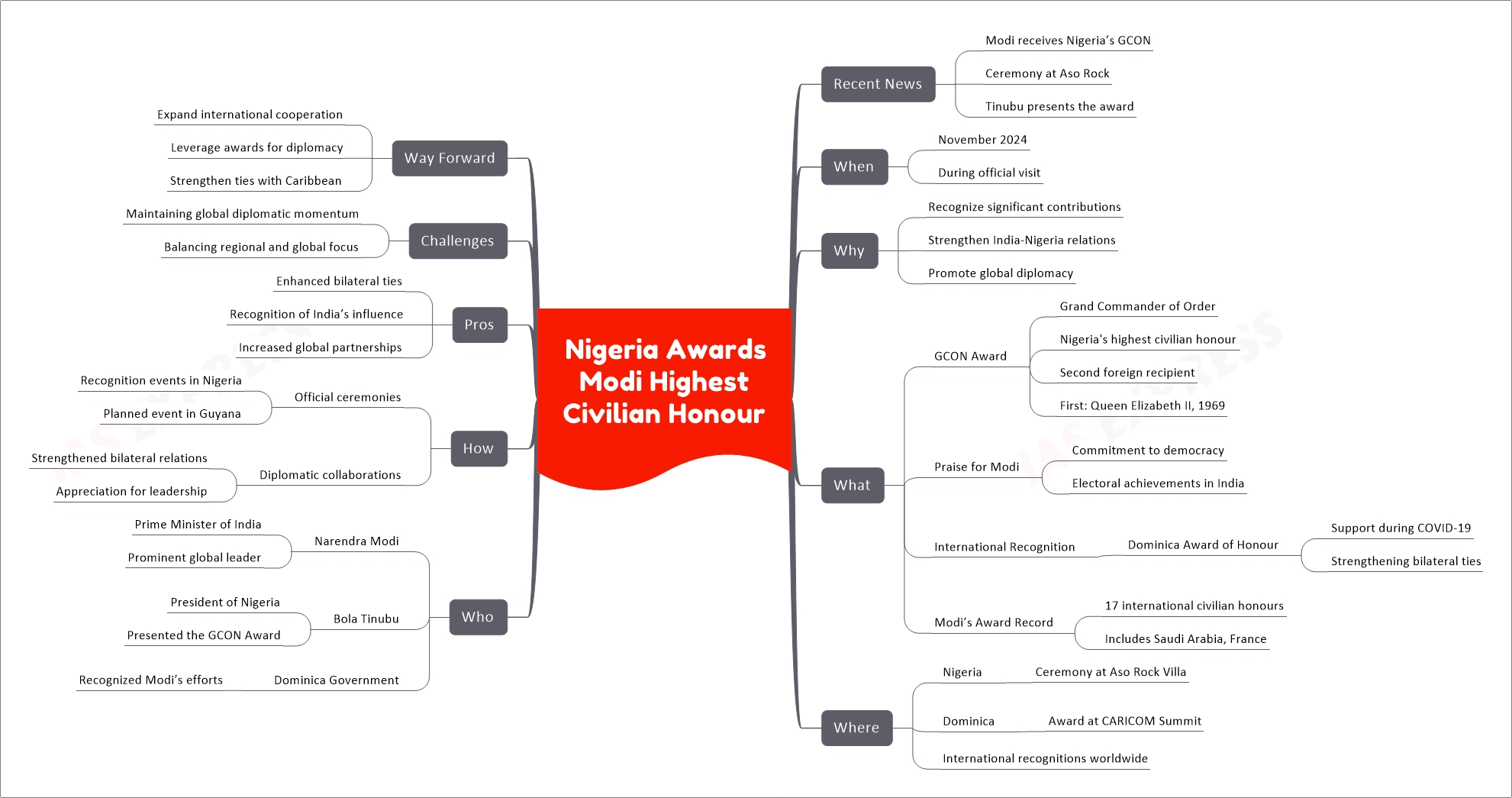
Prime Minister Narendra Modi received Nigeria’s highest civilian honour, the Grand Commander of the Order of the Niger (GCON), during his official visit to Nigeria in November 2024. President Bola Tinubu presented the award at Aso Rock Villa, recognizing Modi’s contributions to democracy and leadership. This marked Modi as the second foreign recipient after Queen Elizabeth II in 1969. Modi also earned Dominica’s highest honour, reflecting India’s support during COVID-19. With 17 international awards, Modi’s recognitions highlight India’s rising global influence. Future diplomatic engagements, including the India-CARICOM Summit, aim to foster stronger international partnerships.

Researchers discovered unique mineral chimneys on the Dead Sea floor, reaching up to 7 meters high and forming through rapid halite crystallization as salty groundwater interacts with the Dead Sea brine. The shrinking Dead Sea, losing about 1 meter annually, exacerbates environmental challenges for Israel, Jordan, and Palestine, including thousands of sinkholes posing risks to lives and infrastructure. These chimneys could help predict sinkhole-prone areas. Researchers suggest using autonomous sonar systems for mapping vulnerable regions, offering insights into groundwater trends and advancing predictive technologies to manage this dynamic environment effectively.
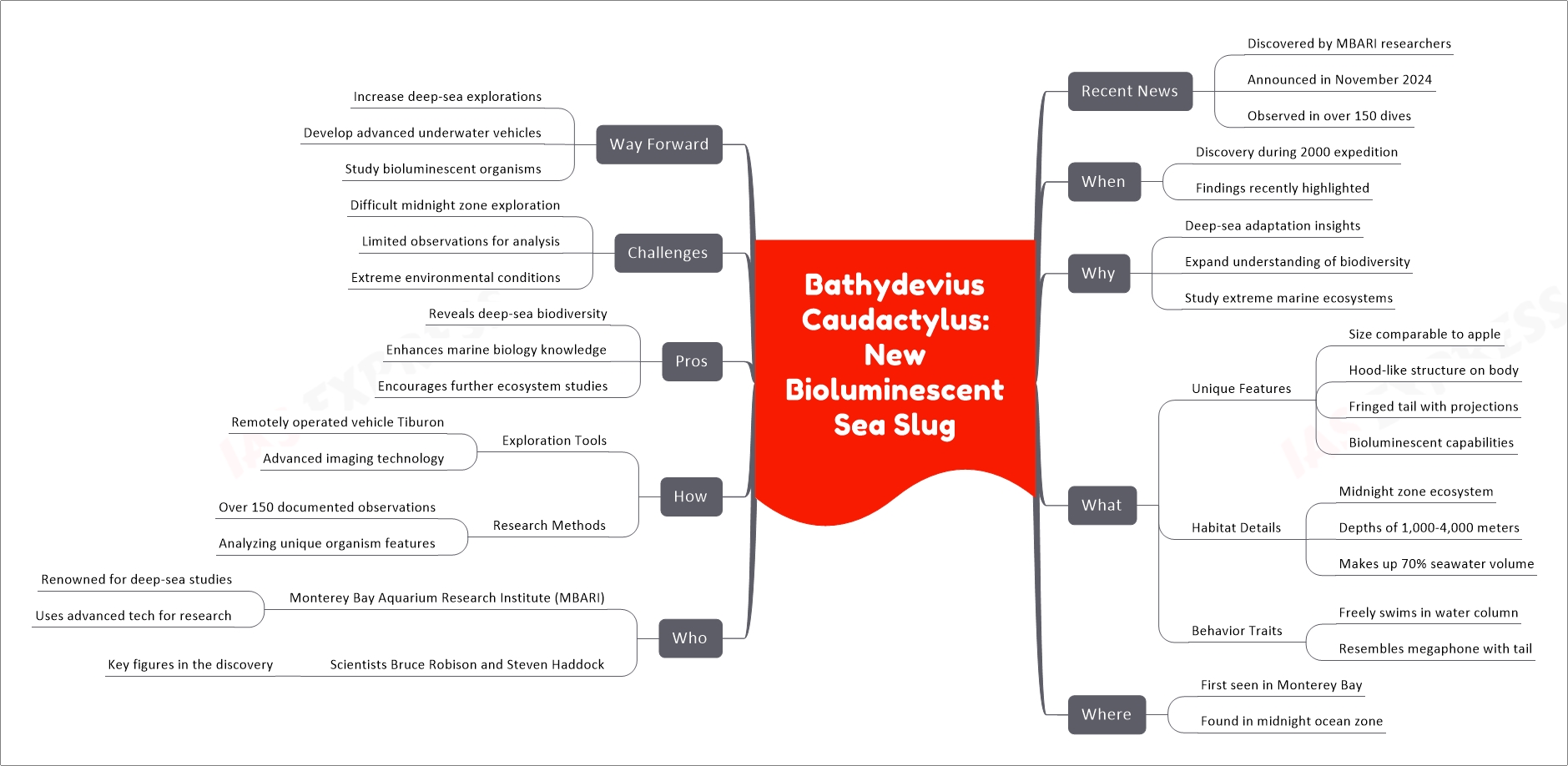
Researchers from MBARI discovered Bathydevius caudactylus, a bioluminescent sea slug thriving in the ocean's midnight zone, spanning depths of 1,000 to 4,000 meters. Resembling a "megaphone with a feathered tail," it measures the size of an apple and swims freely, unlike typical sea slugs. Documented over 150 times since 2000, the study highlights this slug's adaptations to extreme environments. It emphasizes the need for advanced exploration technologies like the Tiburon vehicle to further understand deep-sea biodiversity. This discovery provides significant insights into Earth's largest and least explored habitat, promoting future marine ecosystem studies.

Researchers discovered a new species of crocodile newt, Tylototriton koliaensis, in Vietnam’s Cao Bang region. Published in the journal ZooKeys, the medium-sized newt measures about 5 inches and features unique black and orange coloration. Thriving in mountain forests at elevations over 3,300 feet, it breeds in streams during rainy seasons and hides under rocks in winter. DNA analysis confirmed the species, marking it as a significant contribution to the taxonomy of amphibians. Future studies will explore its ecological role, behavior, and conservation strategies to preserve this biodiversity-rich habitat amid environmental challenges.
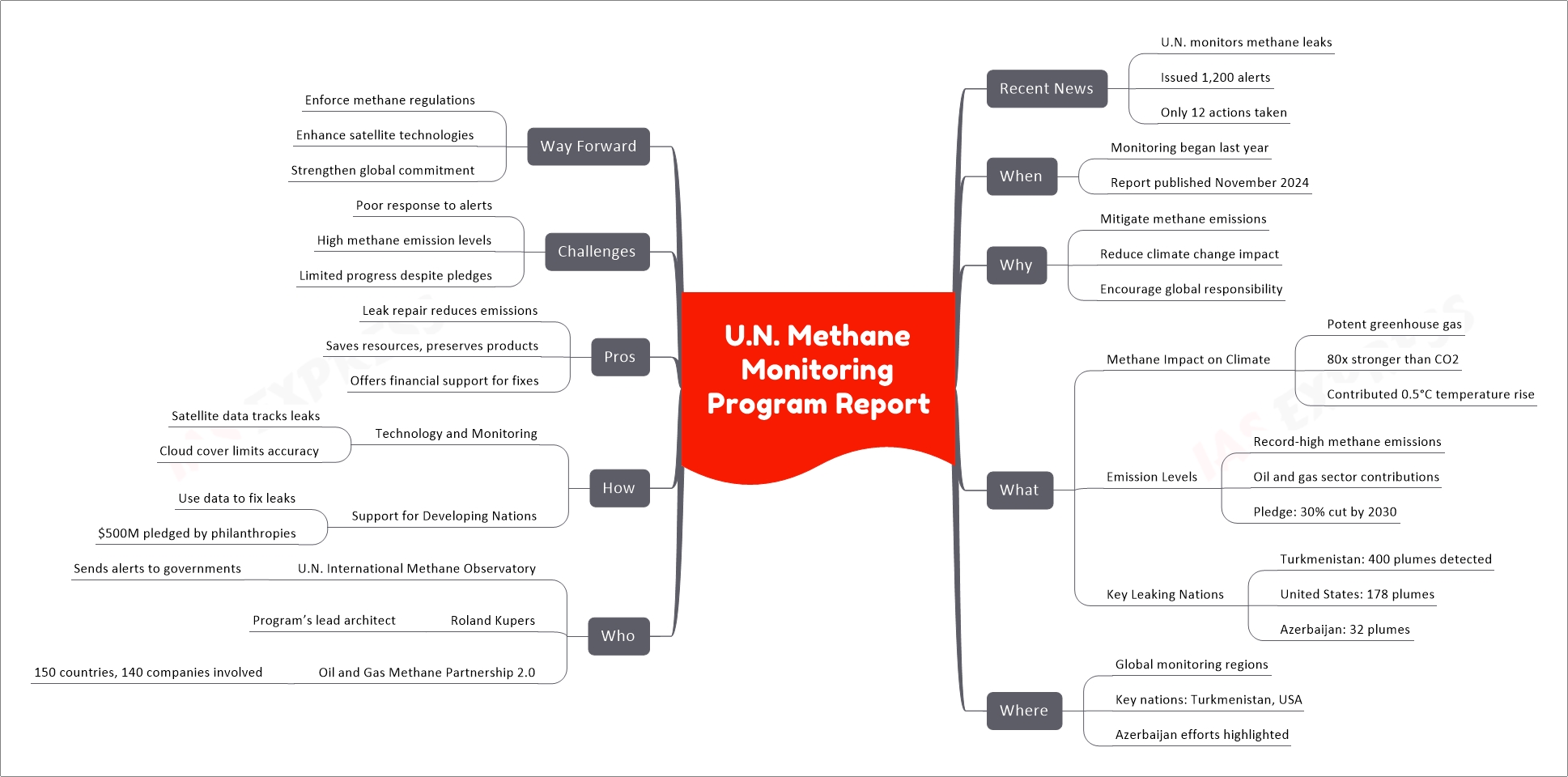
The U.N. Methane Monitoring Program has detected 1,200 methane leaks globally since last year, but only 1% of alerts led to action. Methane, 80 times more potent than CO2, has contributed to a 0.5°C temperature rise. Despite commitments by 150 countries and 140 companies to reduce emissions by 30% by 2030, methane levels remain at record highs. Turkmenistan recorded the most leaks, followed by the U.S. and Azerbaijan. Satellite monitoring and 0 million in pledged support for developing nations are critical for addressing these emissions. Improved enforcement and technological advancements are essential for progress.

Telangana has announced 100% exemption from road tax and registration fees for electric vehicles (EVs) until December 2026 under its EV policy to reduce urban air pollution and promote eco-friendly transportation. Eligible vehicles include two- and four-wheelers, three-wheelers like autorickshaws, electric goods vehicles, and public/private electric buses. TSRTC buses benefit from permanent exemptions. This initiative aims to make EVs more cost-effective, spurring adoption for personal and business use, especially in urban centers like Hyderabad. Challenges such as infrastructure development and rural adoption require attention for widespread success.
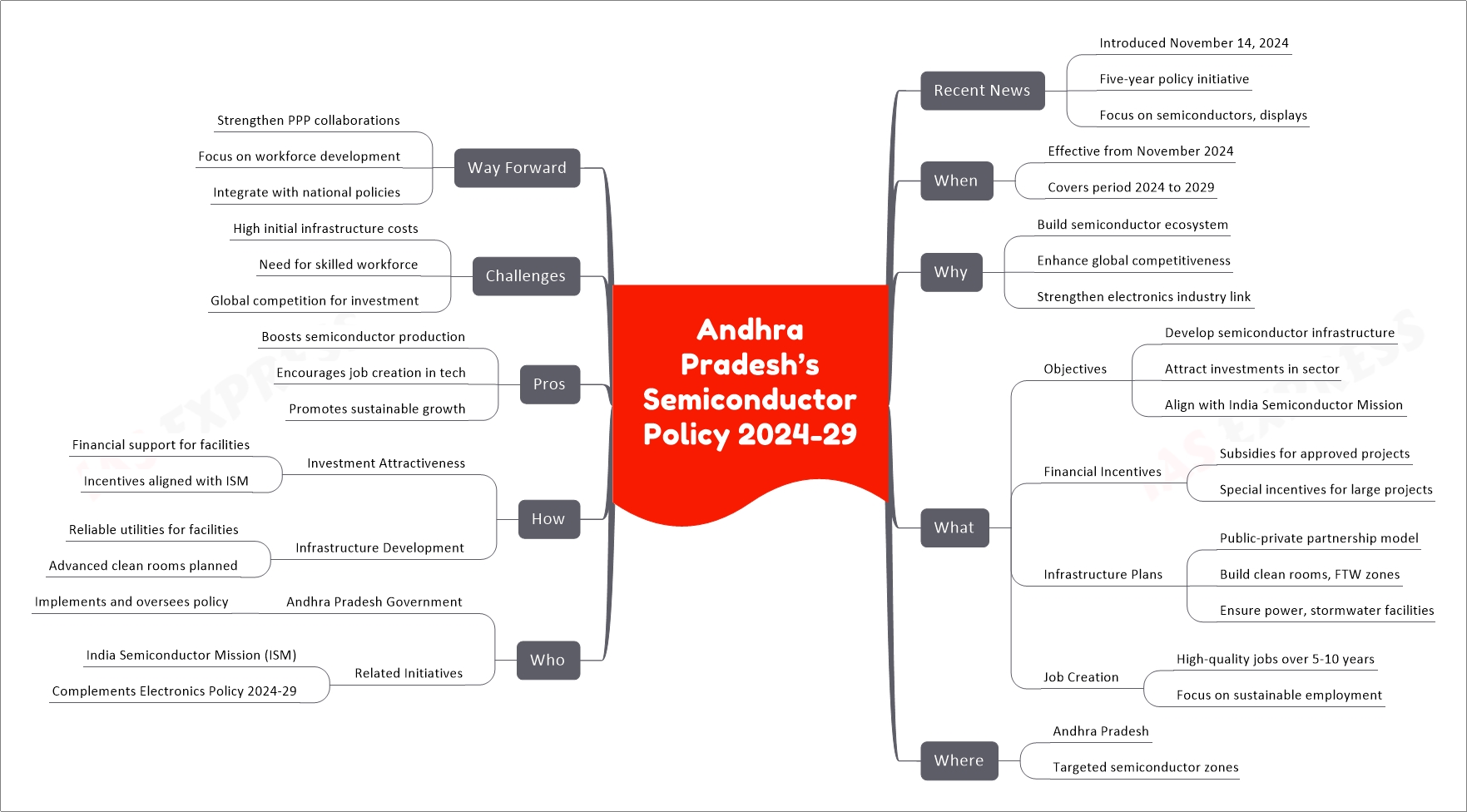
Andhra Pradesh launched its Semiconductor & Display Fab Policy 2024-29 to develop a semiconductor ecosystem, enhance global competitiveness, and align with India Semiconductor Mission goals. Effective from November 2024, the policy offers subsidies for approved projects and large-scale incentives. Infrastructure initiatives include clean rooms and free trade warehouse zones through PPP models. It aims to create sustainable employment and complements the state’s Electronics Manufacturing Policy 2024-29. While boosting semiconductor production, challenges such as infrastructure costs and workforce needs remain. Emphasis on public-private partnerships and workforce training will be essential for success.

India’s GSAT-20 communications satellite, weighing 4,700 kg, was launched on November 19, 2024, by SpaceX’s Falcon 9 rocket from Cape Canaveral, Florida. A collaboration between ISRO and SpaceX, this launch marks a strategic shift for ISRO due to limited capacity in its LVM-3 rocket and reduced options from traditional partners like Arianespace. GSAT-20 features a Ka-band payload and will enhance internet services in remote areas and in-flight connectivity. The partnership reflects growing ISRO-SpaceX ties, with a 2025 mission planned to send an Indian astronaut to the ISS aboard SpaceX’s Dragon spacecraft.
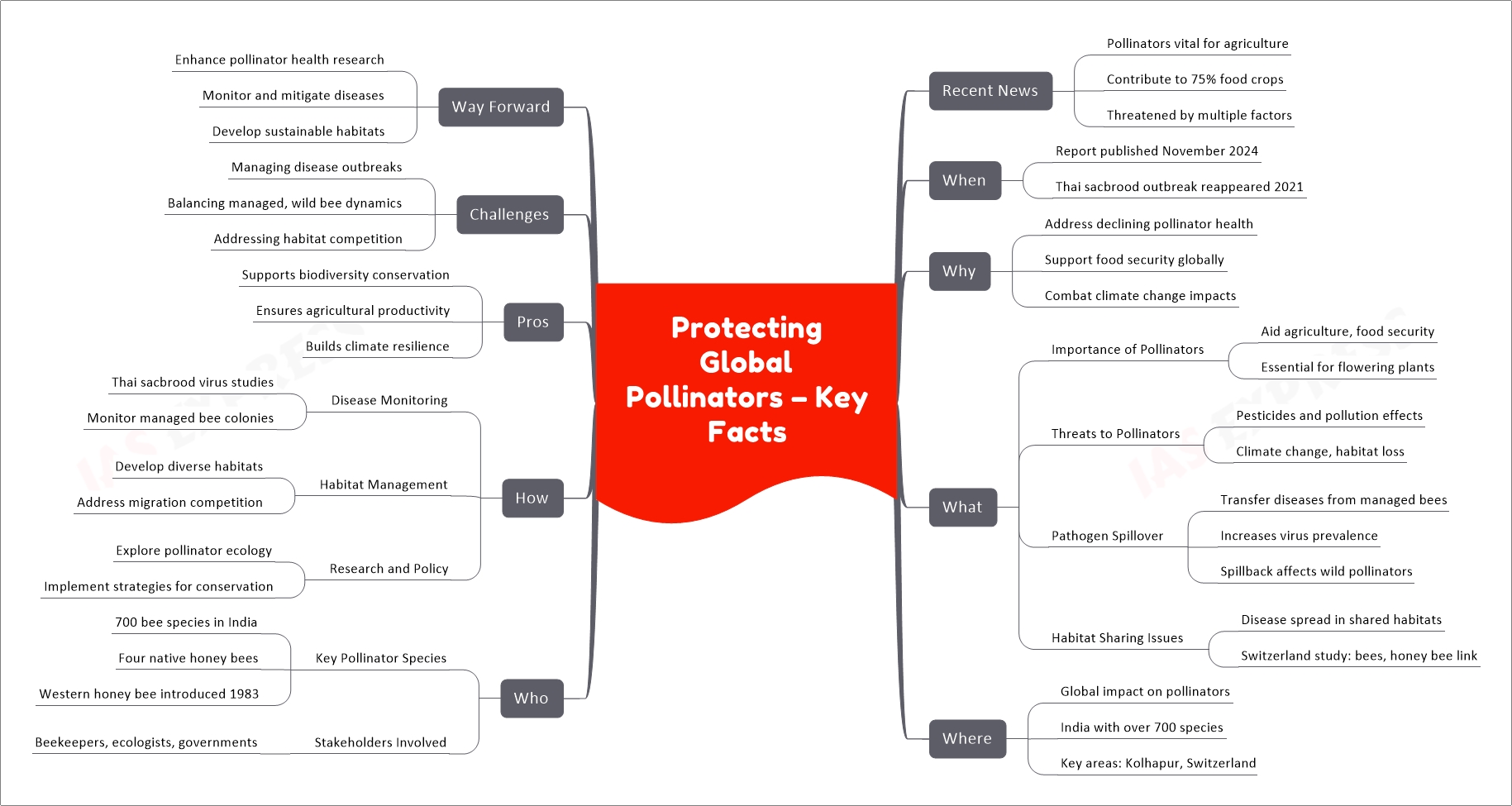
Pollinators contribute to over 75% of food crops, but face threats from pesticides, pollution, climate change, and habitat loss. Key issues include pathogen spillover from managed to wild bees, with diseases like the Thai sacbrood virus affecting Asiatic honey bees in India. Habitat sharing exacerbates disease transmission and competition, especially with the migration of managed honey bees. India, home to over 700 bee species, must focus on habitat diversity, disease monitoring, and pollinator ecology research to mitigate these challenges. Enhancing pollinator health is essential for biodiversity, food security, and resilience against climate change impacts.

If you like this post, please share your feedback in the comments section below so that we will upload more posts like this.

Responses