
[Newsbits] 1-7.11.2024: Exercise VAJRA PRAHAR, Census 2025 & more


The National Large Solar Telescope (NLST) in Ladakh is India’s ground-based project aiming to enhance solar research and improve solar storm predictions, crucial for protecting satellite and communication technology on Earth. Located at Merak near Pangong Tso Lake at 4,200 meters, this advanced telescope will provide high-resolution data on solar magnetic fields, complementing data from the Aditya L1 satellite. Despite facing delays and significant costs, it is expected to receive final approval by November 2024. Led by Professor Annapurni Subramaniam and prioritized by the Principal Scientific Advisor, NLST is positioned to significantly advance India’s solar astronomy capabilities.
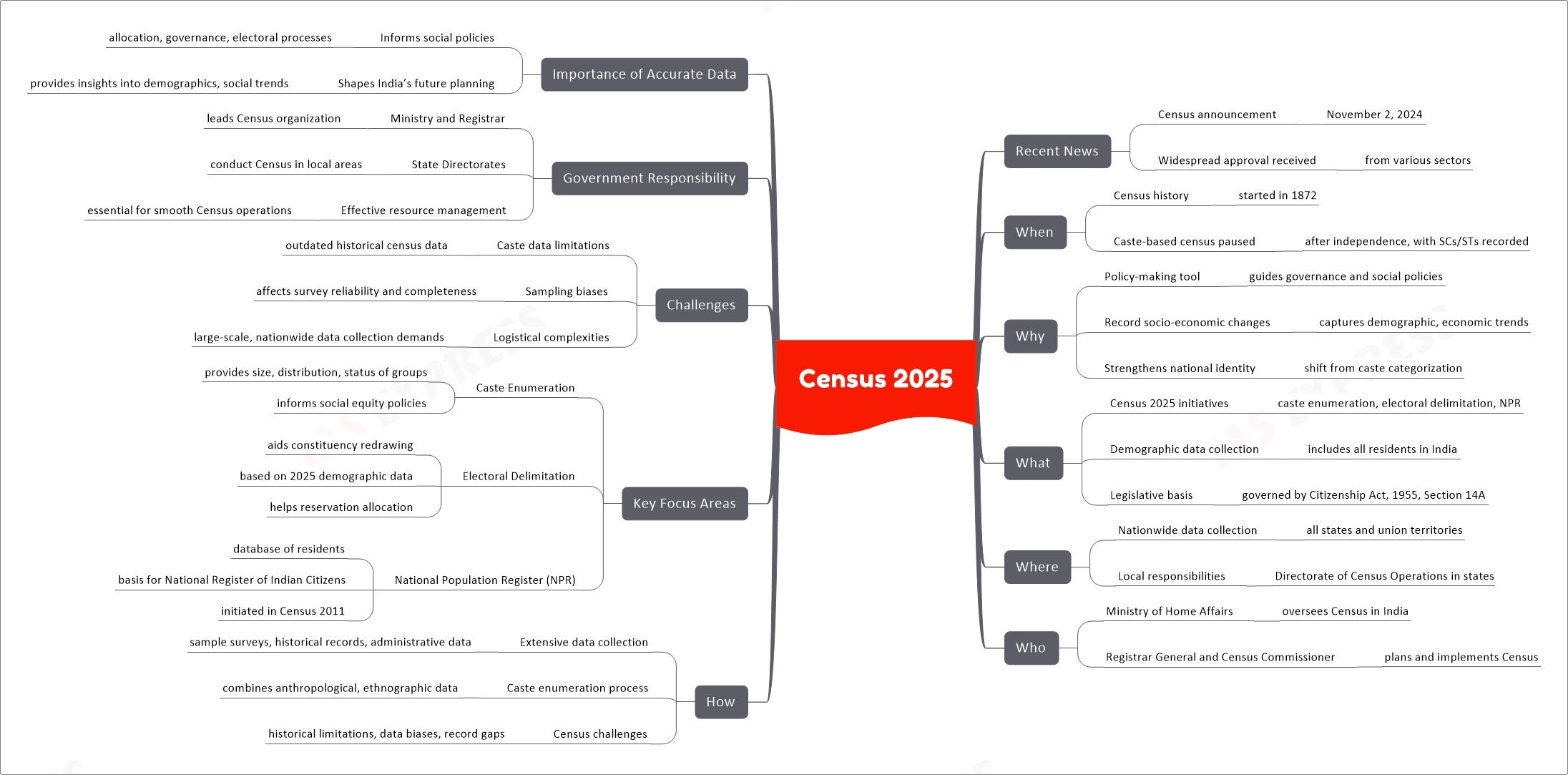
The Census 2025 in India will gather crucial demographic data focusing on caste enumeration, electoral delimitation, and the National Population Register (NPR). Managed by the Ministry of Home Affairs, with local execution by state Census Directorates, this effort aims to capture socio-economic and political trends, providing data that influences policy and governance. Despite challenges like outdated data and logistical hurdles, caste enumeration will provide detailed insights into social structures. Additionally, census findings will guide electoral delimitation and support the NPR, strengthening resource allocation, social policies, and India’s governance framework.

Scientists have used LiDAR technology to discover a lost Mayan city hidden beneath dense jungle in Mexico. LiDAR, or Light Detection and Ranging, employs light pulses to create detailed 3-D surface models. This method, which includes a laser, scanner, and GPS receiver, overcomes dense vegetation barriers that obscure archaeological sites. Commonly used in forestry, urban planning, and environmental monitoring, LiDAR is praised for its accuracy and ability to cover large, inaccessible areas. Although costly and weather-dependent, continued advances promise wider applications, making LiDAR a valuable tool for future archaeological discoveries and environmental studies.
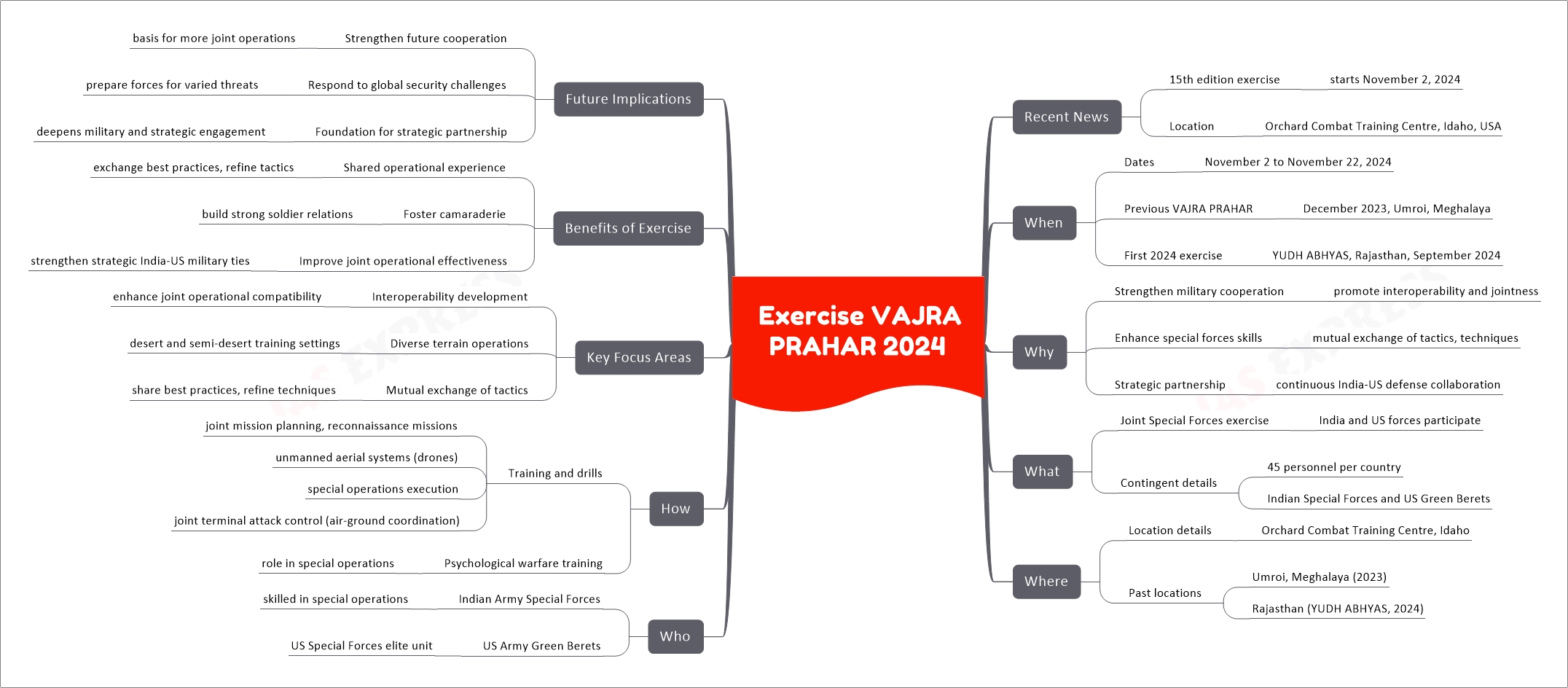
Exercise VAJRA PRAHAR 2024, the 15th edition of the India-US joint Special Forces exercise, is held at Orchard Combat Training Centre, Idaho, from November 2 to 22, 2024. This collaboration, involving 45 personnel each from India’s Special Forces and the US Green Berets, aims to strengthen military cooperation through focused training on interoperability, joint mission planning, reconnaissance, and special operations in desert terrains. The exercise enhances mutual skills and prepares both nations to handle global security challenges, fostering a deeper strategic partnership and paving the way for more coordinated responses to future threats.

The Namo Drone Didi Scheme, launched in November 2024, aims to empower 14,500 Women Self Help Groups (SHGs) across India by providing drones and training for agricultural services, enhancing crop yield and reducing costs. Funded with ₹1261 crore, this initiative under the DAY-NRLM will run through 2026. SHGs receive an 80% subsidy on drone costs, with additional loan facilities and interest subvention. Drone packages include essential equipment and a 15-day training program. Overseen by an Empowered Committee and monitored through an IT-based system, this scheme promotes rural women’s livelihoods and strengthens agriculture through technology.
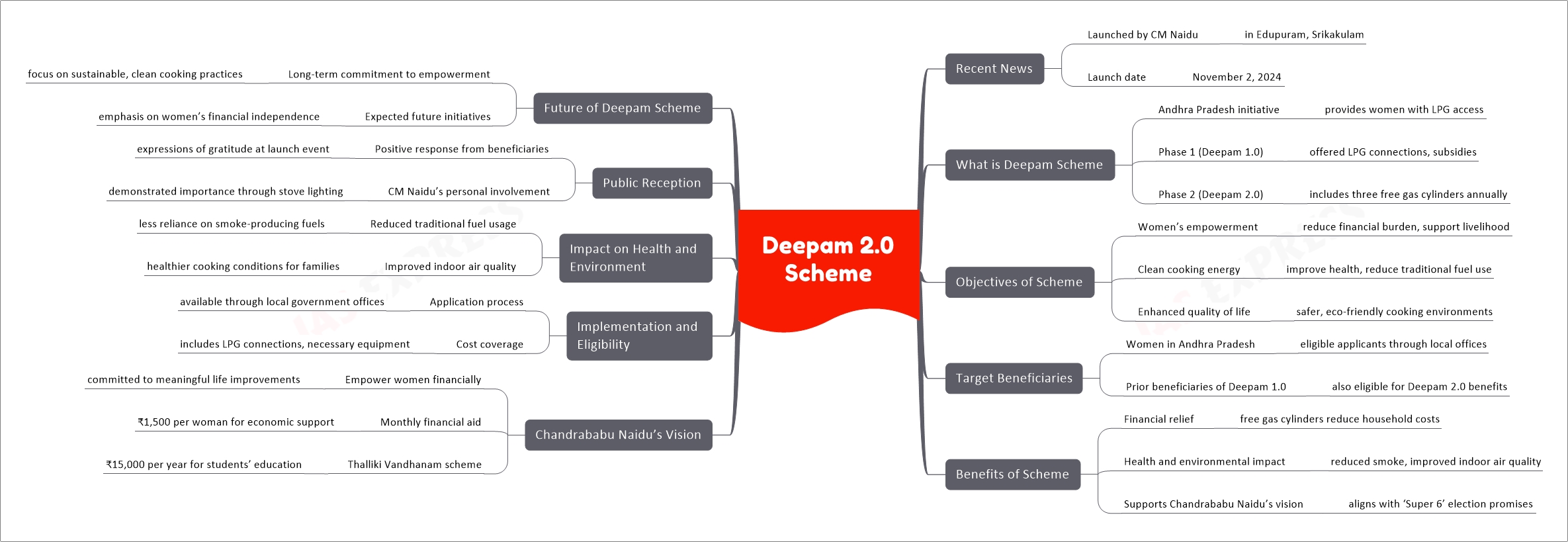
The Deepam 2.0 Scheme, launched by Andhra Pradesh Chief Minister Chandrababu Naidu in Edupuram, aims to empower women through clean cooking energy. Building on Deepam 1.0, it provides three free LPG cylinders annually to reduce health risks associated with traditional cooking fuels. Aligned with Naidu’s “Super 6” promises, the scheme also includes financial support of ₹1,500 monthly for women and educational aid for students. Accessible through local offices, it benefits women statewide. By fostering healthier cooking environments and easing financial burdens, Deepam 2.0 advances women’s empowerment and sustainable living.

Exercise Garud Shakti 24, the 9th India-Indonesia joint military exercise, is underway in Jakarta, focusing on enhancing interoperability and defense ties. From November 1-12, 2024, India’s Parachute Regiment and Indonesia’s Kopassus Special Forces engage in jungle terrain operations, special operations planning, and counter-terrorism exercises. This collaboration aims to improve bilateral military strategies and mutual understanding, reinforced by recent diplomatic discussions. Beyond tactical training, Garud Shakti 24 strengthens India-Indonesia defense cooperation, contributing to Indo-Pacific security and laying a foundation for more advanced future collaborations.
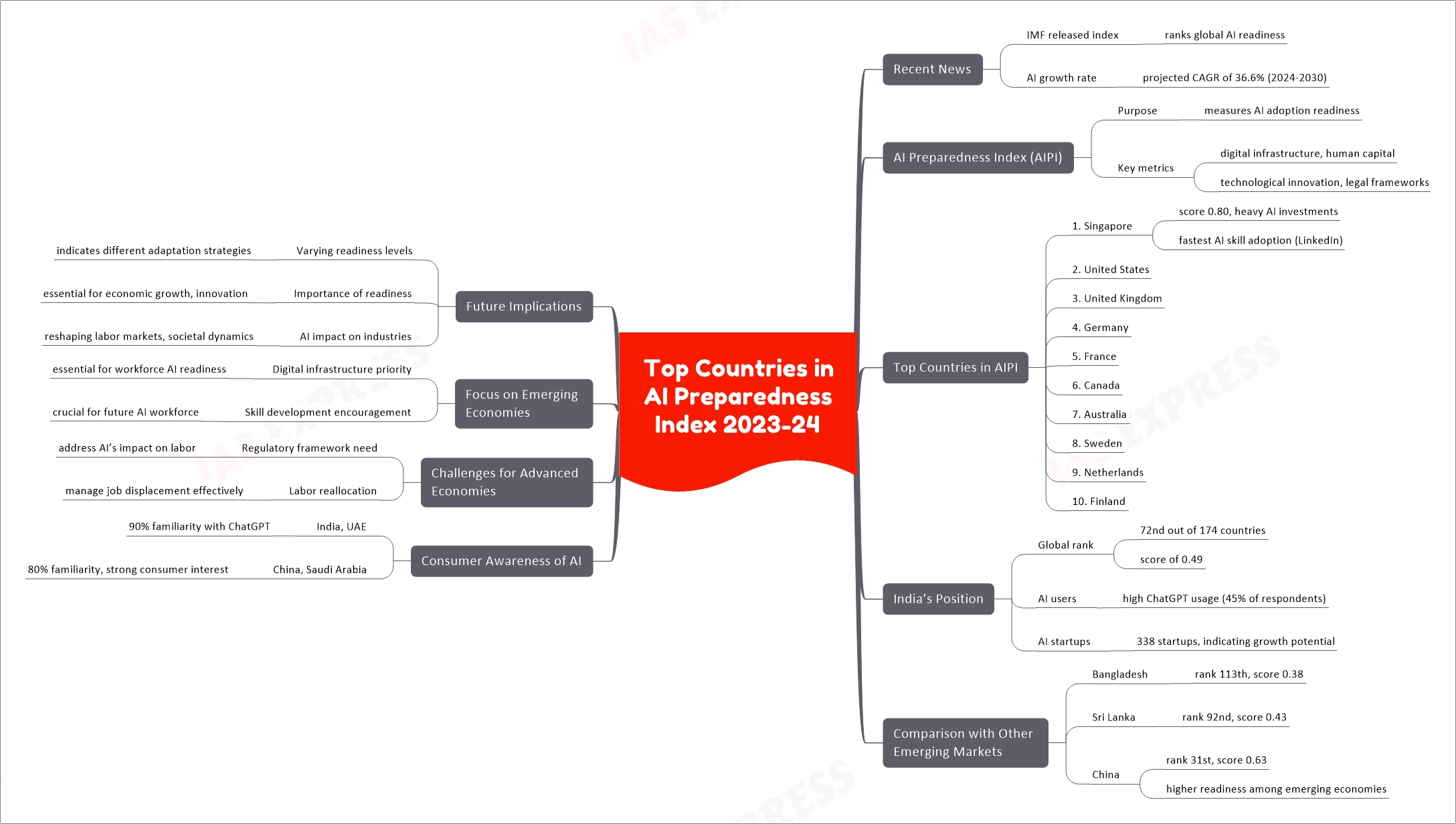
The AI Preparedness Index 2023, released by the IMF, ranks countries based on readiness for AI adoption across infrastructure, human capital, innovation, and legal frameworks. Singapore leads the index with a score of 0.80, followed by the US and the UK, reflecting significant investments in AI technology. India, ranking 72nd, shows high AI engagement with 45% ChatGPT usage and 338 AI startups. In comparison, Bangladesh and Sri Lanka rank lower, while China stands at 31st. The report underscores advanced economies’ regulatory needs and emerging markets' focus on digital infrastructure and skill-building to maximize AI benefits.

Scientists have discovered the first black hole triple system, located 8,000 light years away in the Cygnus constellation. The system consists of a central black hole, V404 Cygni, orbited by two stars—one in a close 6.5-day orbit and another in a distant 70,000-year orbit. This unusual configuration, discovered by researchers from Caltech and MIT, suggests a new formation mechanism called “direct collapse,” where a massive star forms a black hole without a supernova explosion. The discovery challenges existing black hole theories, encouraging further research into similar cosmic systems and the complex dynamics of black hole formation.
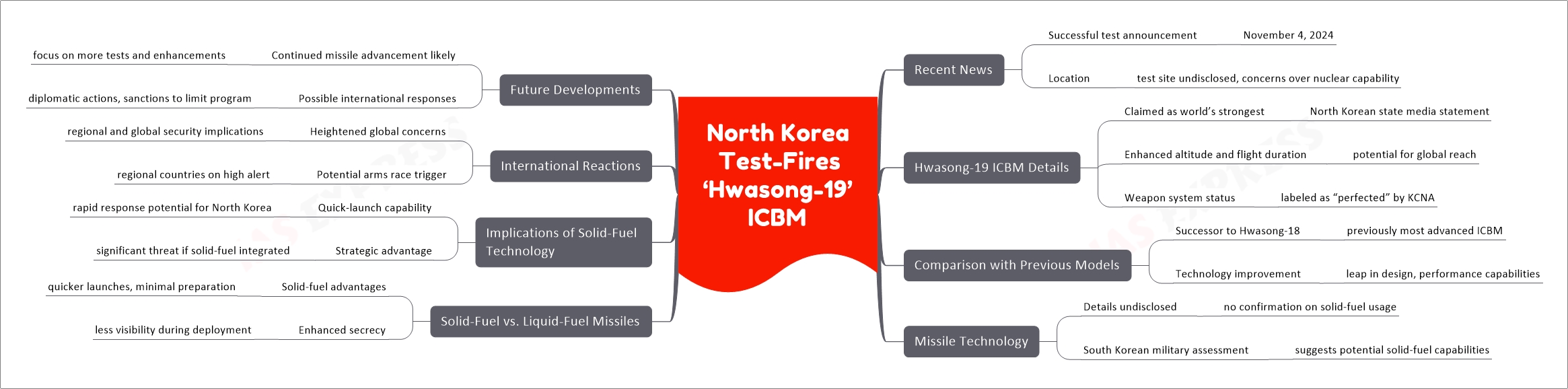
North Korea’s successful test of the Hwasong-19 ICBM, claimed to be the “world’s strongest missile,” raises global concerns with its enhanced range and possible solid-fuel technology for quicker, stealthier launches. South Korean officials suspect solid-fuel capabilities, indicating a serious strategic threat, prompting international scrutiny and potential responses to manage escalating tensions. Concurrently, India has joined the Asset Recovery Interagency Network-Asia Pacific (ARIN-AP) Steering Committee through its Enforcement Directorate. This collaboration enhances India’s cross-border asset recovery efforts, aligning with G-20 priorities, and India will assume the ARIN-AP presidency in 2026, showcasing its leadership in tackling economic crimes.

If you like this post, please share your feedback in the comments section below so that we will upload more posts like this.

Responses