Model Code of Conduct

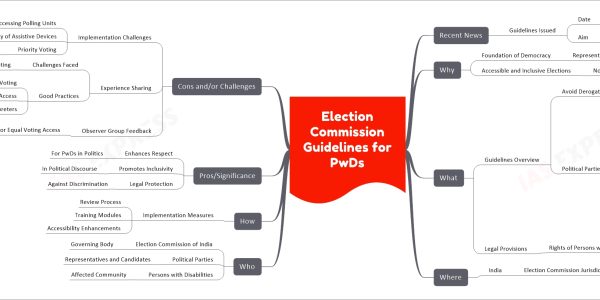
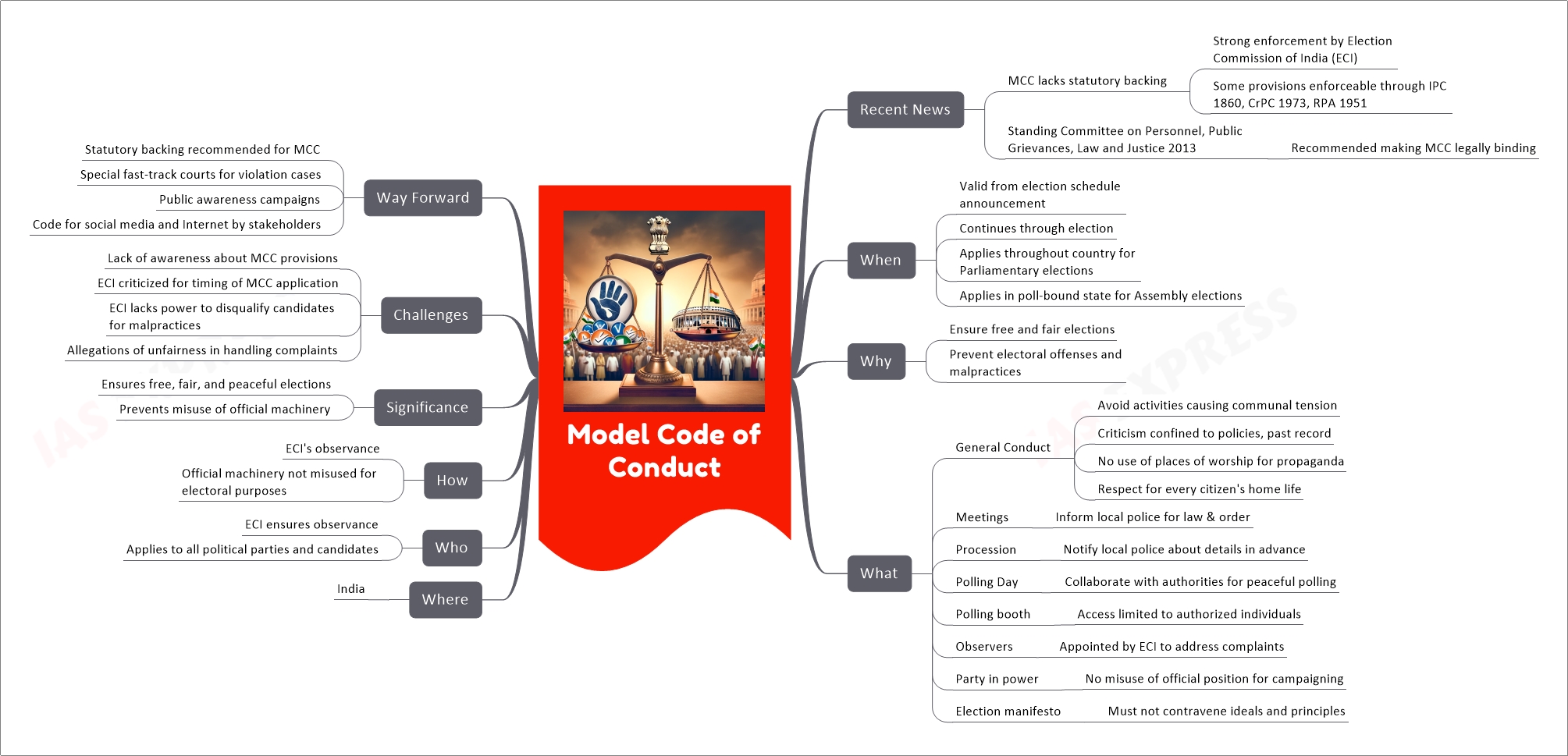
Model Code of Conduct mind map

  Recent News
    MCC lacks statutory backing
      Strong enforcement by Election Commission of India (ECI)
      Some provisions enforceable through IPC 1860, CrPC 1973, RPA 1951
    Standing Committee on Personnel, Public Grievances, Law and Justice 2013
      Recommended making MCC legally binding
  When
    Valid from election schedule announcement
    Continues through election
    Applies throughout country for Parliamentary elections
    Applies in poll-bound state for Assembly elections
  Why
    Ensure free and fair elections
    Prevent electoral offenses and malpractices
  What
    General Conduct
      Avoid activities causing communal tension
      Criticism confined to policies, past record
      No use of places of worship for propaganda
      Respect for every citizen's home life
    Meetings
      Inform local police for law & order
    Procession
      Notify local police about details in advance
    Polling Day
      Collaborate with authorities for peaceful polling
    Polling booth
      Access limited to authorized individuals
    Observers
      Appointed by ECI to address complaints
    Party in power
      No misuse of official position for campaigning
    Election manifesto
      Must not contravene ideals and principles
  Where
    India
  Who
    ECI ensures observance
    Applies to all political parties and candidates
  How
    ECI's observance
    Official machinery not misused for electoral purposes
  Significance
    Ensures free, fair, and peaceful elections
    Prevents misuse of official machinery
  Challenges
    Lack of awareness about MCC provisions
    ECI criticized for timing of MCC application
    ECI lacks power to disqualify candidates for malpractices
    Allegations of unfairness in handling complaints
  Way Forward
    Statutory backing recommended for MCC
    Special fast-track courts for violation cases
    Public awareness campaigns
    Code for social media and Internet by stakeholders

The Model Code of Conduct (MCC) is a set of guidelines issued by the Election Commission of India to ensure free and fair elections in the country. It becomes effective from the date the election schedule is announced and applies throughout the country for Parliamentary elections, and within the poll-bound states for Assembly elections. The MCC covers various aspects, including general conduct, meetings, processions, polling day activities, use of polling booths, and the behavior of the party in power, to prevent any actions that could affect the outcome of the elections. While it lacks statutory backing, some of its provisions are enforceable through other statutes like the Indian Penal Code (IPC), the Code of Criminal Procedure (CrPC), and the Representation of the People Act (RPA). Challenges include a lack of awareness among stakeholders, criticism regarding the timing of its application, and limitations in ECI’s powers. Experts suggest providing statutory backing to the MCC and establishing special fast-track courts for quicker resolution of violations​​​​​​​​.
Related Posts

If you like this post, please share your feedback in the comments section below so that we will upload more posts like this.

Responses

🖍️ Highlight
HomeCoursesPlansAccount