
Epstein Files Explained (2026) | Transparency, Power, Law & Ethics

From Current Affairs Notes for UPSC » Editorials & In-depths » This topic
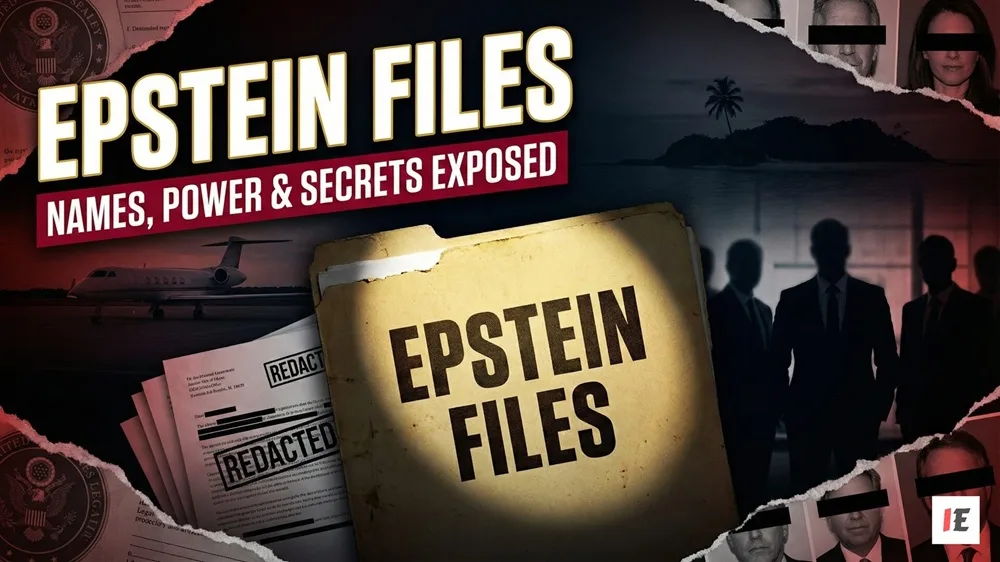
The US Justice Department recently released more than three million pages of files linked to its long-running investigation into convicted sex offender Jeffrey Epstein, following a law passed by Congress last year requiring their disclosure. This massive collection includes over 2,000 videos and 180,000 images, making it the largest release of evidence in this case to date. The release was mandated by the Epstein Files Transparency Act, which was signed into law in November 2025. These documents shed light on the sex trafficking network operated by Epstein and his associates, implicating powerful figures in politics, business, and royalty. The release has triggered global debates on accountability, victim privacy, and the legal systems in countries like India and the US.
What does the massive Epstein files disclosure contain?
Nature and Volume of Documents
- The disclosure consists of approximately 3 million pages of documents, which is a record amount for a single criminal case release.
- This includes internal FBI memos, interview summaries, and emails exchanged between Epstein and high-profile individuals.
- The files also contain flight logs from Epstein's private plane, often called the "Lolita Express", which track travel to his private island.
- A significant portion of the release involves multimedia evidence seized by federal agents.
- There are over 2,000 videos and 180,000 images, providing visual proof of the interactions and locations involved in the case.
- To protect victim privacy, images depicting child sexual abuse have been withheld or redacted.
Categories of Information
- Financial Records showing how Epstein moved money to fund his operations are included.
- Documents reveal connections to major banks like JPMorgan Chase, highlighting failures in banking compliance.
- Legal Documents such as Non-Prosecution Agreements and transcripts from grand jury proceedings are now public.
- These papers explain why Epstein received a lenient sentence in 2008.
- Personal Correspondence found in Epstein's electronic devices is a major part of the files.
- This includes emails and text messages with world leaders and business tycoons.
Why were these confidential documents released now?
Legislative Mandate
- The primary reason for the release is the Epstein Files Transparency Act, passed by the 119th US Congress.
- This law was designed to force the government to be transparent about its investigation.
- President Donald Trump signed this act into law on November 19, 2025, setting a strict deadline for the release.
- The law required the Department of Justice (DOJ) to make all non-classified records public in a searchable format.
- Legislators from both the Democrat and Republican parties supported this bill to ensure public accountability.
Public and Political Pressure
- There was immense public demand to see the "client list" of powerful people associated with Epstein.
- Victim advocacy groups argued that secrecy was protecting abusers and denying justice to survivors.
- The release was also driven by accusations that the FBI and DOJ had previously covered up evidence.
- The act aimed to restore trust in federal law enforcement agencies.
When did the key events in this timeline occur?
Early Investigation and Plea Deal
- 2005: Police in Palm Beach, Florida, started investigating Epstein after a parent reported that her 14-year-old stepdaughter was molested.
- 2006-2008: Federal authorities prepared a massive indictment, but Epstein signed a controversial non-prosecution agreement in 2008.
- He pleaded guilty to lesser state charges and served only 13 months in a private wing of a county jail.
Arrest and Death
- July 2019: Epstein was arrested again by New York federal prosecutors on charges of sex trafficking of minors.
- August 2019: Epstein died in his jail cell at the Metropolitan Correctional Center, which was ruled a suicide.
- 2021: His associate Ghislaine Maxwell was convicted of helping him recruit and abuse underage girls.
Path to Disclosure
- 2024: A batch of court documents from a civil lawsuit was unsealed, naming several associates.
- November 2025: The Epstein Files Transparency Act was enacted.
- January-February 2026: The Department of Justice released the massive tranche of 3 million pages.
Who are the prominent figures identified in the files?
The Core Network
- Jeffrey Epstein: The central figure, a wealthy financier who used money and power to exploit young women and girls.
- Ghislaine Maxwell: Epstein's former partner, described in documents as the "manager" of his trafficking operation.
- New files show her booking photos and registration details from prison.
Political and Royal Connections
- Andrew Mountbatten-Windsor (formerly Prince Andrew): The files contain photos of him in compromising situations with young women.
- Emails suggest he invited Epstein to Buckingham Palace even after Epstein's first conviction.
- Donald Trump: Flight logs show he flew on Epstein's plane in the 1990s.
- New FBI files contain unsubstantiated tips about him, but the DOJ stated no evidence of wrongdoing was found in the review.
- Bill Clinton: The former US President appears in flight logs and photos related to international trips.
- Peter Mandelson: A British politician who resigned from the Labour Party after files revealed his close financial ties to Epstein.
Business and Other Figures
- Elon Musk: Emails reveal he exchanged messages with Epstein in 2012-2013 regarding potential visits to Epstein's island, though Musk denied going.
- Bill Gates: Documents mention meetings and communications between the tech mogul and Epstein.
- Terje Rød-Larsen: A Norwegian diplomat whose emails contained offensive remarks about India.
How did the trafficking network and release mechanism work?
Mechanism of Trafficking
- Recruitment: The network used a "pyramid scheme" model where victims were paid to recruit other young girls.
- Associates like Maxwell acted as groomers to normalize the abuse.
- Shell Companies: Epstein used complex financial structures and offshore accounts to hide payments to victims and co-conspirators.
- Banks like JPMorgan are alleged to have ignored "suspicious activity reports" regarding his accounts.
- Intelligence Links: Some files and theories suggest Epstein may have had ties to intelligence agencies like the Mossad or CIA for blackmail purposes, though this remains a subject of debate.
Mechanism of File Release
- Collection: The DOJ gathered files from the SDNY, FBI, and Florida investigations into a single repository.
- Review and Redaction: A team of 500 attorneys reviewed the 6 million pages to remove Child Sexual Abuse Material (CSAM) and protect victim identities.
- The law allowed redactions only for privacy and national security, not for embarrassment.
- Publication: The files were uploaded to the DOJ website in Data Sets, making them downloadable for the public.
What is the detailed update on the recent news?
The February 2026 Release
- In late January and early February 2026, the DOJ released the final and largest batch of documents.
- This "Data Set 12" and others completed the requirement to release all unclassified files.
- New Revelations:
- Prince Andrew: New images show him "crouching over" a woman, leading to his eviction from the Royal Lodge by King Charles.
- Melania Trump: An FBI interview summary alleges Epstein claimed credit for introducing Donald Trump to his wife Melania, acting as a "matchmaker".
- Intelligence Operations: Emails hint at Epstein discussing Libyan assets and potential help from former MI6 and Mossad agents.
- Public Reaction:
- The release caused immediate political fallout in the UK, with Lord Mandelson resigning.
- In the US, lawmakers criticized the redactions, arguing that too many names were still hidden.
What are the specific implications for India?
References to Indian Figures
- PM Modi Mention: An email in the files referenced Prime Minister Narendra Modi and his 2017 visit to Israel.
- The Ministry of External Affairs (MEA) of India strongly rejected this, calling the comments "trashy ruminations" of a criminal.
- The government clarified that the reference was merely about the visit and contained no evidence of wrongdoing.
- Racist Remarks: A Norwegian diplomat, Terje Rød-Larsen, wrote an email to Epstein with a derogatory phrase: "When you meet an Indian and a snake, kill the Indian first".
- This revelation caused outrage and highlighted the racist attitudes prevalent in some elite circles.
- Political Reactions: Rahul Gandhi, the Leader of the Opposition, used the files to attack the government, linking the delay in release to pressure on the PM.
Legal and Social Context
- Sex Offender Registry: The release highlights a contrast in how countries handle sex offenders.
- The US has a public registry (Megan's Law), allowing citizens to see offender details.
- India launched the National Database of Sexual Offenders (NDSO) in 2018, but it is private and accessible only to law enforcement to protect privacy.
- Victim Privacy: The unsealing of court documents in the US contrasts with India's strict laws.
- Section 72 of the Bharatiya Nyaya Sanhita (BNS) (formerly Section 228A IPC) strictly forbids revealing the identity of sexual assault victims.
- Indian courts, as seen in the Kinnori Ghosh case (2024), mandate the removal of victim names and photos from all media.
What is the significance of this disclosure?
Accountability and Transparency
- The release sets a precedent that legislation can override executive secrecy to expose corruption.
- It exposes the complicity of financial and social institutions that allowed a predator to operate for decades.
Impact on Victims
- For survivors, the release validates their testimony which was ignored for years.
- It serves as a form of restorative justice by making the truth public.
What are the limitations and challenges?
Redactions and Missing Data
- Critics argue that the redactions are too heavy, hiding the names of other potential abusers.
- The DOJ withheld some files citing active investigations, leaving gaps in the story.
Verification Difficulties
- The sheer volume of 3 million pages makes it hard to verify every claim immediately.
- Some documents contain unverified tips or gossip, which can lead to misinformation.
What is the way forward?
Legal Reforms
- There is a need to strengthen anti-trafficking laws globally, similar to the US Trafficking Victims Protection Act (TVPA).
- Banking regulations must be tightened to prevent the financing of such criminal networks.
International Cooperation
- Countries must collaborate to track transnational sex offenders who exploit border loopholes.
- India and other nations can learn from the transparency models while balancing their own privacy norms.
Comparison Chart: US vs India Legal Frameworks
| Feature | United States (USA) | India |
| Transparency Law | Freedom of Information Act (FOIA) Allows public access to government records. | Right to Information Act (RTI) Empowers citizens to demand accountability. |
| Sex Offender Registry | Public Access (Megan's Law) Citizens can search for offenders in their area. | Private/Police Only (NDSO) Maintained by NCRB; not public to protect rehabilitation. |
| Victim Identity | Unsealed by Court Names can be released in public interest (e.g., Epstein files). | Strict Anonymity Section 72 BNS prohibits disclosure; Supreme Court enforces bans. |
| Trafficking Law | Trafficking Victims Protection Act (TVPA) Focuses on Prevention, Protection, Prosecution. | Immoral Traffic (Prevention) Act (ITPA) Historically focused on solicitation; new bills are pending. |
Conclusion
The release of the Epstein files in 2026 marks a historic moment for transparency and justice. By mandating the disclosure of 3 million pages of evidence, the US Congress has exposed the inner workings of a global sex trafficking ring and the powerful individuals who interacted with it. The files have had a ripple effect across the world, from resignations in the UK to diplomatic clarifications in India. While the release validates the struggles of victims, it also highlights the complex balance between public accountability and individual privacy. Moving forward, the focus must shift from the sensational details to systemic legal reforms that prevent such abuse of power from happening again.
Q. Analyze the conflict between the 'Right to Information' and the 'Right to Privacy' of victims in high-profile sex trafficking cases, citing relevant Indian and US statutory provisions. (250 words)

[ytep url="https://youtu.be/h1wqNseqPD4″ duration="412″]
Related Posts



If you like this post, please share your feedback in the comments section below so that we will upload more posts like this.

Responses