
[Newsbits] 8-18.11.2024: Mechanical Qubit, Operation Dronagiri & more



FSSAI has introduced new food safety measures for e-commerce in preparation for the tourist season from November to March. Initiatives include enhanced warehouse surveillance, mobile food labs, and training for 2.5 million food handlers by 2026. Collaborative efforts with state and district authorities aim to ensure rigorous compliance, while consumer engagement under the Eat Right India movement raises awareness. These measures address food safety challenges in tourism hotspots, emphasizing stricter regulation, outreach, and healthier practices. Despite potential logistical and financial hurdles, this proactive strategy seeks to safeguard public health and support India’s growing tourism sector.
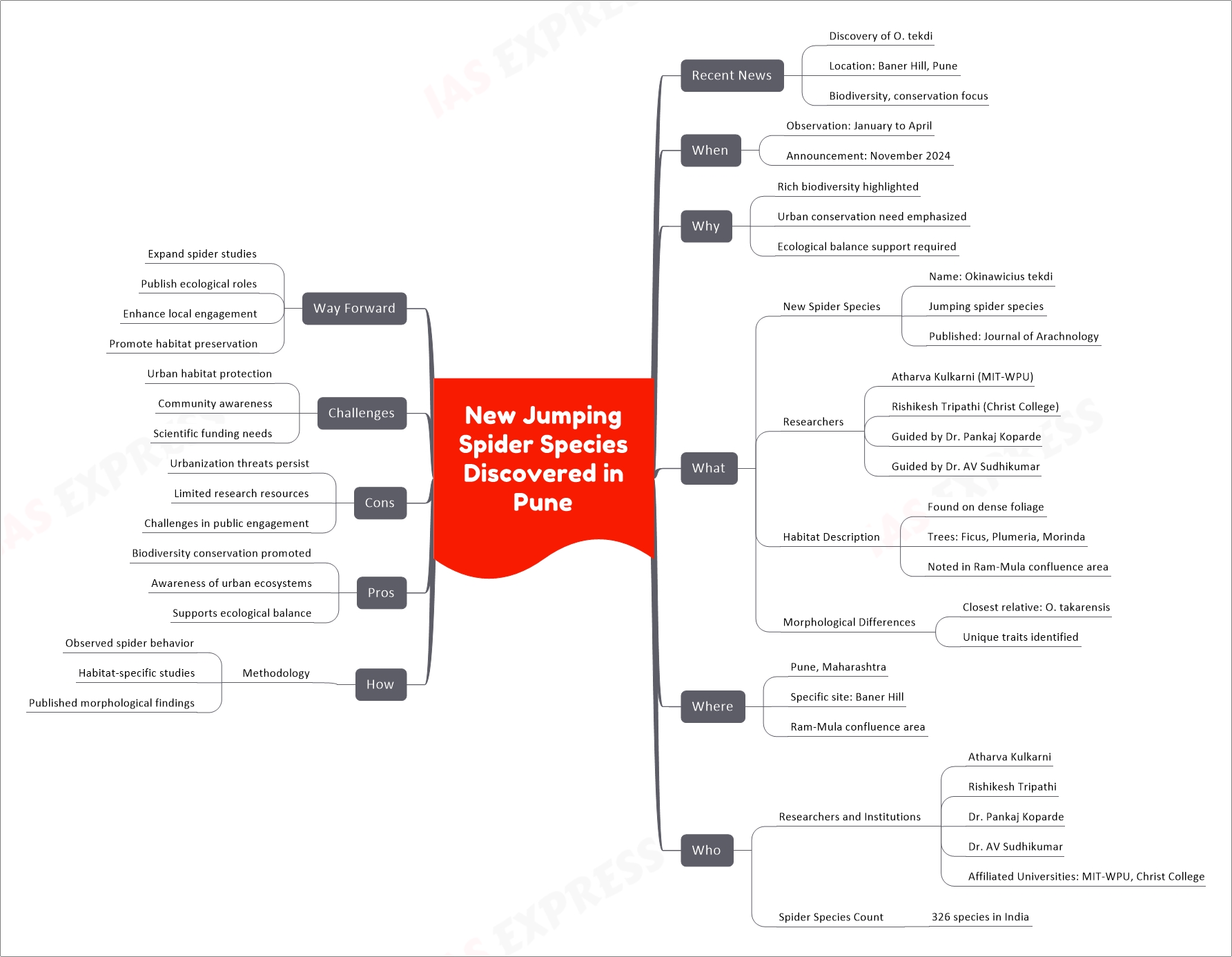
Researchers discovered a new jumping spider species, Okinawicius tekdi, on Baner Hill, Pune. Named after the Marathi word "tekdi" (hill), this discovery highlights the biodiversity of urban ecosystems and the importance of conservation. The spider, found on dense foliage trees like Ficus and Plumeria, differs morphologically from its relative, O. takarensis. Led by Atharva Kulkarni and Rishikesh Tripathi under expert guidance, the findings were published in the Journal of Arachnology. This marks India’s 326th spider species and emphasizes the need for urban biodiversity protection, ecological research, and community engagement to maintain ecological balance.

India launched the tri-services exercise ‘Poorvi Prahaar’ on November 8, 2024, to demonstrate military readiness and foster inter-service collaboration. Involving the Army, Navy, and Air Force, the 10-day exercise features advanced technologies like UAVs, Rafale jets, and MARCOS commandos. Staged in the eastern sector, it responds to recent disengagement with China in Ladakh and ongoing negotiations over patrolling rights in Yangtse. The exercise emphasizes operational preparedness, crisis management, and regional deterrence. It holds strategic significance amid regional tensions and aims to bolster India’s defence posture while addressing challenges like costs and inter-service coordination.
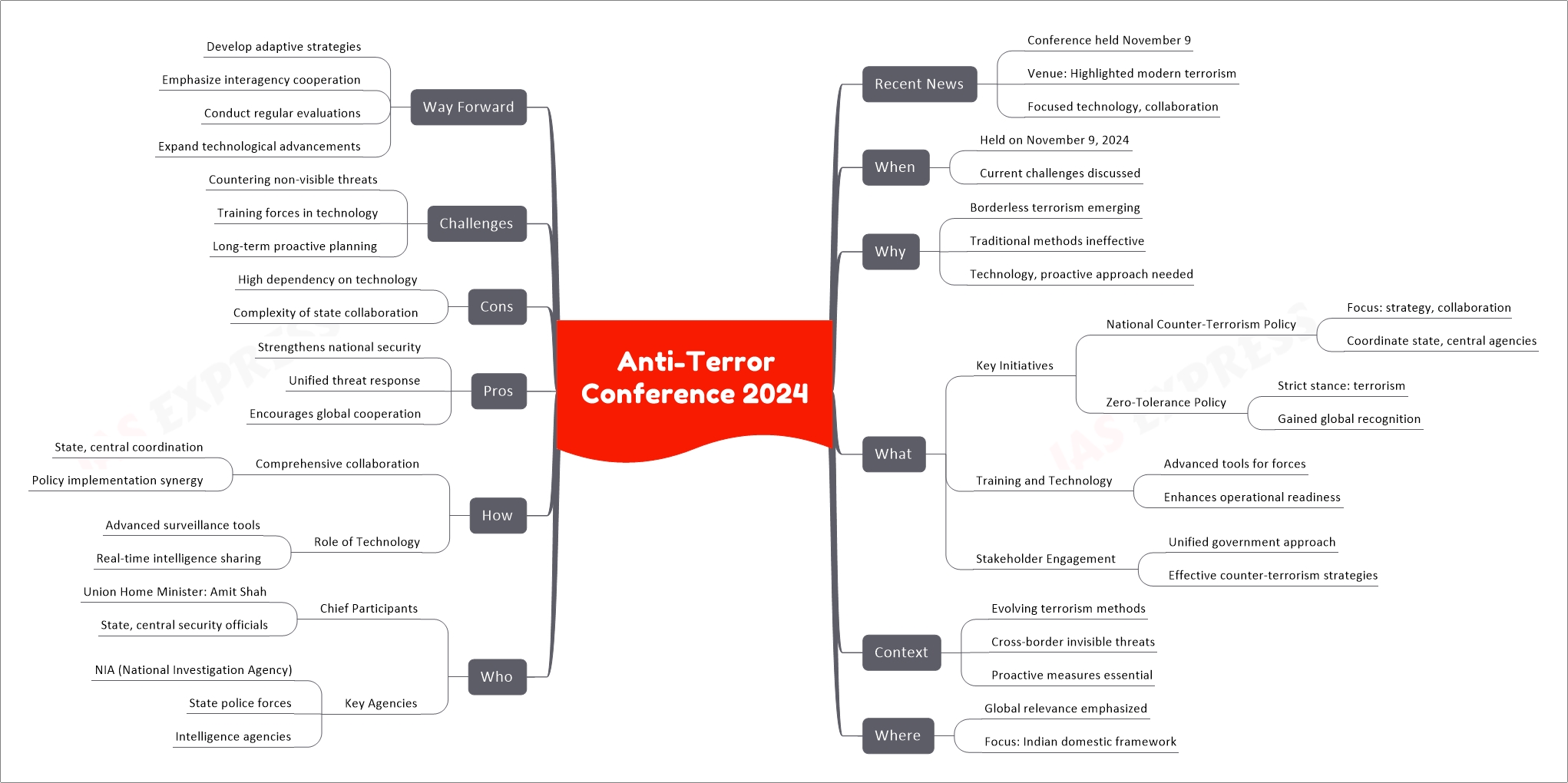
The Anti-Terror Conference 2024 addressed modern terrorism's evolving challenges, emphasizing the use of advanced technology and collaborative strategies. Union Home Minister Amit Shah stressed the importance of a National Counter-Terrorism Policy, state-central agency coordination, and training initiatives. With PM Modi's zero-tolerance policy gaining global traction, the conference highlighted the critical role of a proactive approach in combating cross-border, invisible threats. Tributes were paid to fallen officers, underscoring law enforcement's sacrifices. This event reinforced the need for adaptive strategies, regular evaluations, and technological innovation to build a resilient national security framework.

Anil Pradhan, a 28-year-old engineer from Odisha, received the Rohini Nayyar Prize for his exceptional contributions to rural STEM education. Co-founder of the Young Tinker Foundation, Pradhan introduced ‘Tinker-on-Wheels,’ a mobile lab offering hands-on learning in robotics and 3D printing, impacting over 2.5 lakh rural students. The ₹10 lakh prize commemorates economist Rohini Nayyar’s legacy in rural development. STEM education bridges educational gaps, fosters innovation, and prepares students for future careers. While challenges like funding and accessibility persist, Pradhan’s work exemplifies the transformative potential of targeted rural education initiatives.
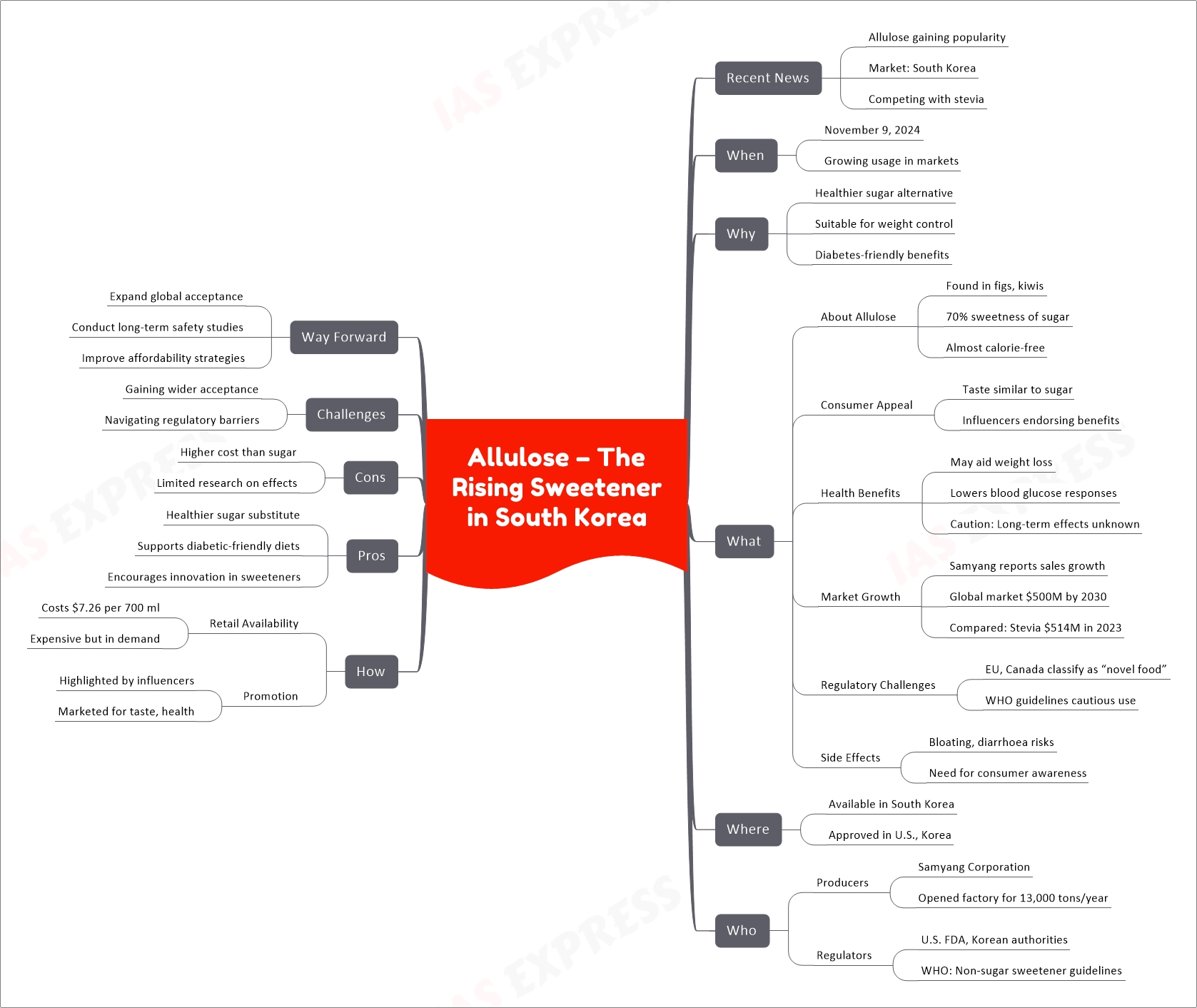
Allulose, a sweetener naturally found in fruits like figs and kiwis, is gaining traction in South Korea as a healthier alternative to sugar. With 70% of sugar’s sweetness and nearly zero calories, it appeals to health-conscious consumers, especially those managing diabetes or seeking weight control. Despite being costlier than sugar, its popularity is fueled by influencers and local companies like Samyang Corp, which reports significant market growth. However, regulatory challenges in the EU and WHO cautionary guidelines highlight the need for further research on long-term health impacts. As the market grows, efforts are underway to make allulose more affordable and globally accepted.

The Adaptation Gap Report 2024, released by UNEP, underscores the pressing need for enhanced climate adaptation efforts. While global adaptation finance rose from $22 billion in 2021 to $28 billion in 2022, a significant annual funding gap of $\text{187-}$359 billion persists. The report calls for new financial goals, stronger adaptation elements in climate pledges, and innovative financing strategies. Vulnerable nations, disproportionately affected by climate impacts, require capacity building and technology transfer. As COP29 approaches, the focus is on achieving coordinated global action to address these challenges, emphasizing sustainable and anticipatory adaptation measures.
Israeli researchers have introduced in-memory computing technology to tackle the “memory wall” problem, where data transfer between memory and CPUs hinders efficiency. Their PyPIM platform integrates Python with digital processing-in-memory (PIM) technology, enabling computations directly in memory. This approach reduces processing time and energy consumption, benefiting applications in AI and big data. A simulation tool aids developers in assessing performance improvements, easing the shift to this new paradigm. While challenges like adoption and compatibility remain, this breakthrough represents a significant step toward faster, more efficient computing systems for modern workloads.

Researchers discovered a unique cyanobacteria strain, Chonkus, thriving in the CO2-rich volcanic vents near Vulcano, Italy. This strain’s rapid growth and natural tendency to sink make it a promising candidate for carbon sequestration and biotechnological innovations. Developed through a collaboration involving the Wyss Institute, Harvard Medical School, and the University of Palermo, this breakthrough could significantly enhance decarbonisation efforts. While challenges remain in scaling and validation, Chonkus opens new possibilities for combating climate change and advancing biomanufacturing, showcasing nature’s potential in providing sustainable environmental solutions.
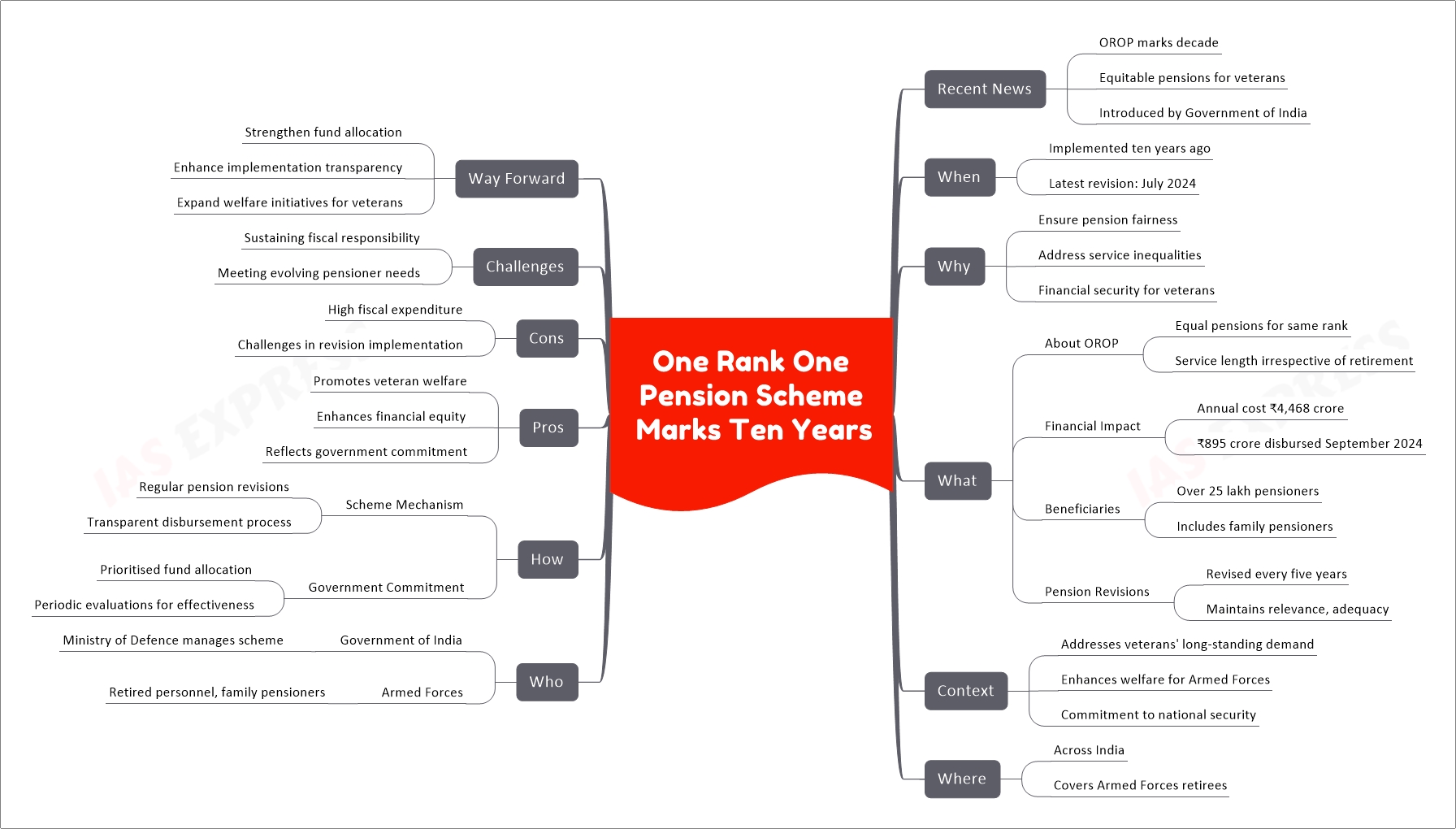
The One Rank One Pension (OROP) scheme, marking its 10th year, ensures equitable pensions for over 25 lakh Armed Forces veterans and family pensioners. Introduced by the Government of India, OROP standardizes pensions based on rank and service length, regardless of retirement date. Regular five-year revisions maintain pension adequacy, with the latest update in July 2024. Despite substantial fiscal costs exceeding ₹4,468 crore annually, the scheme exemplifies the nation’s commitment to veterans’ welfare. Challenges like sustained funding and evolving pensioner needs persist, requiring ongoing evaluations and government support to strengthen the initiative further.

If you like this post, please share your feedback in the comments section below so that we will upload more posts like this.


Responses