
Self Help Groups (SHGs) in India (2026): Functions, Schemes & Impact

From Current Affairs Notes for UPSC » Editorials & In-depths » This topic
Last updated: July 2026.
Self Help Groups (SHGs) are small, voluntary associations of poor people — overwhelmingly women — who pool savings, lend to each other, and later access bank credit as a group. They are the backbone of India's rural microfinance and the main delivery vehicle for women-led development. The topic is heavily tested in UPSC GS-II (social justice, welfare schemes) and GS-III (inclusive growth, financial inclusion), and is back in the news after India crossed 3 crore Lakhpati Didis and gave DAY-NRLM a 20% budget rise in 2026-27.
SHGs in India at a Glance
| Feature | Detail |
|---|---|
| Typical group size | 10–20 members (fewer in hilly/difficult areas) |
| Flagship mission | DAY-NRLM (launched 2011; renamed 2015) |
| Scale | 90+ lakh SHGs; 10+ crore rural women mobilised |
| Credit link | NABARD's SHG-Bank Linkage Programme (SBLP), 1992 — the world's largest microfinance programme |
| Interest subvention | Loans up to ₹3 lakh at 7% p.a. |
| Collateral-free loan limit | ₹20 lakh |
| Budget 2026-27 (DAY-NRLM) | ₹19,200 crore (programme component ₹17,280 crore, ~20% rise) |
| Lakhpati Didi | 3 crore crossed (mid-2026); new target 6 crore by March 2029 |
On This Page
- What are Self Help Groups?
- How SHGs work
- SHG–Bank Linkage Programme
- Government support and key schemes
- Latest developments (2025–2026)
- Why SHGs matter
- Challenges
- Way forward
- UPSC relevance: Prelims & Mains
- Frequently asked questions
What Are Self Help Groups?
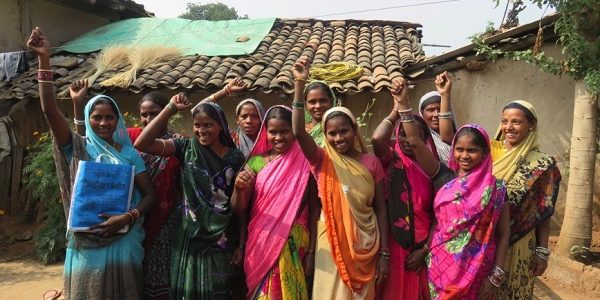
An SHG is a small, homogeneous group of 10–20 people from a similar socio-economic background who come together voluntarily to save regularly and lend to one another from that common pool. Members offer a mutual guarantee rather than physical collateral, so the group's own discipline — not property — secures the loan. About 88% of SHG members in India are women, which is why SHGs have become the primary institutional platform for women's economic empowerment in rural India.
How SHGs Work
Formation and structure
Groups are promoted by Self Help Promoting Institutions (SHPIs) — NGOs, banks, NABARD and State Rural Livelihood Missions. Healthy groups follow the Panchasutra: regular meetings, regular savings, regular inter-lending, timely repayment, and up-to-date book-keeping. SHGs then federate upward into Village Organisations (VOs) and Cluster Level Federations (CLFs), which provide scale, training and bargaining power.
From savings to credit
The sequence is deliberate: savings first, credit later. Members save small amounts, lend internally for consumption and emergencies, and build a repayment record. Once the group demonstrates discipline (usually after about six months), a bank links it for external credit — first as a cash-credit limit, later for enterprise finance.
SHG–Bank Linkage Programme (SBLP)
Launched by NABARD in 1992 as a pilot with 500 SHGs, the SBLP is today the world's largest microfinance programme. It links informal groups to the formal banking system without requiring collateral, and its repayment rates have consistently stayed above 96% — far better than many commercial portfolios. Credit flows through three models: banks lending directly to SHGs, lending via SHPIs/NGOs as facilitators, or via NGOs acting as financial intermediaries.

Government Support and Key Schemes
- DAY-NRLM (2011): the flagship mission that mobilises rural poor women into SHGs and federations, providing revolving funds, community investment support and skilling.
- Lakhpati Didi: aims to make SHG households earn at least ₹1 lakh a year (roughly ₹10,000 a month) sustainably across farming seasons or business cycles.
- Namo Drone Didi: a central sector scheme equipping 15,000 women SHGs with agricultural drones (2024-25 to 2025-26) for rental spraying services, with an 80% subsidy up to ₹8 lakh — expected to add about ₹1 lakh a year per group.
- Credit support: interest subvention brings loans up to ₹3 lakh to 7% p.a.; collateral-free lending to SHGs now extends to ₹20 lakh.
- Bank Sakhi / BC Sakhi: SHG women serve as banking correspondents, taking last-mile financial services into villages.
Latest Developments (2025–2026)
- 3 crore Lakhpati Didis achieved: the milestone was crossed by mid-2026, ahead of the original March 2027 deadline. The government has since raised the bar to 6 crore Lakhpati Didis by March 2029.
- Budget 2026-27: DAY-NRLM's allocation rose to ₹19,200 crore, with the programme component up ₹2,880 crore to ₹17,280 crore — roughly a 20% increase. The overall Gender Budget stands at about ₹1.08 lakh crore, with ₹676.85 crore for Namo Drone Didi and ₹3,605 crore for Mission Shakti.
- SHE-Marts: Self Help Entrepreneurs' Marts, given fresh impetus in Budget 2026-27, aim to fix the weakest link — markets. A national consultation in May 2026 (Bhubaneswar) brought together State Rural Livelihood Missions, NABARD and banks to finalise the operational framework for rural women entrepreneurs.
- Drone rollout continues: distribution of the 15,000 drones under Namo Drone Didi is being completed across states through 2025-26, moving SHGs from farm labour into technology services.
Why SHGs Matter
SHGs deliver on several fronts at once: financial inclusion (credit without collateral for those banks would otherwise refuse), women's agency (control over savings shifts decision-making within the household), social capital (collective action against alcoholism, dowry and domestic violence), and delivery capacity — during COVID-19, SHGs produced masks and sanitiser and ran community kitchens at scale. They also feed local democracy, with many SHG women moving into panchayat leadership.
Challenges
Progress is uneven. The southern states dominate bank linkage while the east and north-east lag, so credit reaches those who need it least intensely. Many groups remain stuck in consumption lending rather than enterprise, held back by weak market linkage and value addition. Other persistent problems include group dormancy and dropout, over-indebtedness from borrowing simultaneously from SHGs and microfinance institutions, thin training and book-keeping capacity, patriarchal control over how loans are actually used, and federations that are not yet financially self-sustaining.
Way Forward
The priorities are to deepen SBLP in the east and north-east, shift credit decisively from consumption to enterprise, and complete the market ecosystem through SHE-Marts, e-commerce onboarding and value addition. That must be paired with serious skilling and digital-financial literacy, credit-bureau reporting to curb multiple borrowing, professional support to make federations self-reliant, and convergence with schemes on health, nutrition and skills, so an SHG becomes a full development platform rather than only a credit window.
UPSC Relevance: Prelims & Mains
Prelims: expect factual questions on SBLP (NABARD, 1992), the DAY-NRLM launch year, the Panchasutra, interest-subvention rates and loan ceilings, the Lakhpati Didi definition, and Namo Drone Didi specifics (15,000 SHGs, 80% subsidy). Statement-based questions often pair SHGs with financial-inclusion instruments.
Mains (GS-II Social Justice / GS-III Inclusive Growth): the analytical angles are SHGs as vehicles of women-led development, SHGs versus microfinance institutions, their role in poverty reduction and financial inclusion, why bank linkage is regionally skewed, and how to move groups from subsistence credit to enterprise. In the Essay paper, SHGs are strong evidence for "women-led development" and "growth with equity". Always anchor answers in current data — the 3 crore Lakhpati Didi milestone and the 2026-27 budget push are high-value examples.
Frequently Asked Questions
What is a Self Help Group (SHG)?
An SHG is a voluntary association of 10–20 people from a similar socio-economic background — mostly women — who save regularly, lend to one another from the pooled fund, and later access collateral-free bank credit on a mutual guarantee.
What is the SHG-Bank Linkage Programme?
Launched by NABARD in 1992 with 500 pilot groups, the SHG-Bank Linkage Programme connects SHGs to formal banks for collateral-free credit. It is the world's largest microfinance programme and maintains repayment rates above 96%.
What is DAY-NRLM?
The Deendayal Antyodaya Yojana – National Rural Livelihoods Mission, launched in 2011, is the flagship mission that organises rural poor women into SHGs and federations and provides revolving funds, community investment support and skilling. It has mobilised over 90 lakh SHGs and 10 crore women.
Who is a Lakhpati Didi?
A Lakhpati Didi is an SHG member whose household earns at least ₹1 lakh a year (about ₹10,000 a month) on a sustained basis. India crossed 3 crore Lakhpati Didis by mid-2026, ahead of schedule, and now targets 6 crore by March 2029.
What is the Namo Drone Didi scheme?
A central sector scheme providing agricultural drones to 15,000 women SHGs between 2024-25 and 2025-26 so they can offer rental spraying services to farmers. It covers 80% of the drone cost up to ₹8 lakh and is expected to add around ₹1 lakh a year per group.
What interest rate do SHGs get on bank loans?
Under the interest subvention scheme, women SHGs get loans up to ₹3 lakh at an effective 7% per annum. Collateral-free lending to SHGs has also been extended up to ₹20 lakh.
What are the main challenges facing SHGs?
Regional skew in bank linkage (the south dominates while the east and north-east lag), credit used for consumption rather than enterprise, weak market linkage, group dormancy and dropout, over-indebtedness from multiple borrowing, and gaps in training and book-keeping.
How many SHGs are there in India?
More than 90 lakh SHGs have been mobilised under DAY-NRLM, covering over 10 crore rural women — making it the largest such network in the world.

Related Posts
If you like this post, please share your feedback in the comments section below so that we will upload more posts like this.

Can you send me details of SHG in India and Telangana State
Complete information about SHGs,thanks
very good
SHGs can be employed or not
I can run SHGs I am eligible to run