
[Newsbits] 24-31.07.2024: Oropouche Virus, SearchGPT & more



A Climate Finance Taxonomy is a systematic framework introduced by the Indian government to classify economic sectors that qualify as environmentally sustainable investments. Presented by Finance Minister Nirmala Sitharaman in the Union Budget on July 23, 2024, this taxonomy aims to enhance funding for climate adaptation and mitigation, aiding India in meeting its climate commitments and transitioning to a greener economy. The framework guides investors and banks, fostering genuine environmental benefits and mitigating risks associated with greenwashing. India targets significant investments in sectors like electric vehicles and renewable energy, aligning with global efforts to combat climate change and achieve net-zero emissions by 2070.
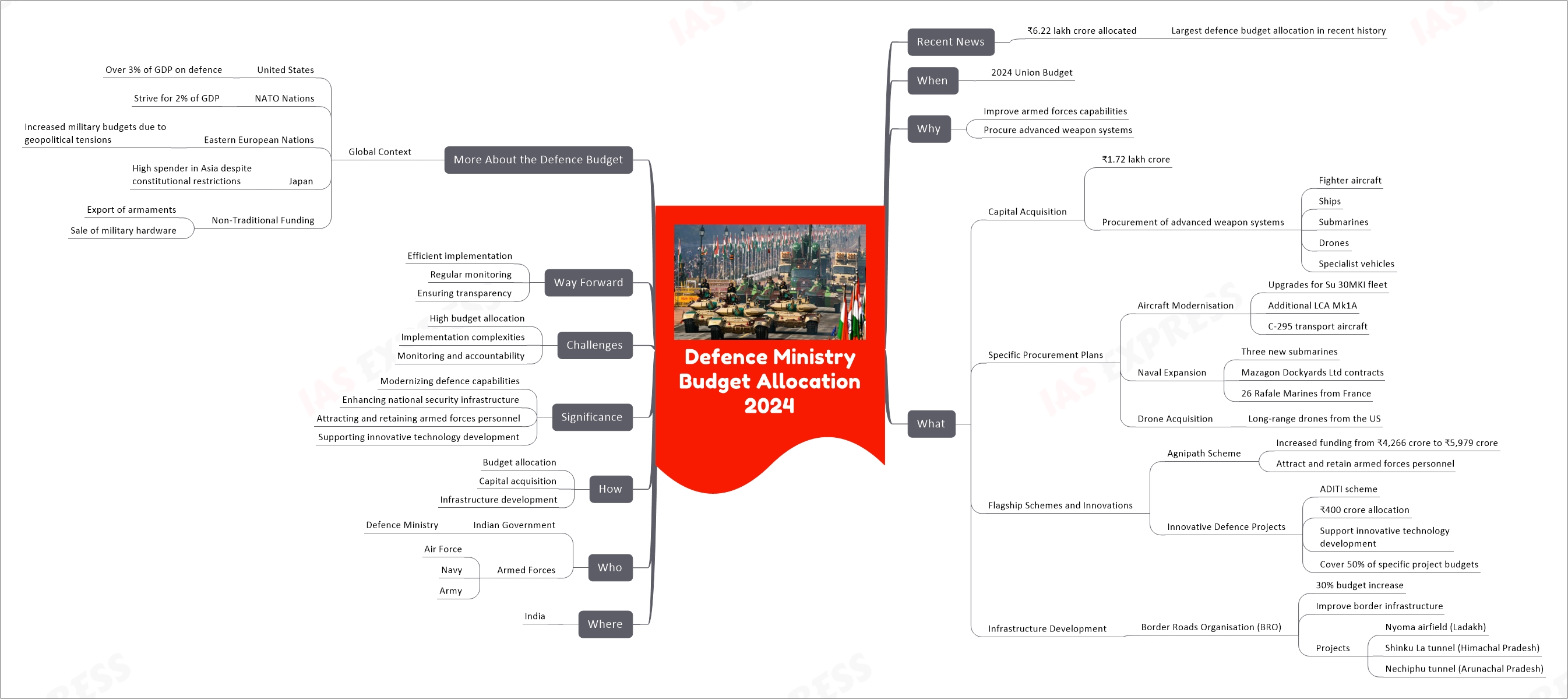
In the 2024 Union Budget, the Indian government allocated ₹6.22 lakh crore to the Defence Ministry, marking the largest defence budget in recent history. This allocation focuses on capital acquisition, amounting to ₹1.72 lakh crore, for procuring advanced weapon systems like fighter aircraft, ships, submarines, drones, and specialist vehicles. Specific procurement plans include modernizing the Su 30MKI fleet, acquiring additional LCA Mk1A and C-295 aircraft, expanding the navy with new submarines and Rafale Marines, and purchasing long-range drones from the US. Key schemes like Agnipath and ADITI receive increased funding to attract personnel and support innovative defence projects. The Border Roads Organisation's budget increased by 30% to enhance border infrastru

Researchers have discovered a novel form of oxygen production, termed “dark oxygen,” on the deep-ocean floor in the Clarion-Clipperton Zone of the Pacific Ocean, challenging the traditional belief that oxygen is primarily generated by photosynthetic organisms. Published in Nature Geoscience, the study revealed that oxygen levels below 4,000 meters have been steadily rising over a decade. The discovery was confirmed through various electrical tests and sensors. Dark oxygen originates from polymetallic nodules, mineral layers rich in cobalt, nickel, and lithium, which may be crucial for aerobic sea life. This finding expands our understanding of oxygen production, highlighting its significance in lightless environments and the potential environmental impacts of mining these nodules. Further research is needed to explore the ecological and mining implications of this discovery.
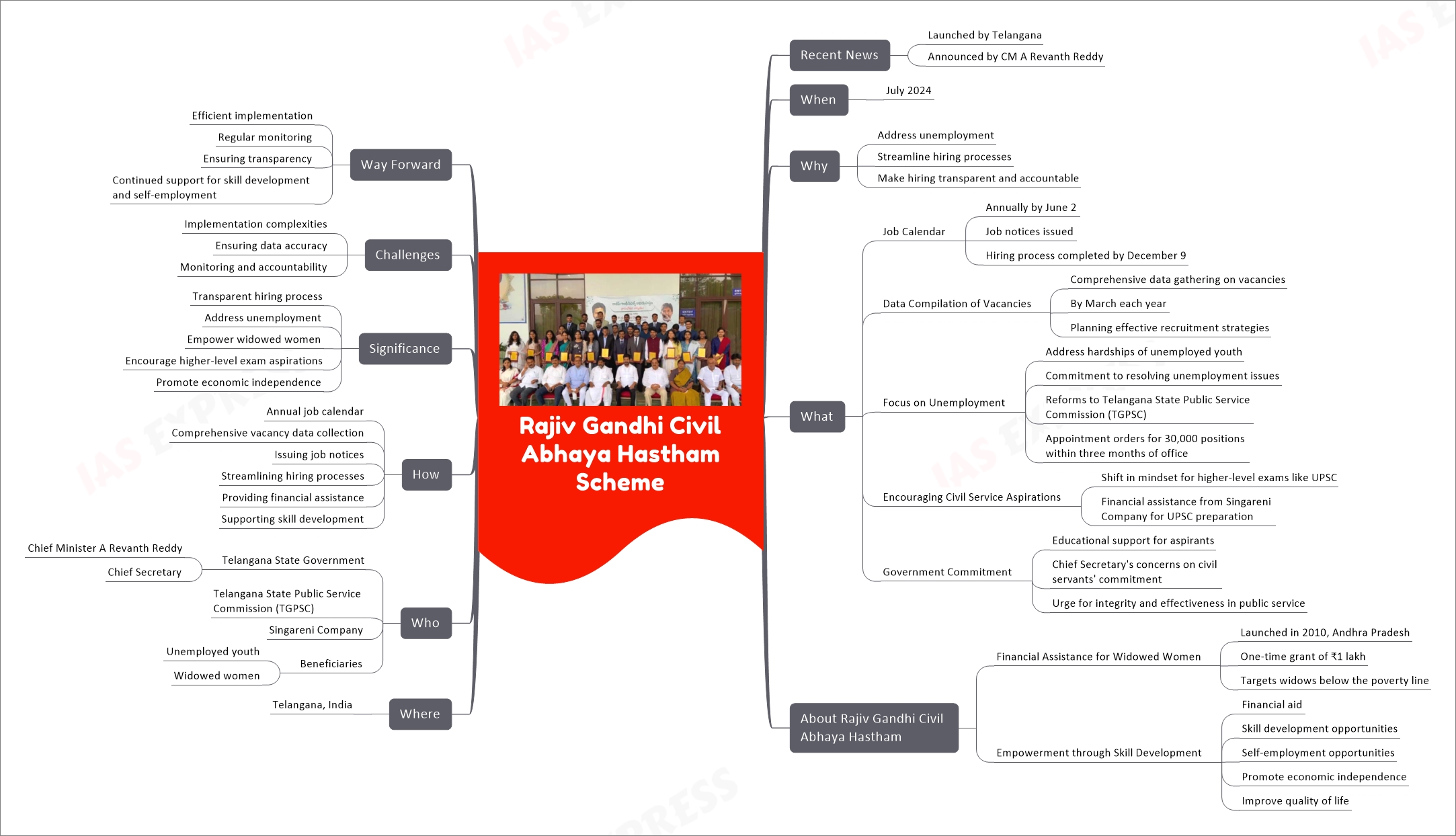
Telangana's Chief Minister A Revanth Reddy launched the Rajiv Gandhi Civil Abhaya Hastham Scheme in July 2024, aiming to address unemployment by creating a transparent and accountable hiring process for state jobs. The initiative includes an annual job calendar with job notices issued by June 2 and hiring completed by December 9, along with comprehensive data compilation on vacancies by March each year. The scheme highlights the government's commitment to resolving unemployment issues, encouraging youth to aim for higher-level exams like UPSC, and providing educational support through financial assistance. The scheme also focuses on empowering widowed women with financial aid and skill development opportunities, promoting economic independence and improved quality of

The Henley Passport Index 2024 ranks Singapore’s passport as the most powerful in the world, allowing visa-free entry to 195 destinations, highlighting Singapore’s strong diplomatic network and ease of global movement for its citizens. India ranks 82nd, providing access to 58 countries, tied with Senegal and Tajikistan. Historical data shows a decline in rankings for the UK and USA from their joint first place in 2014, while Afghanistan remains the weakest with access to only 26 countries. Noteworthy improvements include the UAE, China, and Ukraine, while countries like Venezuela, Yemen, Nigeria, Syria, and Bangladesh have experienced declines. The Henley Passport Index, operational since 2006 and updated quarterly, provides crucial insights into global mobility and reflects international diplomatic relationships and agreements.
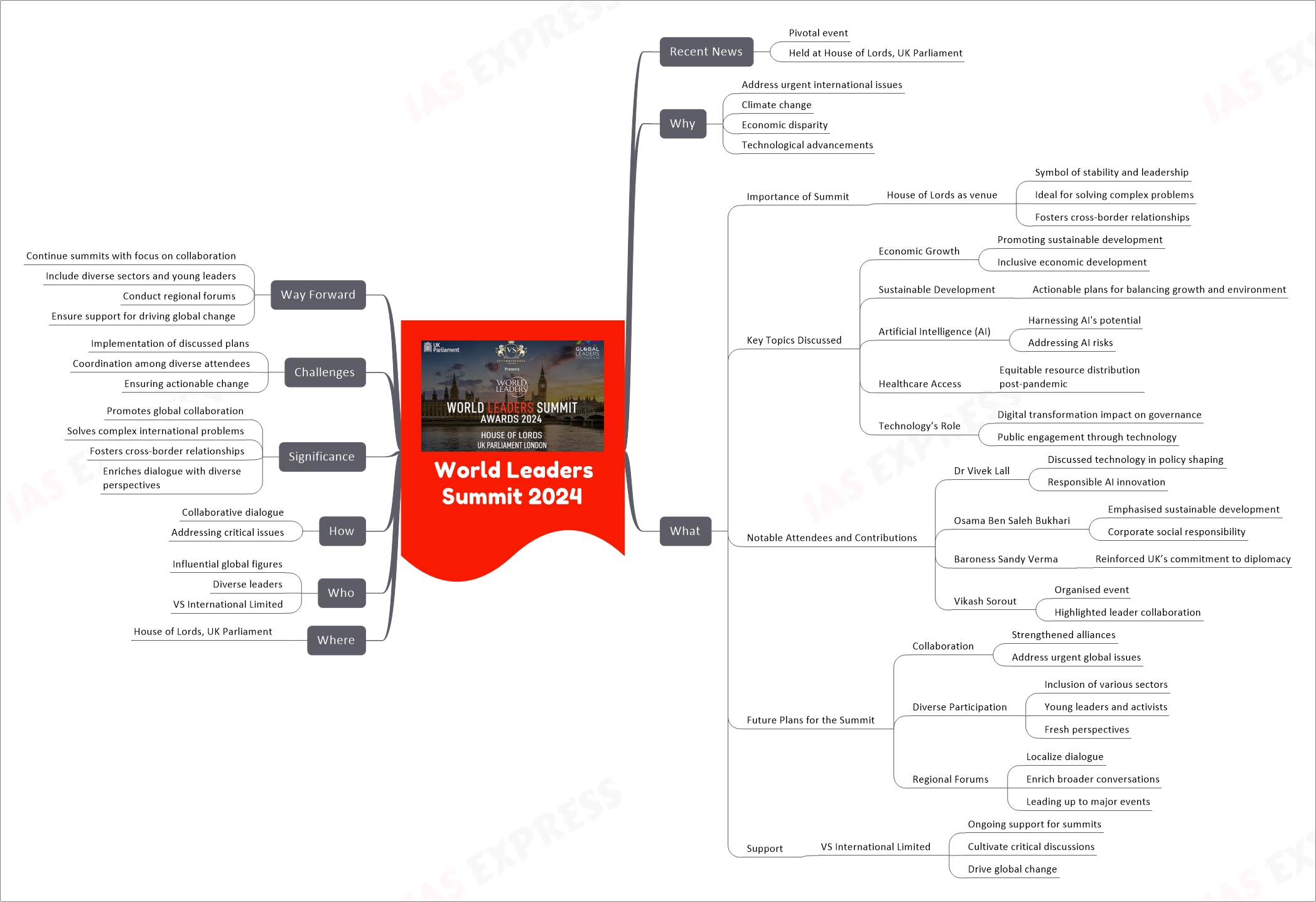
The World Leaders Summit 2024, held at the historic House of Lords in the UK Parliament, gathered influential global figures to address urgent international issues such as climate change, economic disparity, and technological advancements. The venue symbolized stability and leadership, fostering cross-border relationships and collaborative problem-solving. Key discussions focused on promoting sustainable economic growth, balancing development with environmental preservation, harnessing AI while managing its risks, ensuring equitable healthcare access, and examining the impact of digital transformation on governance. Notable attendees like Dr. Vivek Lall, Osama Ben Saleh Bukhari, Baroness Sandy Verma, and Vikash Sorout contributed diverse insights. Future plans include continued coll

Abhinav Bindra, India’s first individual Olympic gold medalist, will be awarded the Olympic Order on August 10, 2024, during the 142nd IOC Session in Paris, one day before the 33rd Summer Olympic Games. This prestigious award recognizes his significant contributions to the Olympic Movement and his achievements, including winning the men’s 10m air rifle event at the 2008 Beijing Olympics. The Olympic Order, the highest award given by the International Olympic Committee (IOC), acknowledges outstanding service to the Olympic cause and promotes values of unity, friendship, and excellence in sports. The selection process involves proposals from the Olympic Orders Council and final decisions by the IOC Executive Board. Bindra’s recognition highlights his influence and encourages future athletes and leaders to embody Olympic values.
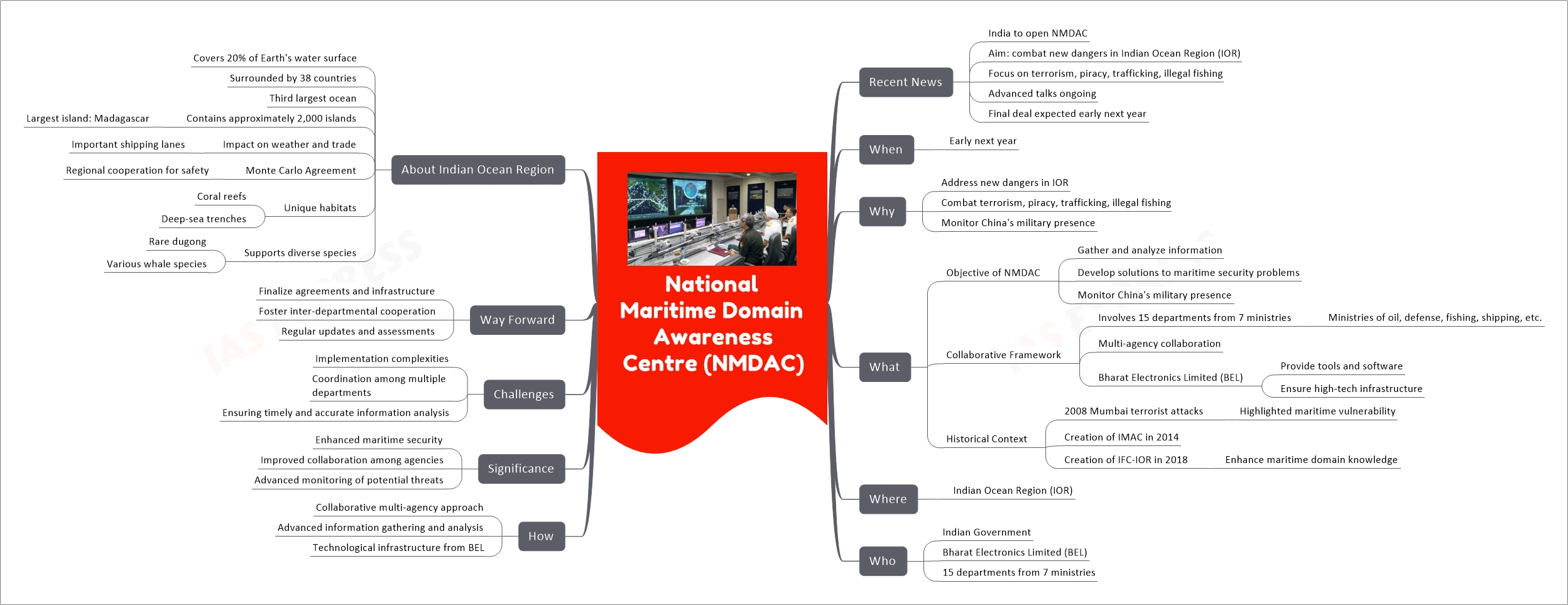
India plans to establish the National Maritime Domain Awareness Centre (NMDAC) to combat emerging threats in the Indian Ocean Region (IOR), including terrorism, piracy, trafficking, and illegal fishing. This initiative, set to be finalized early next year, aims to gather and analyze information swiftly, developing actionable solutions while monitoring China's increasing military presence. The NMDAC will incorporate 15 departments from seven ministries, ensuring a multi-agency collaborative framework. Bharat Electronics Limited (BEL) will supply the necessary technological infrastructure. This move follows heightened awareness of maritime vulnerabilities post the 2008 Mumbai attacks, leading to the creation of IMAC in 2014 and IFC-IOR in 2018, enhancing maritime

The Carbon Border Adjustment Mechanism (CBAM), initiated by the European Union, aims to combat climate change and maintain the competitiveness of European businesses by taxing goods based on their greenhouse gas emissions. Key industries affected include iron and steel, cement, aluminum, and fertilizers. CBAM’s primary goal is to prevent carbon leakage by ensuring that companies outside the EU, who use the Emissions Trading System (ETS), face similar carbon costs as EU companies. This promotes global cleaner production methods. However, concerns arise about the fairness and impact on global trade, particularly on developing countries, which may face significant economic losses and increased inequality. The ETS, established in 2005, is a market-based pollution control system that incentivizes emission reduction through a cap-and-trade principle, supporting innovation and green technology investments. Ensuring fair implementation and providing support to developing nations are crucial for CBAM’s success.
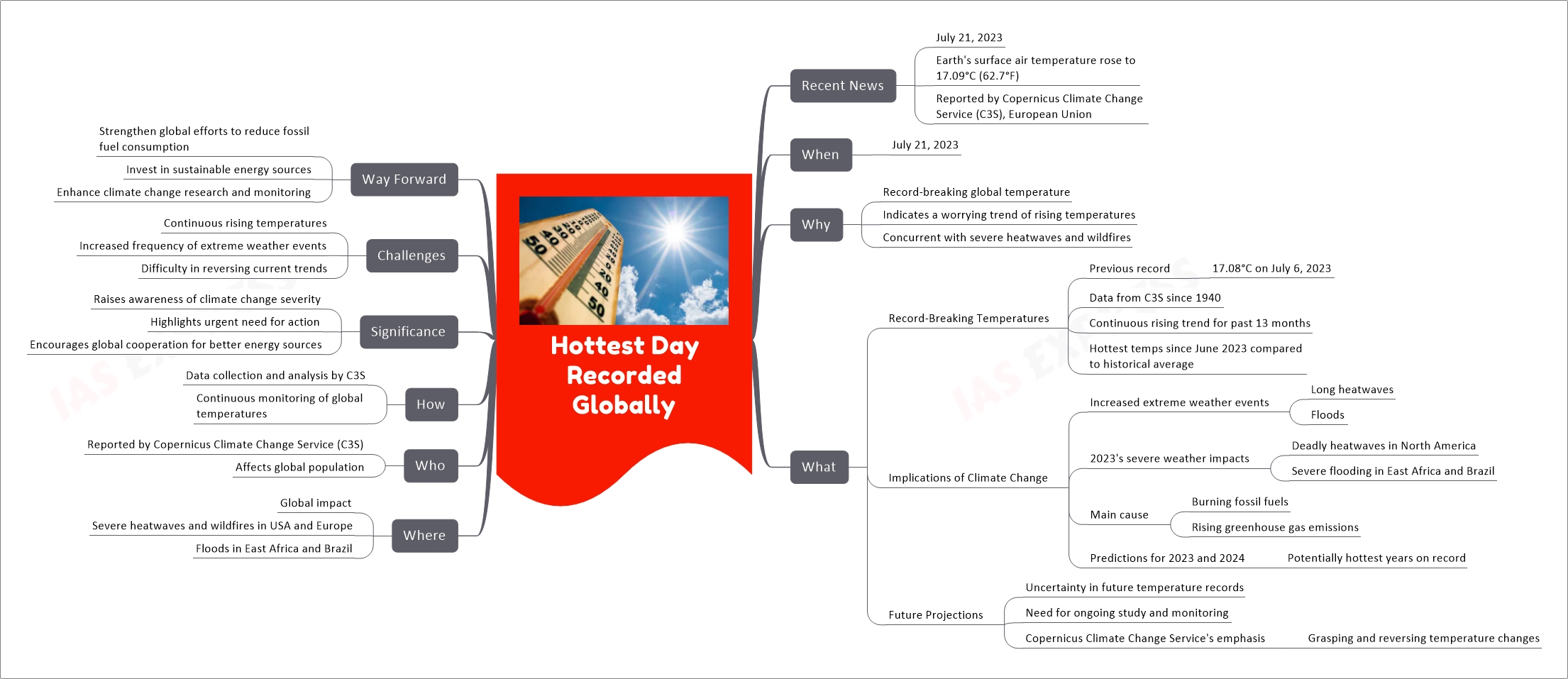
On July 21, 2023, the average temperature of Earth's surface air reached a record-high 17.09°C (62.7°F), as reported by the Copernicus Climate Change Service (C3S) of the European Union. This surpasses the previous record of 17.08°C set on July 6, 2023, and highlights a worrying trend of rising global temperatures, which have been increasing steadily over the past 13 months. The extreme heat coincides with severe heatwaves and wildfires in the USA and Europe, and severe flooding in East Africa and Brazil. The primary cause of these rising temperatures is the continued burning of fossil fuels and increasing greenhouse gas emissions. As these trends persist, 2023 could become the hottest year on record, with 2024 likely to follow suit. Future projections remain uncertain, empha

If you like this post, please share your feedback in the comments section below so that we will upload more posts like this.

Responses