
Vechur Cow

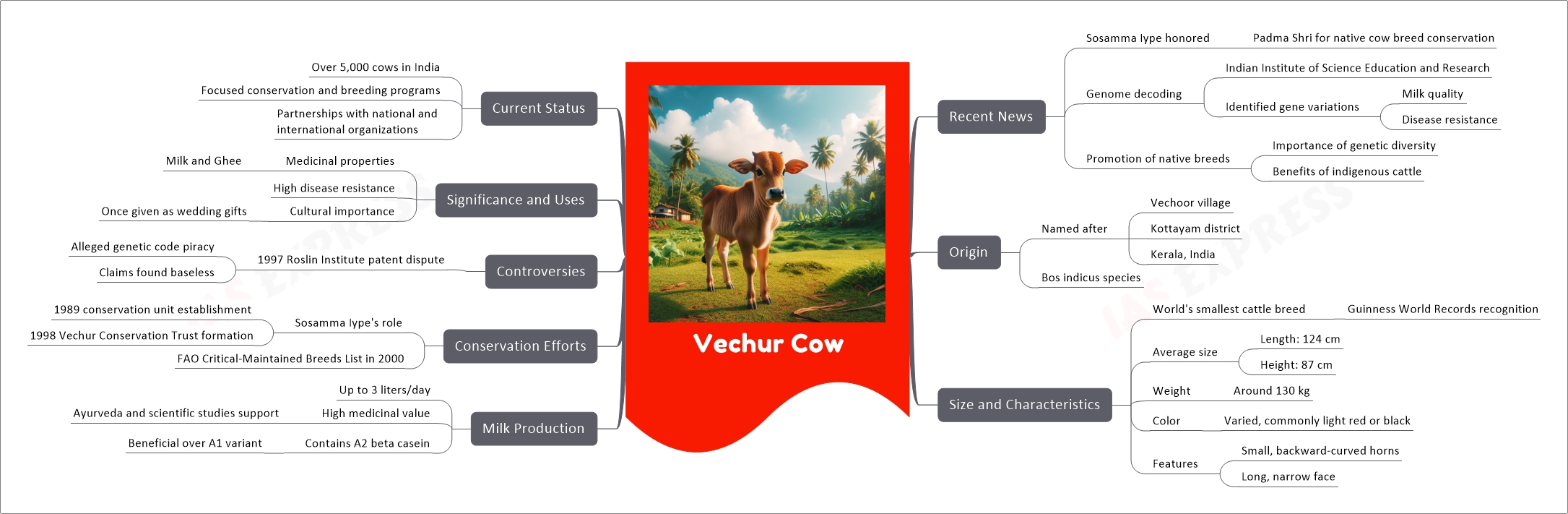
The Vechur cow, originating from the village of Vechoor in Kerala, India, is renowned for being the world’s smallest cattle breed, a status confirmed by the Guinness World Records. This breed is characterized by its diminutive stature, with an average length of 124 cm and height of 87 cm, and a weight of around 130 kg. Despite their small size, Vechur cows are prolific milk producers, yielding up to 3 liters per day. This milk is noted for its medicinal properties, supported by both Ayurvedic tradition and scientific research, particularly due to its A2 beta casein content, which is associated with health benefits over the A1 variant found in most commercial dairy products.
Conservation efforts for the Vechur cow have been significant, led by Sosamma Iype and her team since 1989, culminating in the formation of the Vechur Conservation Trust in 1998. These efforts were recognized when the breed was listed on the FAO’s World Watch List of Domestic Animal Diversity in the ‘Critical-Maintained Breeds List’ in 2000, highlighting the breed’s risk of extinction and the urgent need for its preservation.
Controversy once surrounded the Vechur cow in 1997 when environmentalist Vandana Shiva accused The Roslin Institute in Scotland of attempting to patent the cow’s genetic code, a charge that was later found to be baseless. Today, the Vechur cow is celebrated not only for its unique size and the medicinal value of its milk but also as a symbol of successful conservation efforts, with more than 5,000 cows now found across India. These cows continue to be a focus of conservation and breeding programs, supported by partnerships with various national and international organizations
Related Posts

If you like this post, please share your feedback in the comments section below so that we will upload more posts like this.

Responses