Guinea Worm Disease

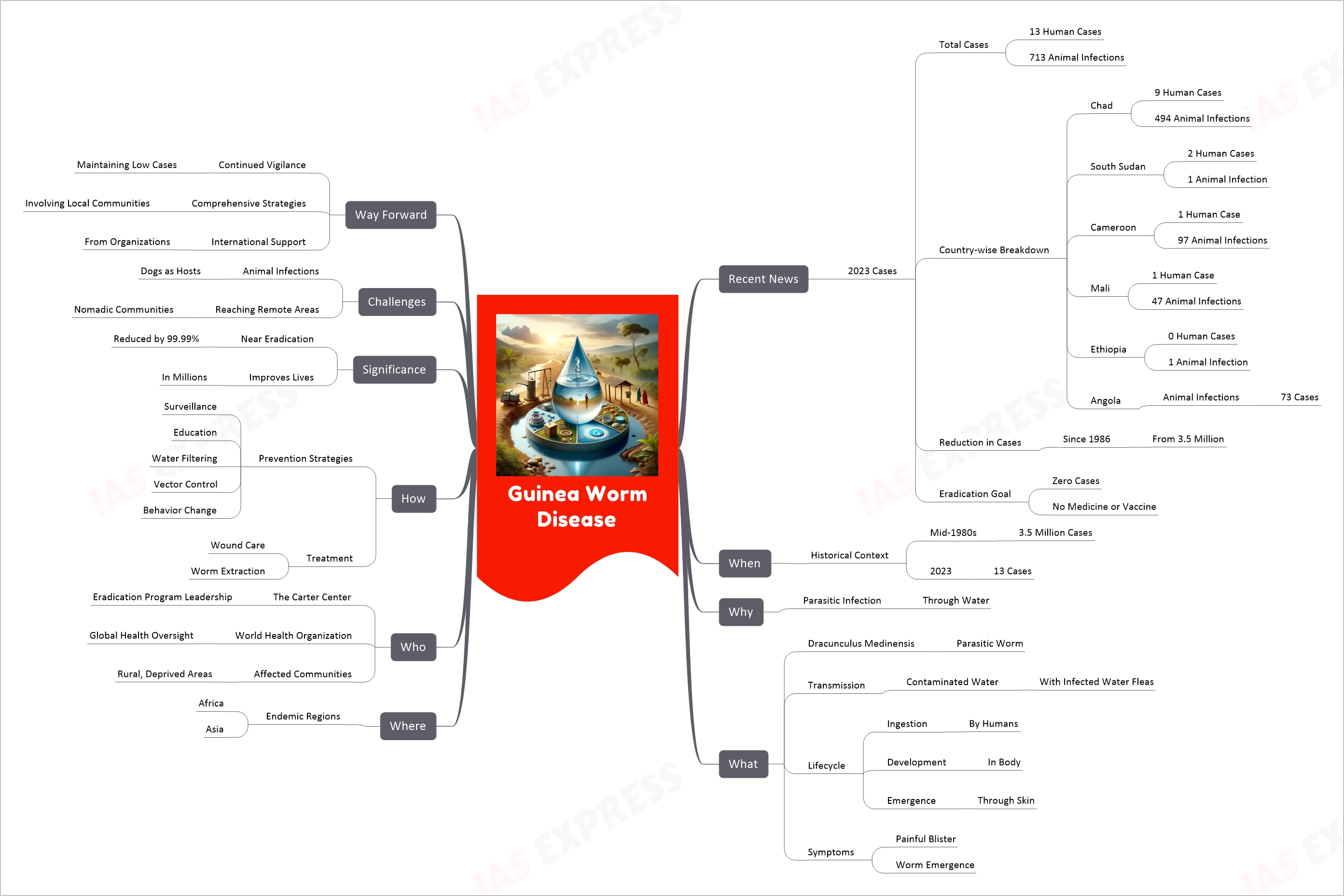
Guinea Worm Disease mind map
  Recent News
    2023 Cases
      Total Cases
        13 Human Cases
        713 Animal Infections
      Country-wise Breakdown
        Chad
          9 Human Cases
          494 Animal Infections
        South Sudan
          2 Human Cases
          1 Animal Infection
        Cameroon
          1 Human Case
          97 Animal Infections
        Mali
          1 Human Case
          47 Animal Infections
        Ethiopia
          0 Human Cases
          1 Animal Infection
        Angola
          Animal Infections
            73 Cases
      Reduction in Cases
        Since 1986
          From 3.5 Million
      Eradication Goal
        Zero Cases
        No Medicine or Vaccine
  When
    Historical Context
      Mid-1980s
        3.5 Million Cases
      2023
        13 Cases
  Why
    Parasitic Infection
      Through Water
  What
    Dracunculus Medinensis
      Parasitic Worm
    Transmission
      Contaminated Water
        With Infected Water Fleas
    Lifecycle
      Ingestion
        By Humans
      Development
        In Body
      Emergence
        Through Skin
    Symptoms
      Painful Blister
      Worm Emergence
  Where
    Endemic Regions
      Africa
      Asia
  Who
    The Carter Center
      Eradication Program Leadership
    World Health Organization
      Global Health Oversight
    Affected Communities
      Rural, Deprived Areas
  How
    Prevention Strategies
      Surveillance
      Education
      Water Filtering
      Vector Control
      Behavior Change
    Treatment
      Wound Care
      Worm Extraction
  Significance
    Near Eradication
      Reduced by 99.99%
    Improves Lives
      In Millions
  Challenges
    Animal Infections
      Dogs as Hosts
    Reaching Remote Areas
      Nomadic Communities
  Way Forward
    Continued Vigilance
      Maintaining Low Cases
    Comprehensive Strategies
      Involving Local Communities
    International Support
      From Organizations

Guinea worm disease, caused by the parasitic worm Dracunculus medinensis, is a crippling ailment transmitted through drinking water contaminated with infected water fleas. Once prevalent with 3.5 million cases in the mid-1980s across Africa and Asia, the disease has seen a dramatic reduction, with only 13 human cases reported worldwide in 2023. The Carter Center, leading the eradication efforts since 1986, has brought the disease to the brink of eradication without the use of medicine or vaccines, relying instead on community-based interventions like surveillance, education, water filtering, and vector control. Although the disease is rarely fatal, it leads to severe disability and affects the most deprived and isolated communities. The final push towards complete eradication faces challenges such as animal infections, especially in dogs, and reaching remote or nomadic communities.

Related Posts
If you like this post, please share your feedback in the comments section below so that we will upload more posts like this.

Responses

🖍️ Highlight
HomeCoursesPlansAccount