Immoral Traffic (Prevention) Act, 1956

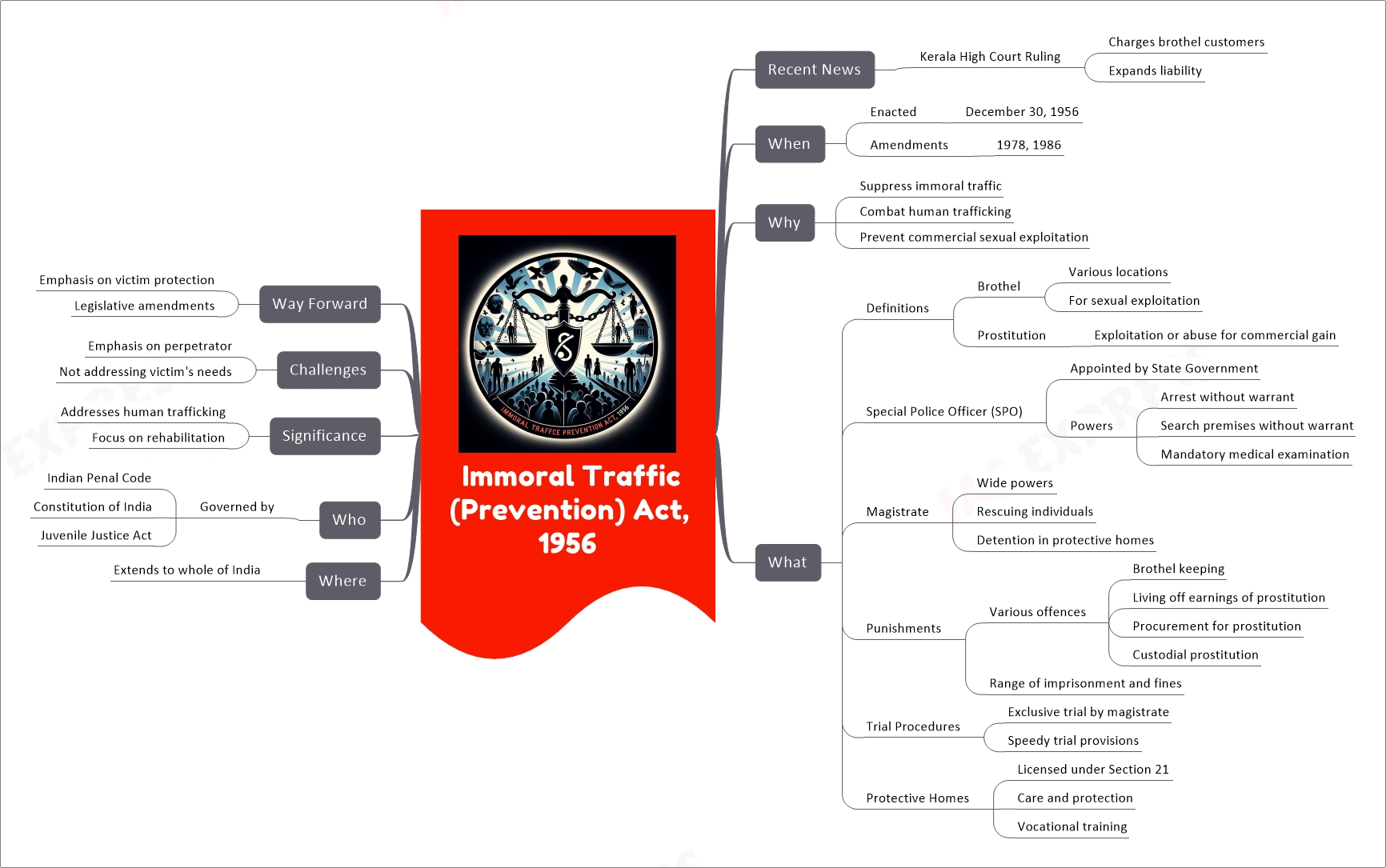
Immoral Traffic (Prevention) Act, 1956 mind map

  Recent News
    Kerala High Court Ruling
      Charges brothel customers
      Expands liability
  When
    Enacted
      December 30, 1956
    Amendments
      1978, 1986
  Why
    Suppress immoral traffic
    Combat human trafficking
    Prevent commercial sexual exploitation
  What
    Definitions
      Brothel
        Various locations
        For sexual exploitation
      Prostitution
        Exploitation or abuse for commercial gain
    Special Police Officer (SPO)
      Appointed by State Government
      Powers
        Arrest without warrant
        Search premises without warrant
        Mandatory medical examination
    Magistrate
      Wide powers
      Rescuing individuals
      Detention in protective homes
    Punishments
      Various offences
        Brothel keeping
        Living off earnings of prostitution
        Procurement for prostitution
        Custodial prostitution
      Range of imprisonment and fines
    Trial Procedures
      Exclusive trial by magistrate
      Speedy trial provisions
    Protective Homes
      Licensed under Section 21
      Care and protection
      Vocational training
  Where
    Extends to whole of India
  Who
    Governed by
      Indian Penal Code
      Constitution of India
      Juvenile Justice Act
  Significance
    Addresses human trafficking
    Focus on rehabilitation
  Challenges
    Emphasis on perpetrator
    Not addressing victim's needs
  Way Forward
    Emphasis on victim protection
    Legislative amendments

The Immoral Traffic (Prevention) Act of 1956, commonly known as ITPA, is an Indian legislation initially enacted to combat the trafficking of women and children for the purpose of prostitution. This act, which aligns with international conventions, doesn’t criminalize prostitution per se but targets activities like brothel keeping, pimping, and procuring individuals for prostitution. With provisions for the rescue and rehabilitation of victims, the Act empowers special police officers and magistrates to enforce its provisions. However, it has faced criticism for focusing more on the perpetrators rather than adequately addressing the needs of the victims. Recent legal interpretations, such as the Kerala High Court’s decision to charge brothel customers, demonstrate evolving judicial attitudes towards this complex issue.

Related Posts
If you like this post, please share your feedback in the comments section below so that we will upload more posts like this.

Responses

🖍️ Highlight
HomeCoursesPlansAccount