UNSC Veto Power & Gaza Ceasefire

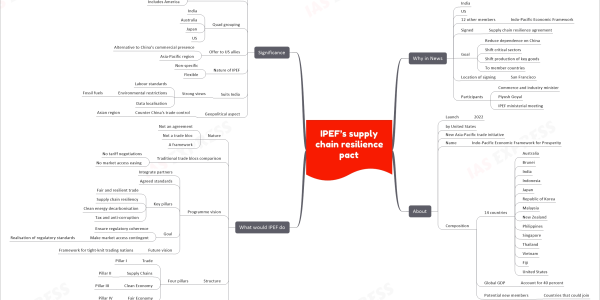
UNSC Veto Power & Gaza Ceasefire mind map

  December 2023 News
    UNSC Resolution on Gaza
      Proposal
        By United Arab Emirates
        Co-sponsorship
          From 97 Member States
          Within 24 hours
        Focus
          Immediate humanitarian ceasefire
          Release of all hostages
          Ensuring humanitarian access
        Support
          13 Council members
          Including China, France, Russia
      Veto
        By United States
        Date
          9 December 2023
        Reasons for Veto
          Unbalanced resolution
          Ignored US recommendations
          Failed to condemn Hamas' terrorist attacks
          Overlooked Israel's right to self-defence
      Reaction
        Global disappointment
        Criticism of US decision
        Highlighting need for ceasefire
    General Assembly Action
      Resolution Adoption
        Title
          "Protection of civilians and upholding legal and humanitarian obligations"
        Vote Outcome
          153 in favour
          10 against
          23 abstentions
        Failed Amendments
          Austria's amendment
          US's amendment
        Key Points
          Immediate ceasefire
          Compliance with international law
          Release of hostages
          Humanitarian access
      International Response
        Support from Arab Group
        Criticism from Israel
        Advocacy by Pakistan, Syria, Tunisia
  UNSC Veto Power
    Origin
      In Article 27 of the United Nations Charter
    Scope
      Applies to substantive resolutions
      Does not prevent adoption if abstained or absent
    Controversy
      Seen as undemocratic
      Hinders action on war crimes
    Reforms Proposed
      Limiting veto to vital issues
      Requiring multiple states' agreement
      Possible abolition
  Context of Gaza Ceasefire
    Conflict Duration
      Over 63 days
    Casualties
      More than 18,000 people
    International Law
      Obligations under humanitarian law
      Protection of civilians
    Diplomatic Efforts
      By various countries
      Aimed at ending hostilities
    Humanitarian Situation
      Catastrophic conditions in Gaza
      Need for immediate relief
  Way Forward
    Enhanced Diplomacy
      Need for effective negotiating process
      Engaging all Member States
    Humanitarian Focus
      Prioritizing civilian protection
      Ensuring consistent humanitarian aid
    Accountability
      Addressing violations of international law
      Holding aggressors accountable

Summary:- The recent news about the veto power in the UNSC related to the Gaza ceasefire highlights the complexities of international diplomacy and decision-making within the United Nations. A resolution proposed by the United Arab Emirates, co-sponsored by 97 Member States, called for an immediate humanitarian ceasefire in Gaza. However, it was vetoed by the United States in the UNSC, citing reasons such as the resolution’s failure to condemn Hamas’ terrorist attacks and to recognize Israel’s right to self-defense. This veto led to significant global disappointment and criticism. In response, the UN General Assembly adopted a resolution demanding an immediate ceasefire and compliance with international law. The situation underscores ongoing debates about the UNSC’s veto power, its implications for global peace and security, and the need for more inclusive and effective diplomatic processes.

Related Posts

If you like this post, please share your feedback in the comments section below so that we will upload more posts like this.

Responses

🖍️ Highlight
HomeCoursesPlansAccount