
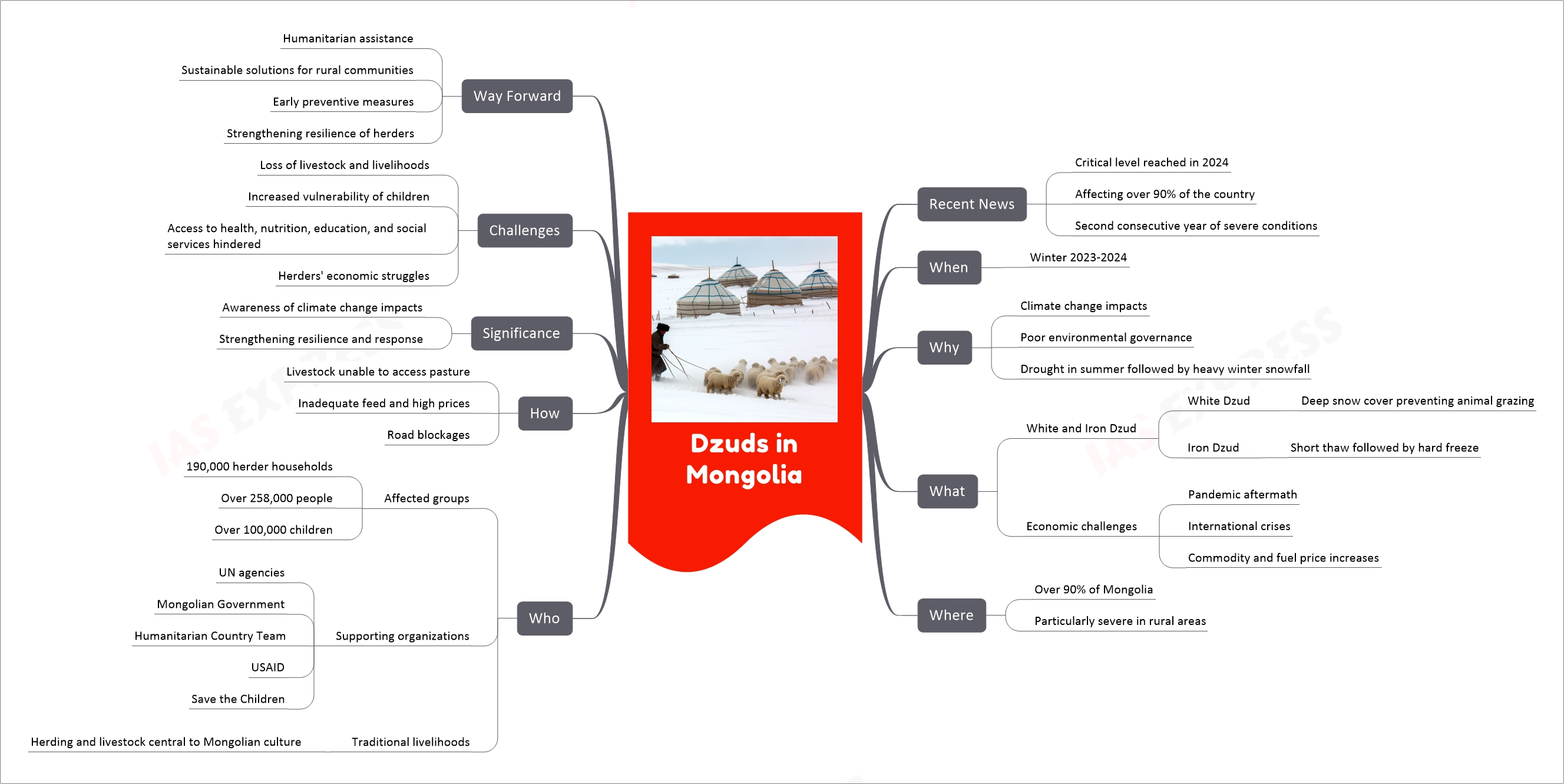
Dzuds in Mongolia

Dzuds in Mongolia mind map
  Recent News
    Critical level reached in 2024
    Affecting over 90% of the country
    Second consecutive year of severe conditions
  When
    Winter 2023-2024
  Why
    Climate change impacts
    Poor environmental governance
    Drought in summer followed by heavy winter snowfall
  What
    White and Iron Dzud
      White Dzud
        Deep snow cover preventing animal grazing
      Iron Dzud
        Short thaw followed by hard freeze
    Economic challenges
      Pandemic aftermath
      International crises
      Commodity and fuel price increases
  Where
    Over 90% of Mongolia
    Particularly severe in rural areas
  Who
    Affected groups
      190,000 herder households
      Over 258,000 people
      Over 100,000 children
    Supporting organizations
      UN agencies
      Mongolian Government
      Humanitarian Country Team
      USAID
      Save the Children
    Traditional livelihoods
      Herding and livestock central to Mongolian culture
  How
    Livestock unable to access pasture
    Inadequate feed and high prices
    Road blockages
  Significance
    Awareness of climate change impacts
    Strengthening resilience and response
  Challenges
    Loss of livestock and livelihoods
    Increased vulnerability of children
    Access to health, nutrition, education, and social services hindered
    Herders' economic struggles
  Way Forward
    Humanitarian assistance
    Sustainable solutions for rural communities
    Early preventive measures
    Strengthening resilience of herders

Dzuds in Mongolia refer to a severe and unique weather phenomenon characterized by extremely cold winters with heavy snow and ice, hindering livestock from accessing pasture. In the winter of 2023-2024, Mongolia faced a critical level of dzud, affecting over 90% of the country. This situation, exacerbated by climate change and poor environmental governance, has led to considerable hardships for over 190,000 herder households, affecting their livelihoods and the well-being of over 258,000 people, including children. The dzud has brought to light the urgent need for humanitarian assistance and sustainable solutions to support Mongolia’s rural communities, highlighting the significance of resilience against climate change and economic challenges.

Related Posts

No posts found.

If you like this post, please share your feedback in the comments section below so that we will upload more posts like this.

Responses

🖍️ Highlight
HomeCoursesPlansAccount