
India-Canada Diplomatic Crisis: Causes, Impacts, Solutions

From Current Affairs Notes for UPSC » Editorials & In-depths » This topic
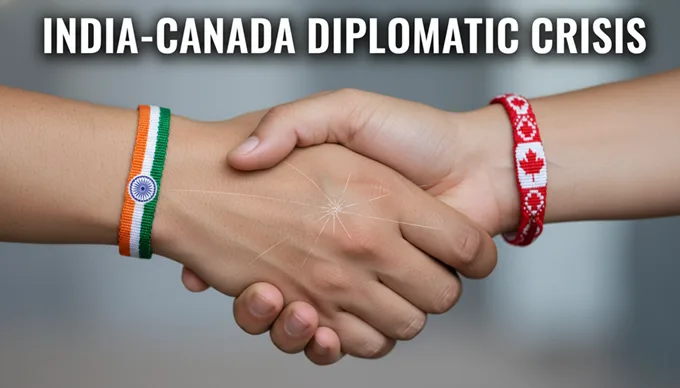
A new documentary detailing alleged murder plots of Sikh activists has recently brought the complex and strained diplomatic relationship between India and Canada, and even the U.S., back into sharp focus. This development further complicates a situation already fraught with accusations and counter-accusations, particularly concerning the alleged involvement of Indian government agents in criminal activities on Canadian soil. For UPSC aspirants, grasping the nuances of this crisis is crucial, as it involves intricate geopolitical dynamics, international law, and the sensitive issue of diaspora politics, all impacting bilateral relations and global perceptions.
What is the India-Canada diplomatic crisis about?
- The India-Canada diplomatic crisis centers on allegations by the Canadian government that Indian government agents were involved in the murder of Hardeep Singh Nijjar, a prominent Sikh separatist leader, in Surrey, British Columbia, in June 2023.
- Canada claims to possess credible intelligence linking the Indian government to this assassination on its soil.
- India has vehemently denied these allegations, calling them “absurd” and “politically motivated”.
- Key features of the dispute include:
- Accusations of extraterritorial killings: Canada views the alleged involvement of foreign government agents in a murder within its borders as a serious breach of its sovereignty and international law.
- Diplomatic expulsions: Both nations have expelled senior diplomats in a tit-for-tat manner, significantly impacting their diplomatic missions.
- Visa service suspension: India temporarily suspended visa services for Canadian citizens, citing security concerns for its diplomatic staff in Canada.
Why did this diplomatic crisis happen?
- Underlying reasons for the crisis are deeply rooted in historical factors and differing national perspectives.
- The Khalistan movement: This movement advocates for an independent Sikh state called Khalistan in the Punjab region.
- It has historical roots dating back to the partition of India in 1947.
- While the movement has largely faded in India, it continues to find support among some segments of the Sikh diaspora, particularly in Canada, the UK, and the U.S.
- India views pro-Khalistan activities as a threat to its national sovereignty and territorial integrity.
- Canada’s stance on freedom of speech: Canada upholds freedom of expression as a fundamental right, which allows for activities by pro-Khalistan groups, including protests and referendums, within its legal framework.
- This stance often clashes with India’s concerns about the rise of extremist elements and anti-India sentiments.
- Canada maintains that it cannot restrict lawful expressions of political views, even if they are controversial to another nation.
- Allegations of Indian interference: Canada has accused India of interfering in its internal affairs, not only through the alleged murder plot but also through intimidation and espionage activities against Sikh activists in Canada.
Where did the India-Canada diplomatic crisis unfold and when did it start?
- The primary events related to the alleged murder of Hardeep Singh Nijjar took place in Surrey, British Columbia, Canada.
- Nijjar was shot and killed outside a Sikh temple on June 18, 2023.
- Other alleged plots, such as the one against Gurpatwant Singh Pannun (a U.S.-based Sikh activist), indicate a broader geographical scope of alleged activities by Indian government operatives, extending to the United States.
- Historical background:
- The Sikh diaspora in Canada has been significant for decades, with many migrating from Punjab, India.
- The Khalistan movement gained traction in the late 1970s and early 1980s, leading to incidents like the 1985 Air India bombing, which India attributes to Khalistani extremists operating from Canada.
- India has consistently raised concerns with Canada about the activities of what it perceives as extremist elements among the Sikh community in Canada.
- Timeline of significant events since June 2023:
- June 18, 2023: Hardeep Singh Nijjar is murdered in Surrey, British Columbia.
- September 2023: Canadian Prime Minister Justin Trudeau publicly announces “credible allegations” of Indian government involvement in Nijjar’s killing.
- September 2023: Canada expels six Indian diplomats. India retaliates by expelling six Canadian diplomats and temporarily suspends visa services for Canadians.
- October 2023: India partially resumes visa services for Canadians.
- November 2023: U.S. authorities indict an Indian national, Nikhil Gupta, for an alleged plot to assassinate Gurpatwant Singh Pannun in the U.S., linking the broader issue to alleged activities of Indian government operatives.
- May 2024: Four Indian nationals—Karan Brar, Amandeep Singh, Kamalpreet Singh, and Karanpreet Singh—are arrested and charged in Canada with first-degree murder and conspiracy to commit murder in the Nijjar case. They have since been granted bail.
Who are the main actors involved in this crisis?
- India:
- Government of India: Prime Minister Narendra Modi‘s administration, the Ministry of External Affairs (MEA), and intelligence agencies are central. India maintains its right to protect its sovereignty and address perceived threats from extremist elements.
- Indian diplomats: Those expelled from Canada, and the High Commissioner.
- Canada:
- Government of Canada: Prime Minister Justin Trudeau and the Royal Canadian Mounted Police (RCMP) are key figures. Canada emphasizes the rule of law and the protection of its citizens’ safety and sovereignty.
- Canadian diplomats: Those expelled from India, and the High Commissioner.
- Sikh diaspora in Canada: A significant community, including both mainstream members and a minority involved in pro-Khalistan activities.
- Hardeep Singh Nijjar: The murdered Sikh leader whose assassination triggered the current diplomatic crisis.
- United States:
- U.S. government: Involved due to the alleged plot to assassinate Gurpatwant Singh Pannun on U.S. soil, potentially involving Indian government operatives.
- U.S. intelligence and law enforcement agencies: Cooperating with Canada on investigations related to foreign interference.
How has this crisis unfolded and what are its impacts?
- The crisis unfolded through a series of accusations, diplomatic retaliations, and legal developments.
- Sequence of events: The murder of Hardeep Singh Nijjar in June 2023 was followed by Justin Trudeau’s public allegations in September 2023, leading to the expulsion of diplomats by both countries.
- Diplomatic actions:
- Canada expelled six Indian diplomats from Ottawa.
- India, in response, expelled six Canadian diplomats from Delhi, stating concerns over their alleged involvement in “anti-India activities” and interference in internal matters.
- India temporarily suspended visa services for Canadian citizens, citing security threats to its missions in Canada. These services were later partially resumed.
- Overall impacts:
- Bilateral relations: The crisis has severely strained the traditionally friendly relations between India and Canada. High-level engagements have been significantly curtailed.
- Trade: Despite the diplomatic tensions, bilateral trade in goods has remained stable. In 2024, it totaled approximately CA$\text{ 11.36 billion (about ₹69,368 crore), slightly higher than CA}$ 10.87 billion in 2023. Key Indian exports to Canada include pharmaceutical products, machinery, and organic chemicals, with Canada importing US$ 425.33 million in pharmaceutical products from India in 2023-24 alone.
- Diaspora communities: The crisis has created unease and concerns among the Indian and Sikh diaspora in both countries, impacting travel and family ties due to visa issues and heightened scrutiny.
- International perception: The allegations have raised questions about India’s adherence to international norms and its conduct on foreign soil, impacting its soft power.
Recent News: The Documentary and Renewed Tensions
- A new documentary has emerged, providing further details on alleged murder plots targeting Sikh activists, specifically focusing on the assassination of Hardeep Singh Nijjar.
- This documentary, including security video footage obtained by The Fifth Estate, reportedly details a highly coordinated attack resulting in Nijjar’s death.
- It presents evidence that has been independently verified, intensifying the public’s understanding of the alleged plot.
- How it has reignited diplomatic tensions:
- India has actively sought to block this documentary on major video-sharing platforms in Canada, seeing it as a rehash of “baseless allegations” and an interference in its internal affairs. This is the second time in just over a year that India has attempted to block a critical documentary, signaling its strong disapproval of any content suggesting its government’s involvement in the killing.
- The documentary adds a new layer of public scrutiny to the crisis, reinforcing Canada’s assertions of Indian government involvement and drawing renewed attention from the U.S.
- The U.S. is already investigating its own alleged murder plot involving Nikhil Gupta and Gurpatwant Singh Pannun, where evidence from the Nijjar case may be presented, further intertwining the issues. This continuous flow of information keeps the diplomatic crisis in the global spotlight.
India’s Perspective and Role
- India’s position:
- Categorical denial of allegations: India has consistently and strenuously denied any involvement of its government agents in the murder of Hardeep Singh Nijjar or any other criminal activity on foreign soil. It views Canada’s accusations as “absurd,” “baseless,” and “politically motivated.”
- Concern over Khalistani extremism: India has long expressed grave concerns about the presence and activities of pro-Khalistan extremist elements in Canada, alleging that they use Canadian soil to promote secessionism and violence against India. India views these groups as a significant national security threat.
- Sovereignty and non-interference: India emphasizes that foreign governments should not interfere in its internal affairs. It expects Canada to take stronger action against those who advocate violence or secession from India.
- Security of diplomats: India cited “security threats” to its diplomatic personnel in Canada as the reason for suspending visa services, highlighting its concern for the safety of its officials.
- Strategic interests:
- Maintaining territorial integrity: India’s primary strategic interest is to safeguard its territorial integrity and prevent the resurgence of any separatist movement like Khalistan.
- Combating terrorism: India views Khalistani extremism as a form of terrorism and seeks international cooperation in combating such threats, irrespective of where they originate.
- Protecting national image: India aims to protect its image as a responsible global power and denies any actions that would contradict international law or norms of conduct.
- Diaspora engagement: India seeks to engage constructively with its large diaspora abroad, but also expects them to abide by the laws of their host countries and not engage in activities harmful to India’s interests.
What is the significance of this diplomatic dispute?
- Broader implications for international relations:
- Sovereignty and international law: The crisis highlights the delicate balance of national sovereignty and the principles of international law, particularly concerning alleged extraterritorial actions by state actors. If proven, such actions could set dangerous precedents for how countries conduct themselves globally.
- Trust and cooperation: It has eroded trust between two democratic nations, impacting their ability to cooperate on other global issues like climate change, security, and economic development.
- Role of diaspora in foreign policy: The dispute underscores the increasing influence of diaspora communities on the foreign policy of both their home and host countries, often creating complex challenges for diplomatic relations.
- Human rights and state accountability:
- The allegations raise serious questions about human rights and the accountability of states for actions taken beyond their borders.
- It puts a spotlight on the protection of activists and dissidents in democratic nations, and the potential threats they face from foreign governments.
What are the limitations and challenges faced by both nations?
- Trust deficit: A deep trust deficit exists, with Canada alleging foreign interference and India denying it while accusing Canada of harboring extremists. Rebuilding this trust is a formidable challenge.
- Differing legal frameworks: Canada’s legal system prioritizes due process and evidence-based prosecution, which can be slower than political demands. India’s legal framework and expectations may differ, leading to friction.
- Domestic political pressures: Both governments face significant domestic political pressures. Justin Trudeau‘s government is under pressure from its own populace and opposition to ensure justice for a Canadian citizen. India’s government faces pressure to appear strong against separatist elements and to protect its image internationally.
- Lack of concrete public evidence: While Canada claims to have credible intelligence, the public release of specific, undeniable evidence has been limited due to national security concerns, which makes it harder to gain international consensus or public support for its claims.
- Allegations of foreign interference: The broader context of other alleged foreign interference, including in the U.S. plot against Gurpatwant Singh Pannun, complicates the situation, suggesting a pattern of behavior that both Canada and the U.S. are taking seriously.
Comparison Chart: India vs. Canada Perspectives
| Aspect | India’s Perspective | Canada’s Perspective |
|---|---|---|
| Nijjar Murder Allegations | Categorically denies any involvement; calls allegations “absurd” and “politically motivated.” | Claims “credible allegations” of Indian government agents‘ involvement in the assassination of Hardeep Singh Nijjar on Canadian soil. Emphasizes rule of law. |
| Khalistan Movement | Views it as a threat to national sovereignty and territorial integrity; demands stronger action against extremist elements in Canada. | Upholds freedom of expression as a fundamental right, allowing lawful (though sometimes controversial) activities by pro-Khalistan groups; states it cannot restrict such activities unless they involve violence or illegal acts. |
| Sovereignty | Accuses Canada of interfering in its internal matters by allowing anti-India activities; stresses the importance of non-interference. | Sees alleged foreign government involvement in a murder on its soil as a grave violation of its sovereignty; asserts the right to protect its citizens and enforce its laws within its borders. |
| Diplomatic Actions | Expelled six Canadian diplomats in response to Canada’s expulsions; temporarily suspended visa services citing security concerns for its diplomats in Canada. | Expelled six Indian diplomats due to alleged involvement in serious criminal activities; maintains that such actions are necessary to uphold national security and the rule of law. |
| Evidence & Due Process | Demands concrete evidence to support Canada’s claims, which it views as unsubstantiated. | Relies on intelligence and ongoing law enforcement investigations; emphasizes that legal processes must unfold, acknowledging that public release of sensitive intelligence is limited. |
| Role of U.S. | Views U.S. involvement (e.g., Pannun plot) as a separate legal matter, though the underlying allegations reflect similar concerns from a third party. | Seeks cooperation with U.S. and other allies on intelligence sharing and addressing foreign interference, seeing the alleged Pannun plot as corroborating evidence of a broader pattern of alleged Indian government operative activities. |
What is the path forward to resolve this diplomatic crisis?
- Potential solutions and diplomatic avenues:
- De-escalation of rhetoric: Both sides need to reduce inflammatory statements and engage in quiet diplomacy.
- Information sharing and cooperation: Canada could share more specific, non-sensitive intelligence with India through secure channels to address India’s demands for evidence. India, in turn, could demonstrate willingness to investigate any credible leads.
- Adherence to international norms: Both countries must recommit to respecting each other’s sovereignty and adhering to international law regarding diplomatic conduct and extraterritorial actions.
- Third-party mediation: While not explicitly discussed, a trusted third party, such as a neutral allied nation, could potentially facilitate dialogue, though both countries generally prefer bilateral resolutions.
- Areas for de-escalation:
- Resumption of full consular services: Fully restoring visa services and diplomatic presence would be a crucial step towards normalization.
- Focus on shared interests: Both nations have shared interests in trade, climate action, and regional stability. Re-emphasizing these areas could help rebuild bridges.
- Dialogue on diaspora issues: Constructive dialogue on how to address concerns related to extremist elements within the diaspora, without infringing on legitimate rights, is vital. This could involve joint mechanisms for information exchange on threats.
Conclusion
The India-Canada diplomatic crisis is a complex interplay of allegations, historical grievances, and differing national priorities, significantly impacting their bilateral relations. Triggered by the alleged murder of Hardeep Singh Nijjar and fueled by accusations of Indian government involvement, the crisis has led to diplomatic expulsions and a temporary suspension of visa services. While trade ties have shown resilience, the political and strategic trust between the two nations has been severely eroded. Moving forward requires a commitment from both sides to de-escalate tensions, engage in constructive dialogue, and respect international norms and each other’s sovereignty to find a sustainable path toward resolution.
Q. Analyze the balance between a state’s sovereign right to counter perceived security threats and its obligation to respect the sovereignty and legal processes of other nations when addressing diaspora activities. (250 words)

Related Posts

If you like this post, please share your feedback in the comments section below so that we will upload more posts like this.

Responses