
[Newsbits] 14.03.2025: Chagos Archipelago, National Board for Wildlife & More


The National Board for Wildlife (NBWL) is a statutory body responsible for wildlife policy and conservation in India. Established in 2003 under the Wild Life (Protection) Act, 1972, it evolved from the Indian Board for Wildlife (1952). The NBWL comprises 47 members, including the Prime Minister as chairperson. Recently, it met in Gir National Park, Gujarat, to review conservation programs and announce new initiatives for gharials and the Great Indian Bustard. Controversies surround its approval of projects in sensitive habitats. Its 2014 reconstitution reduced non-governmental representation, raising concerns about its conservation focus.

The United States proposed a 30-day ceasefire in the Russia-Ukraine war, which Ukraine has supported following talks in Jeddah, Saudi Arabia. The ceasefire aims to stop missile, drone, and bomb attacks along the front line. As part of the deal, the U.S. resumed military aid and intelligence sharing with Ukraine. Discussions on Ukraine’s critical mineral resources were also revived. The ceasefire includes humanitarian efforts like prisoner exchanges. The U.S. will present the proposal to Russia, with high-level meetings planned. Meanwhile, military actions continue, with Ukraine recently conducting its largest drone attack on Moscow to pressure Russia.
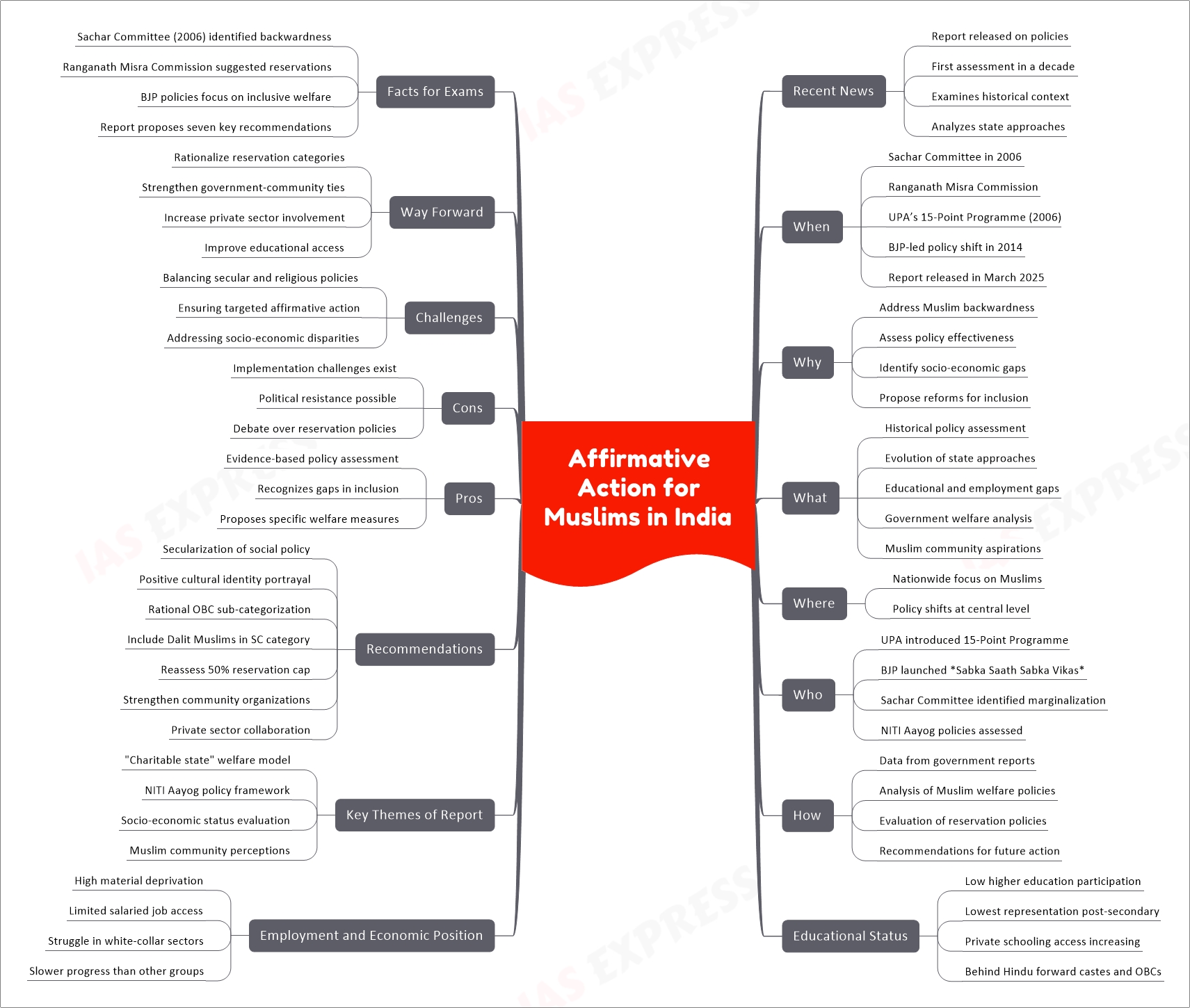
The report Rethinking Affirmative Action for Muslims in Contemporary India highlights the historical and policy evolution of Muslim socio-economic conditions. It traces Muslim backwardness to reports like the Sachar Committee and Ranganath Misra Commission. While earlier policies focused on targeted welfare, the BJP-led government’s Sabka Saath, Sabka Vikas emphasized inclusive growth. The report analyzes government welfare approaches, Muslim educational and employment challenges, and perceptions of deprivation. Key recommendations include rational OBC sub-categorization, Dalit Muslim inclusion in SC categories, reassessing the 50% reservation cap, and strengthening community and private-sector partnerships to improve Muslim representation in educ

Scientists have confirmed Plastic Ice VII, a new phase of water, under extreme pressure and temperature conditions. Led by Livia Bove from Sorbonne University, the discovery expands knowledge of water’s behavior in planetary environments. Unlike regular ice, Plastic Ice VII has a crystalline structure but allows molecular rotation. It forms above 450 K (177°C) and at pressures over 3 GPa. Researchers used quasi-elastic neutron scattering and diamond-anvil cells for observation. Found in icy moons like Ganymede and Titan, it has implications for planetary science, astrobiology, and material engineering, potentially leading to advancements in technology for extreme environments.
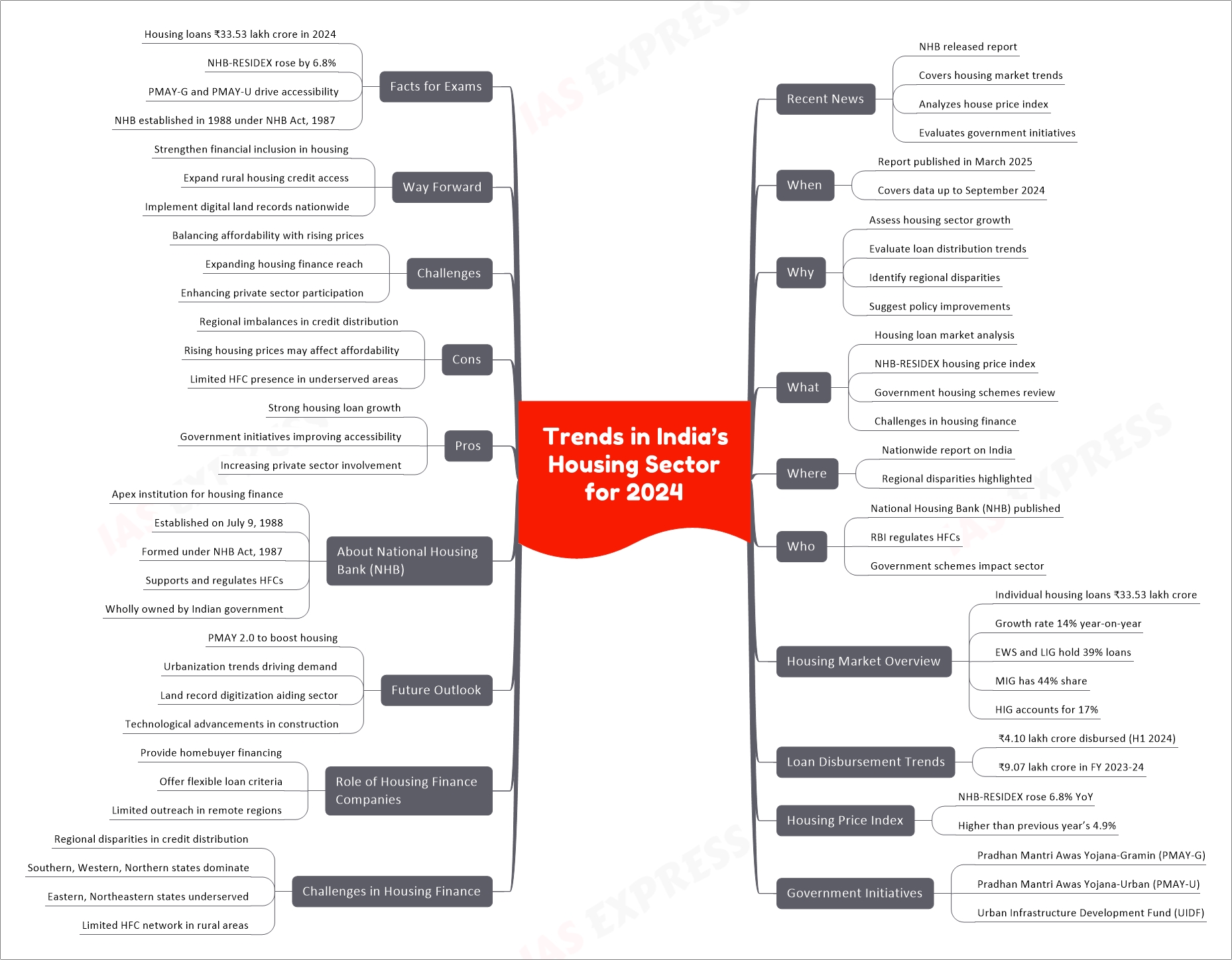
The Report on Trends and Progress of Housing in India, 2024, published by the National Housing Bank (NHB), highlights housing market growth, loan trends, and policy impacts. As of September 2024, individual housing loans reached ₹33.53 lakh crore, growing 14% year-on-year. The Housing Price Index rose by 6.8%. Government schemes like PMAY and UIDF aim to improve accessibility. Challenges include regional credit disparities and limited HFC outreach. The future outlook is positive, with PMAY 2.0, urbanization, and digitization expected to drive growth. NHB, established in 1988, supervises Housing Finance Companies (HFCs) under RBI regulation.

Scrub typhus is an infectious disease caused by Orientia tsutsugamushi and transmitted through infected larval mites (chiggers). A study by Christian Medical College, Vellore, and the London School of Hygiene and Tropical Medicine, conducted on 32,000 individuals in Tamil Nadu, found scrub typhus responsible for nearly 30% of fever hospitalizations. Symptoms include fever, headache, and rash, often leading to misdiagnosis. Severe cases can result in organ failure. The disease peaks between August and February in rural areas. Increased public awareness and improved diagnostics in rural healthcare are essential for timely treatment and reducing fatalities.
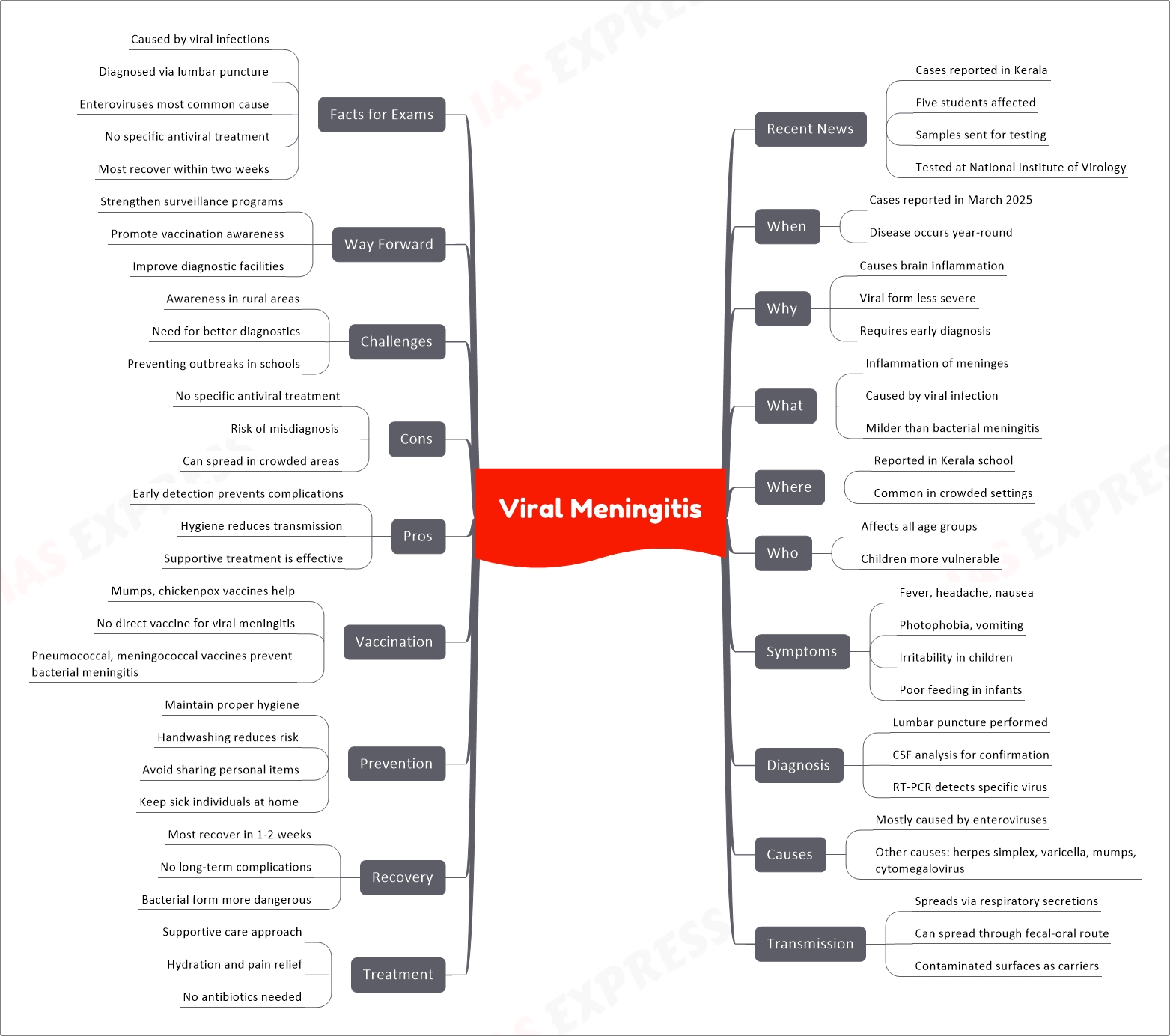
Viral meningitis is an inflammation of the meninges caused by viruses, primarily enteroviruses. Recently, five students in Kalamassery, Kerala, exhibited symptoms, prompting sample testing at the National Institute of Virology. The disease is milder than bacterial meningitis but can cause fever, headache, nausea, and photophobia. Diagnosis involves cerebrospinal fluid (CSF) analysis via lumbar puncture. Treatment is supportive, focusing on hydration and pain relief. Transmission occurs through respiratory secretions and fecal-oral contamination. Preventive measures include hygiene practices and vaccination against related viruses like mumps and varicella. Nearly all cases recover fully, but awareness is crucial for early intervention.

A study by Punjabi University and Thapar University found a strong correlation between heavy metal pollution and cancer risk in Punjab. Conducted along the Ghaggar River from 2017 to 2018, the research revealed excessive levels of lead, cadmium, and nickel, surpassing Central Pollution Control Board limits. Key contaminated sites included Sirhind Choe, Badi Nadi, and Dhakanshu Drain, with pollution peaking during monsoon due to agricultural runoff and untreated wastewater. Children are at higher risk, with carcinogenic exposure exceeding US safety limits. Researchers urge stricter regulations, improved water monitoring, and immediate public health interventions to mitigate the crisis.
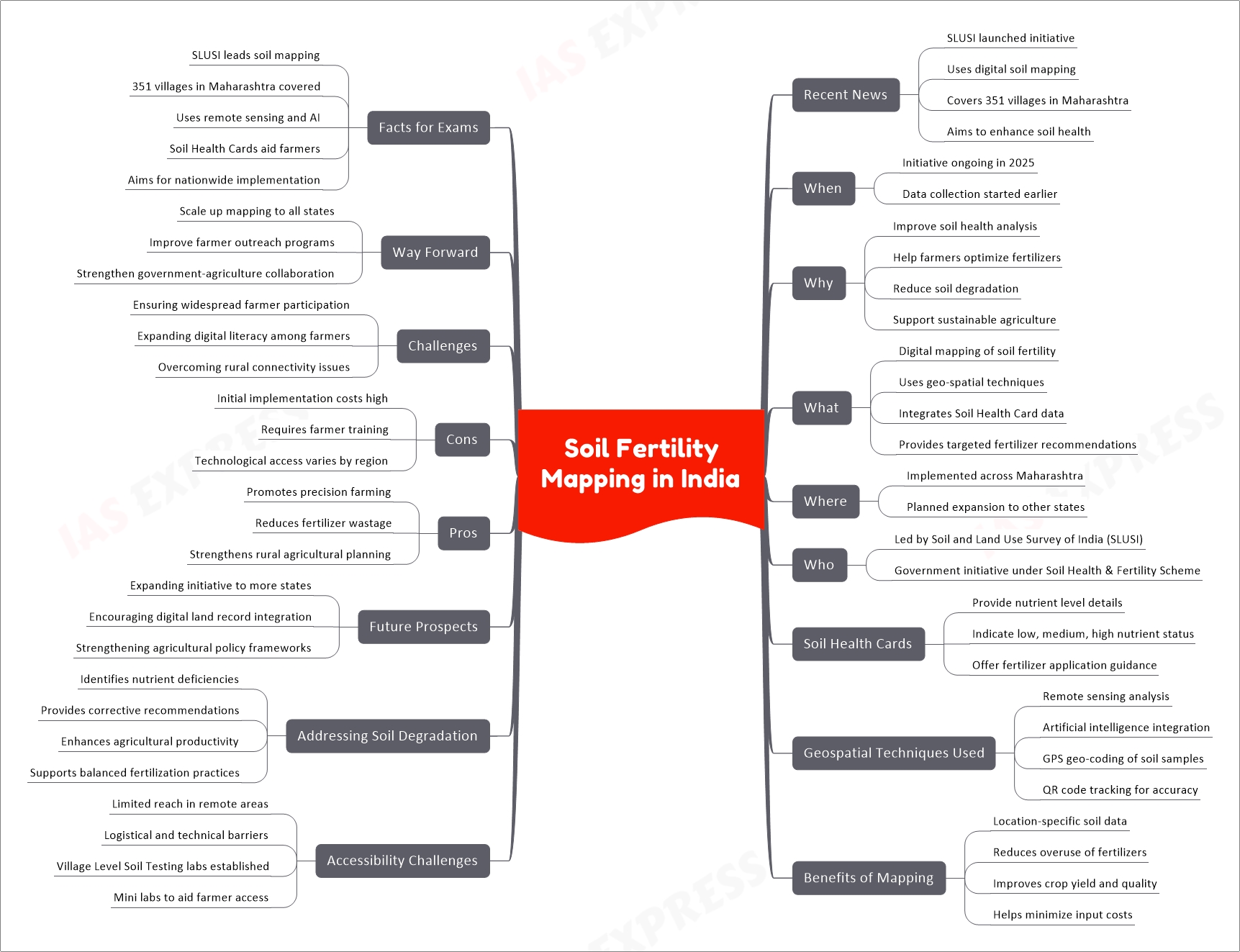
The Soil and Land Use Survey of India (SLUSI) is implementing a digital soil fertility mapping initiative using geo-spatial techniques and Soil Health Cards (SHC) to improve agricultural productivity. The project has mapped soil fertility in 351 villages across Maharashtra, helping farmers optimize fertilizer use. SHCs provide data on nutrient levels and offer customized recommendations. Geospatial tools like remote sensing and GPS ensure precise soil analysis. Challenges include accessibility in remote areas, but Village Level Soil Testing labs help mitigate this. The initiative supports sustainable farming, reduces soil degradation, and promotes balanced fertilizer application across India.

The Ministry of Mines is launching India’s first auction of Exploration Licences (ELs) in Goa on March 13, 2025. This initiative, introduced under the MMDR Amendment Act, 2023, allows private firms to conduct reconnaissance and prospecting for 29 critical minerals, including lithium, copper, and gold. The first phase will auction 13 blocks through an online bidding process. A roadshow and AI Hackathon 2025 will also take place, focusing on AI-driven mineral exploration. The auction aims to boost private participation, enhance mineral security, and strengthen India’s self-reliance in critical minerals for industrial and technological advancements.

If you like this post, please share your feedback in the comments section below so that we will upload more posts like this.

Responses