Panel Recommends Roadmap for Simultaneous Elections in India

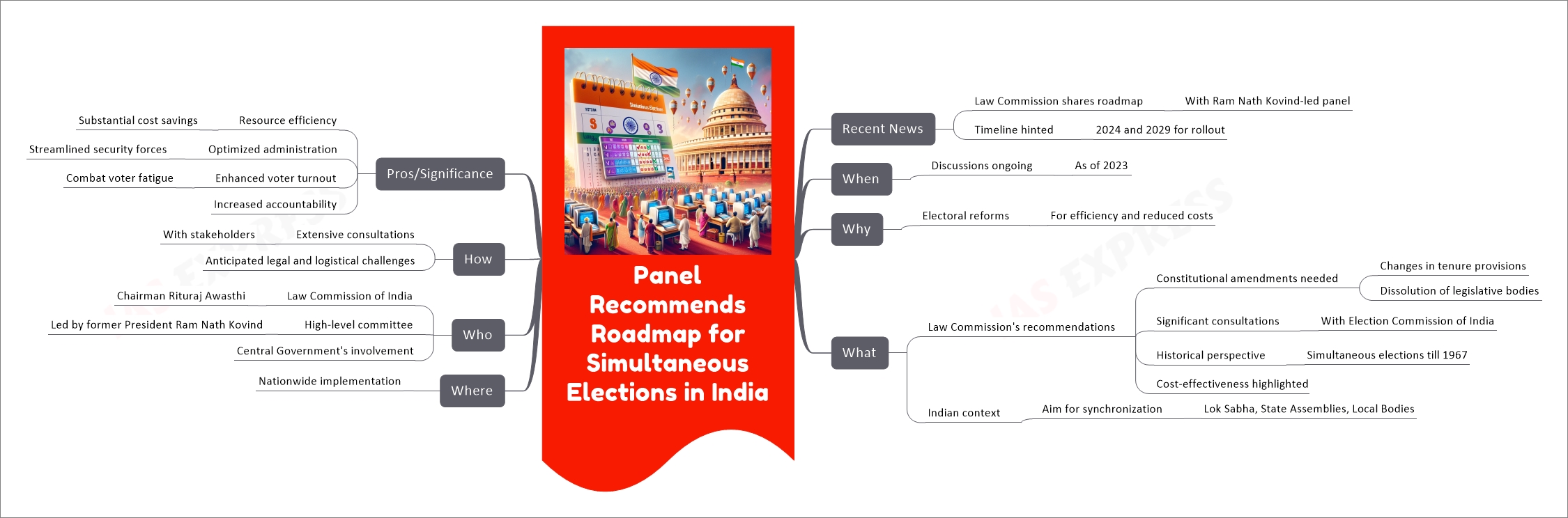
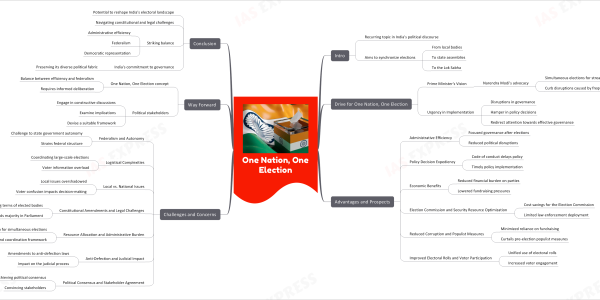
Panel Recommends Roadmap for Simultaneous Elections in India mind map

  Recent News
    Law Commission shares roadmap
      With Ram Nath Kovind-led panel
    Timeline hinted
      2024 and 2029 for rollout
  When
    Discussions ongoing
      As of 2023
  Why
    Electoral reforms
      For efficiency and reduced costs
  What
    Law Commission's recommendations
      Constitutional amendments needed
        Changes in tenure provisions
        Dissolution of legislative bodies
      Significant consultations
        With Election Commission of India
      Historical perspective
        Simultaneous elections till 1967
      Cost-effectiveness highlighted
    Indian context
      Aim for synchronization
        Lok Sabha, State Assemblies, Local Bodies
  Where
    Nationwide implementation
  Who
    Law Commission of India
      Chairman Rituraj Awasthi
    High-level committee
      Led by former President Ram Nath Kovind
    Central Government's involvement
  How
    Extensive consultations
      With stakeholders
    Anticipated legal and logistical challenges
  Pros/Significance
    Resource efficiency
      Substantial cost savings
    Optimized administration
      Streamlined security forces
    Enhanced voter turnout
      Combat voter fatigue
    Increased accountability

The initiative for simultaneous elections in India, led by a panel with the Law Commission sharing a comprehensive roadmap, aims at the synchronization of Lok Sabha, State Assemblies, and Local Body elections nationwide. This move is driven by the intent to enhance electoral efficiency, reduce the substantial costs associated with separate elections, and minimize administrative and security disruptions. Despite its historical precedent up to 1967, the proposal faces hurdles, including opposition from various parties fearing an erosion of federalism and the substantial legal challenges of amending the Constitution to align election cycles. The proposal suggests significant benefits such as cost savings, increased voter turnout, and streamlined governance, yet faces criticism for potentially centralizing power and overshadowing local issues with national narratives​​​​​​.

Related Posts

If you like this post, please share your feedback in the comments section below so that we will upload more posts like this.

Responses

🖍️ Highlight
HomeCoursesPlansAccount