World’s First 3D-Printed Mosque in Saudi Arabia

World’s First 3D-Printed Mosque in Saudi Arabia mind map

  Recent News
    World’s first 3D-printed mosque unveiled
  When
    7 March 2024
  Where
    Jeddah, Saudi Arabia
    Al-Jawhara suburb
  Who
    Named after Abdulaziz Abdullah Sharbatly
    Tribute by his wife, Wajnat Abdulwahed
    Leading Forsan Real Estate
    Guanli, Chinese 3D printing technology company
  Why
    Innovation in construction and architecture
    Blend tradition with modern technology
  What
    Spans 5,600 square metres
    Part of National Housing Co.'s portfolio
    Construction
      Completed in six months
      Used four cutting-edge printers from Guanli
    Design
      Reflects Hejazi architectural heritage
      Centered within a circle for qibla orientation
      Mass and natural light relationship emphasized
      Entrances, gates, and facades designed to reflect identity
      Minarets with minimalist detailing
      Open outdoor area inspired by Hijr Ismail
  How
    Spearheaded by Saudi businesswoman Wajnat Abdulwahed
    Utilization of 4 Guanli 3D printers
  Significance
    Demonstrates potential of technology in reshaping architecture
    Aims for sustainability and technological-driven future
    Aligns with Saudi Vision 2030 for economic diversification
  Challenges
    Adapting traditional architectural designs to modern 3D printing techniques
  Way Forward
    Exploration of further innovative projects in construction
    Integration of technology with cultural and religious structures

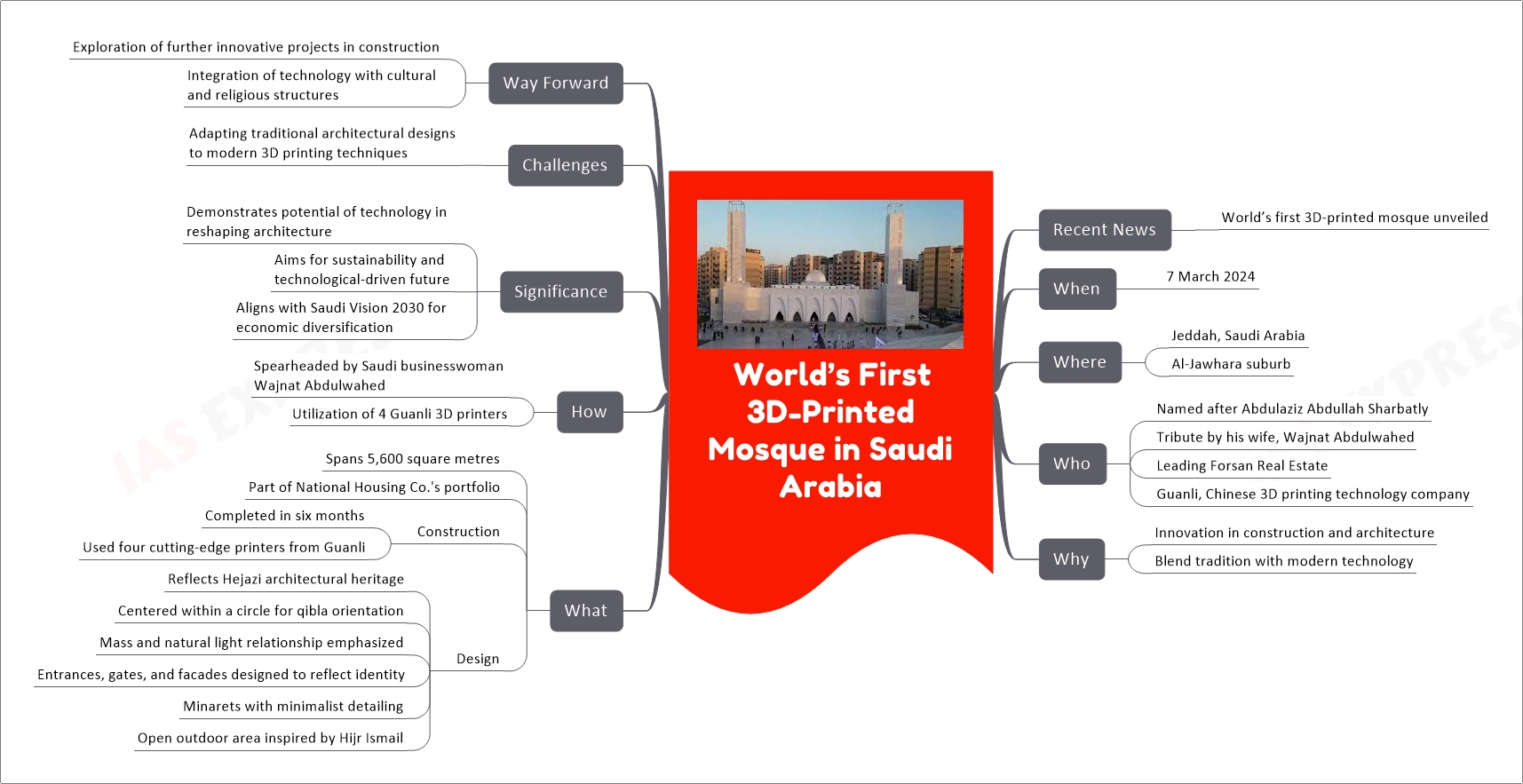
The world’s first 3D-printed mosque, unveiled in Jeddah, Saudi Arabia, marks a significant milestone in construction and architectural innovation. Named after Abdulaziz Abdullah Sharbatly, the mosque is a tribute by his wife, Wajnat Abdulwahed, and spans 5,600 square meters in the Al-Jawhara suburb. This project, completed in just six months using cutting-edge 3D printing technology from the Chinese company Guanli, demonstrates the vast potential of modern techniques to reshape traditional architectural practices. The design of the mosque, which reflects Hejazi architectural heritage, is centered within a circle for accurate orientation towards the qibla, with attention to the relationship between the building’s mass and natural light. This innovation aligns with Saudi Vision 2030’s objectives for economic diversification and represents a bold step towards a more sustainable and technologically-driven future​​​​​​​​.

Related Posts

If you like this post, please share your feedback in the comments section below so that we will upload more posts like this.

Responses

🖍️ Highlight
HomeCoursesPlansAccount