
ASI’s Gyanvapi Mosque Survey Report

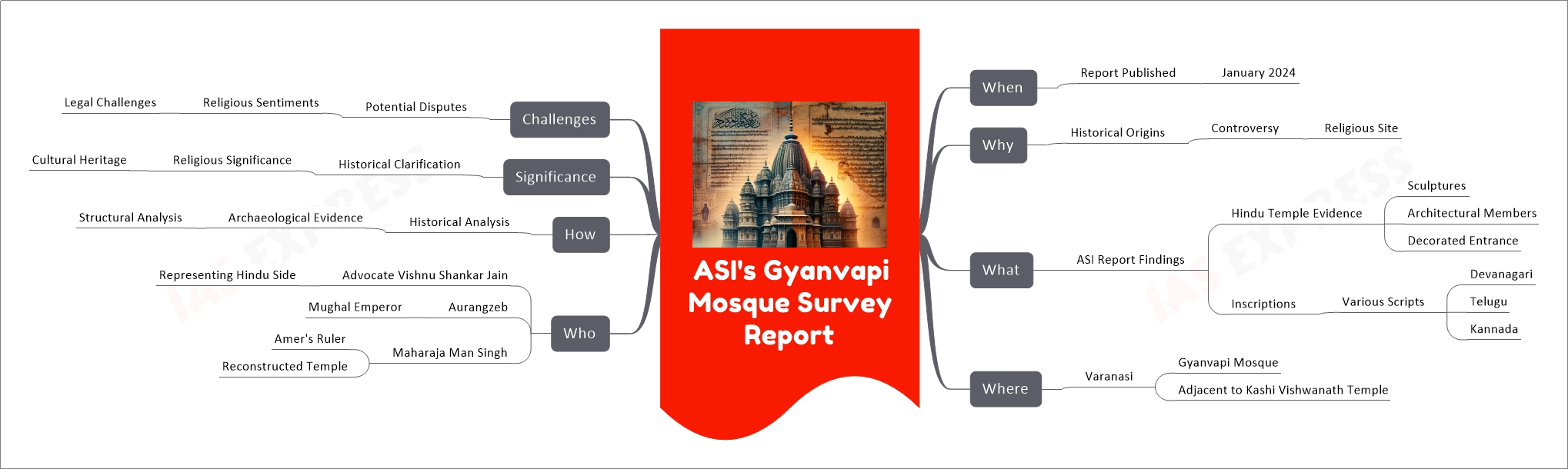
The ASI’s Gyanvapi Mosque Survey Report, released in January 2024, has stirred significant interest, particularly in India. The report suggests that Varanasi’s Gyanvapi mosque is built on the ruins of a Hindu temple, as indicated by findings like Hindu deity sculptures, architectural elements, and various inscriptions in scripts such as Devanagari, Telugu, and Kannada. This conclusion has reignited debates about the historical origins of the site and its future. The mosque’s history, dating back over 800 years, includes periods of destruction and reconstruction, notably during Aurangzeb’s reign and under Maharaja Man Singh of Amer. The report presents both a historical clarification of the site’s past and potential challenges due to religious sensitivities and legal implications.
Related Posts




If you like this post, please share your feedback in the comments section below so that we will upload more posts like this.

Responses