Wetland City Tag

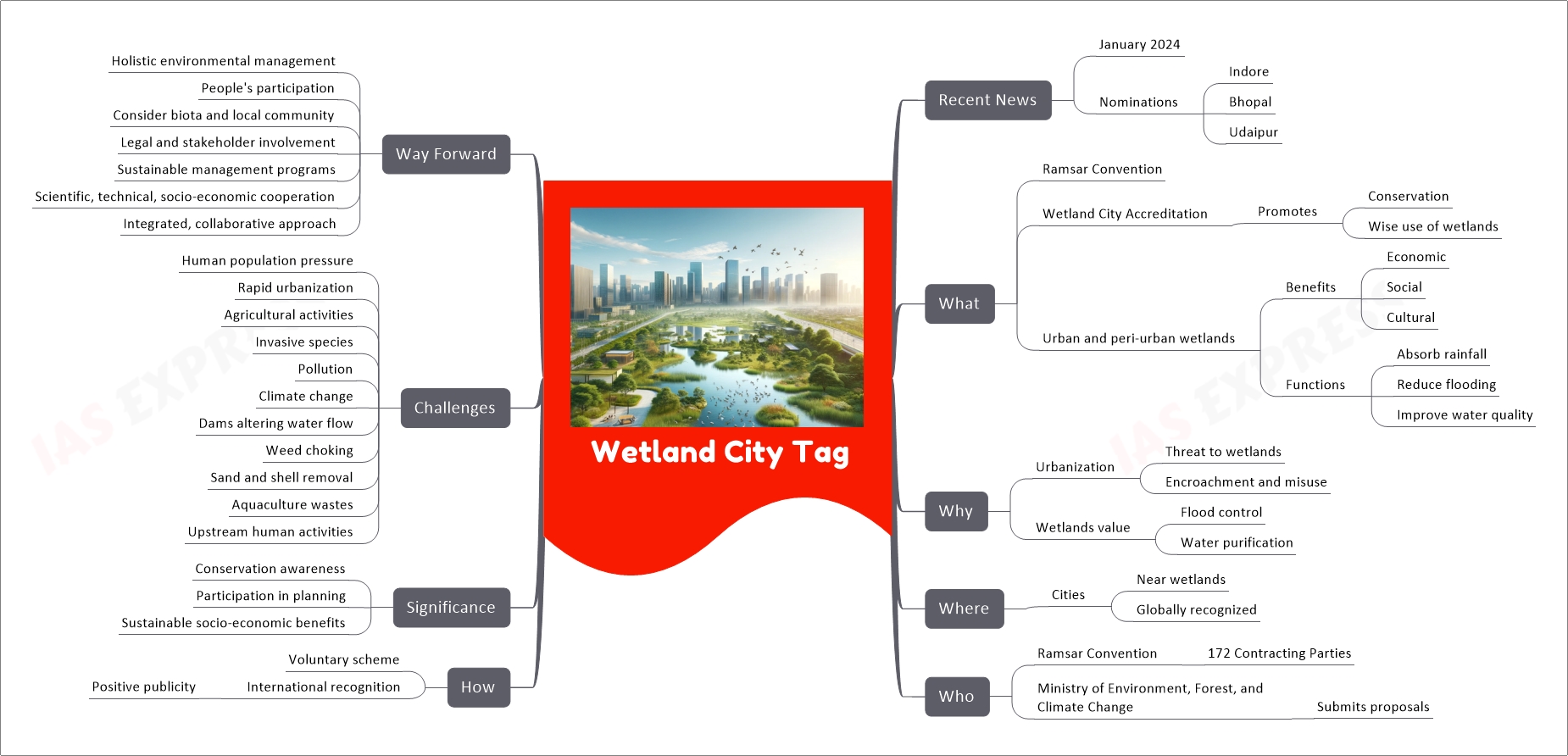
Wetland City Tag mind map
  Recent News
    January 2024
    Nominations
      Indore
      Bhopal
      Udaipur
  What
    Ramsar Convention
    Wetland City Accreditation
      Promotes
        Conservation
        Wise use of wetlands
    Urban and peri-urban wetlands
      Benefits
        Economic
        Social
        Cultural
      Functions
        Absorb rainfall
        Reduce flooding
        Improve water quality
  Why
    Urbanization
      Threat to wetlands
      Encroachment and misuse
    Wetlands value
      Flood control
      Water purification
  Where
    Cities
      Near wetlands
      Globally recognized
  Who
    Ramsar Convention
      172 Contracting Parties
    Ministry of Environment, Forest, and Climate Change
      Submits proposals
  How
    Voluntary scheme
    International recognition
      Positive publicity
  Significance
    Conservation awareness
    Participation in planning
    Sustainable socio-economic benefits
  Challenges
    Human population pressure
    Rapid urbanization
    Agricultural activities
    Invasive species
    Pollution
    Climate change
    Dams altering water flow
    Weed choking
    Sand and shell removal
    Aquaculture wastes
    Upstream human activities
  Way Forward
    Holistic environmental management
    People's participation
    Consider biota and local community
    Legal and stakeholder involvement
    Sustainable management programs
    Scientific, technical, socio-economic cooperation
    Integrated, collaborative approach

The Wetland City Tag is a part of the Ramsar Convention’s Wetland City Accreditation scheme, aimed at promoting the conservation and wise use of urban and peri-urban wetlands. Recently, in January 2024, three Indian cities – Indore, Bhopal, and Udaipur – were nominated for this accreditation. This scheme is significant as it recognizes cities that value their natural or human-made wetlands and encourages their conservation and sustainable use. Wetlands provide numerous benefits, including flood control, water purification, and contributing to economic, social, and cultural well-being. However, they face threats from urbanization, pollution, climate change, and other human activities. To counter these threats, a holistic approach involving stakeholder participation, legal frameworks, and sustainable management is essential for wetland conservation.

Related Posts

If you like this post, please share your feedback in the comments section below so that we will upload more posts like this.

Responses

🖍️ Highlight
HomeCoursesPlansAccount